

Nguom Ngao Cave: “Tiger Cave” Hidden in the Mountains of Trung Khanh
When people think of travel in Cao Bang, Ban Gioc Waterfall often comes to mind first. Just a few kilometers from the falls is a quieter cave that still has the power to surprise visitors: Nguom Ngao Cave. It is one of the most beautiful limestone caves in northeastern Vietnam, perfect for travelers looking to add an intriguing stop to a journey through the rugged borderlands.
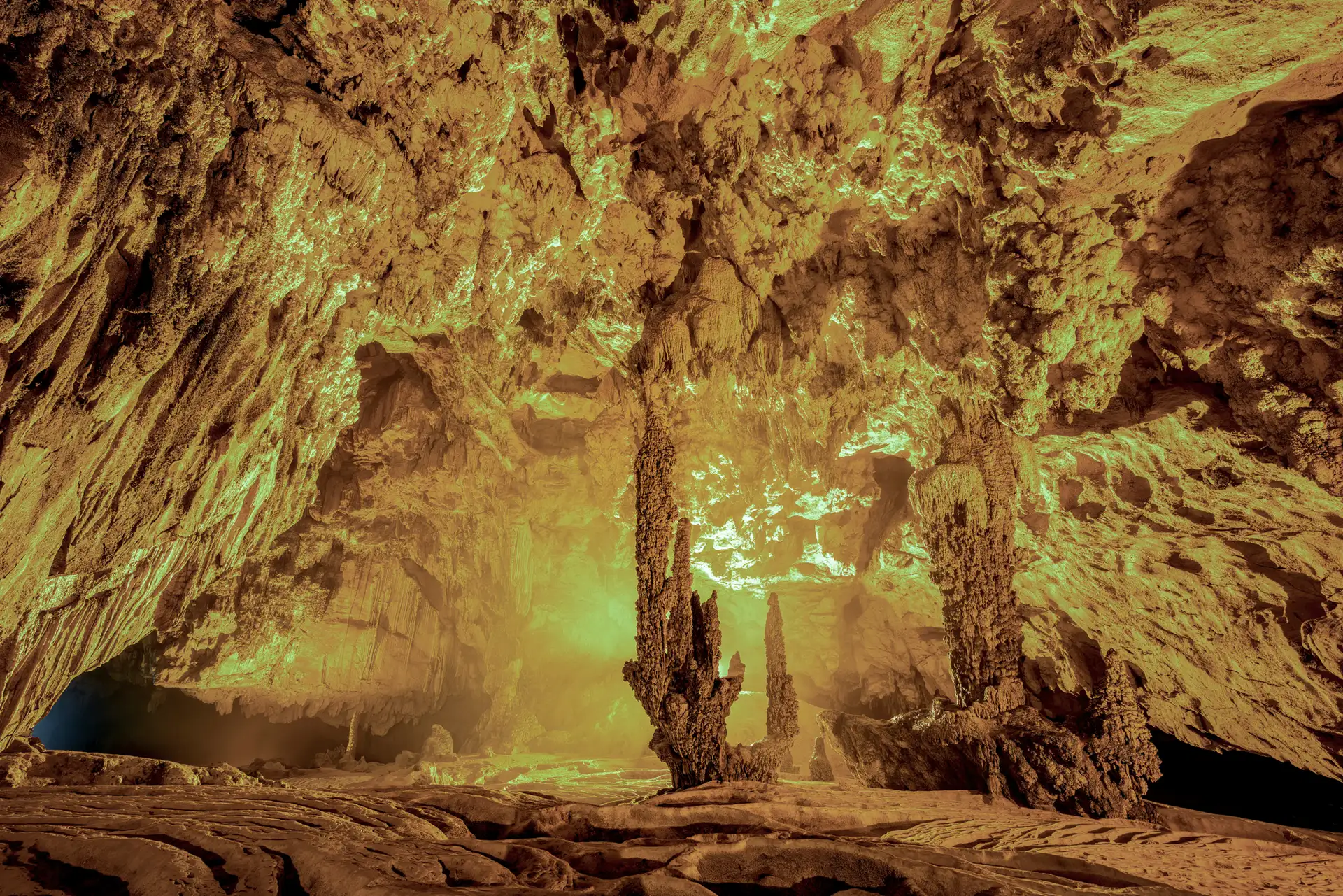
Where Is Nguom Ngao Cave?
The cave is in Gun Village, Dam Thuy Commune, Trung Khanh District, Cao Bang Province (district-level place names may have changed following the 2025 administrative reorganization, but the destination’s name remains the same). It is just 3 km from Ban Gioc Waterfall, so most visitors see both in one trip.
The area is also part of the UNESCO Global Geopark Non Nuoc Cao Bang, and the scenery around the cave is classic karst country: rugged limestone peaks, lush green rice fields, and peaceful Tay villages.
The Meaning of “Nguom Ngao” and Local Legends
In the Tay language, “Nguom” means cave and “Ngao” means tiger, giving the name “Tiger Cave.” Locals tell two stories about how it got its name:
- According to legend, many fierce tigers once lived in the cave.
- Another explanation is that the stream flowing through the cave sounds like a tiger’s roar.
The cave is also known as “Wind Cave” because the underground stream flows swiftly, creating gusts of wind and loud echoes inside the mountain.
The Cave’s Discovery and Scale
- Formation: Scientific research suggests this karst cave formed nearly 300 million years ago.
- Discovery and opening to visitors: The cave was discovered in 1921, surveyed in 1995, and opened to visitors in 1996.
- Length: The cave stretches 2,144 m and has three main entrances: Nguom Lom, Nguom Ngao, and Ban Thuan.
- Visitor route: About 900 m is currently open to visitors, with concrete paths and lighting.
What Makes Nguom Ngao Cave Special?
Colorful Stalactites Unlike Those in Other Caves
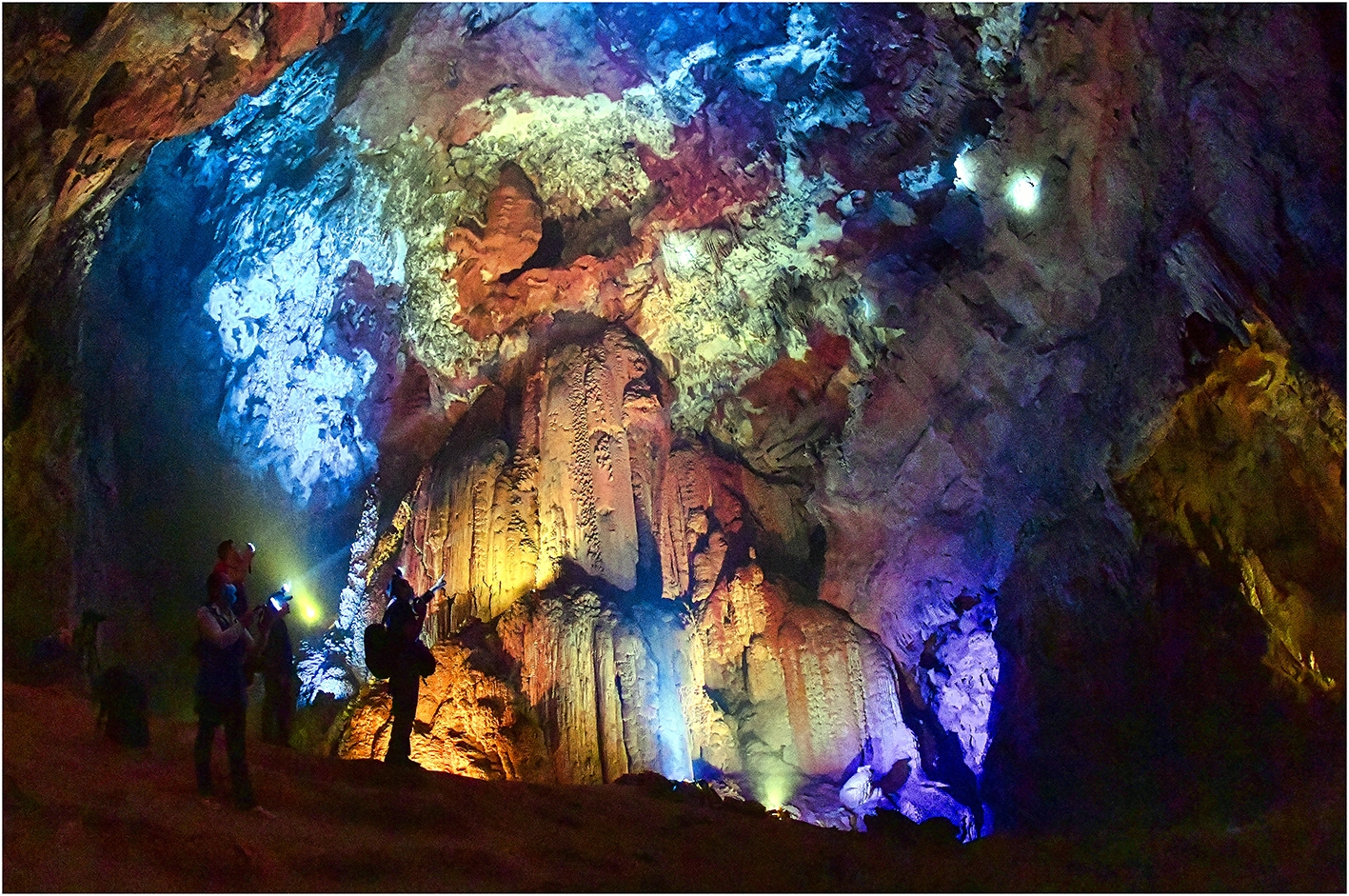
Nguom Ngao is best known for its dense formations of stalactites. Their colors are quite different from those in other caves because the limestone contains various impurities alongside calcium. In the light, the formations glow in shades of gold, white, brown, and gray, creating the feeling of stepping into an underground palace.
Vivid and Intriguing Rock Formations
Along the path, you’ll spot formations that resemble all sorts of things: people, forest trees, animals, a fairy combing her hair, or a lotus bud. Guides often point out standout features, including a stone chandelier hanging from the cave ceiling, limestone “terraced fields,” stone trees, and stalactite columns connecting the ceiling to the floor. Look closely and let your imagination wander—each angle reveals a different shape.
A Cave That Keeps Changing
The cave ceiling alternates between low, enclosed passages and open spaces, keeping visitors guessing. Some sections are narrow enough to make you duck, then suddenly open into spacious chambers with soaring ceilings. These changing rhythms make the nearly 1 km journey through the cave anything but dull.
A Rare Light Phenomenon
According to some sources, an opening in the cave ceiling is positioned so precisely that sunlight enters only for a few minutes at around 2 p.m. on April 22 each year, creating three beams of light. If your visit coincides with that date, it’s a rare sight to catch.
Nguom Ngao Cave Tickets and Opening Hours
- Opening hours: Approximately 7:30 a.m. to 5 p.m. daily.
- Tickets: Prices range from VND 45,000 to VND 200,000, depending on the ticket type (the standard sightseeing route or a longer exploration route).
Ticket prices and opening hours may vary, so check at the ticket counter or with a tour operator before setting out.
How to Get to Nguom Ngao Cave
From Hanoi to Cao Bang: Take a sleeper bus (around 7–8 hours), a limousine van, or drive a car or motorbike along National Highway 3.
From Cao Bang city center to the cave: The popular route runs from Cao Bang City via Ma Phuc Pass, Khau Lieu Pass, and Trung Khanh Town to Nguom Ngao Cave. The journey is around 85–90 km and takes about 2–2.5 hours. The road is paved, and though it winds through mountain passes, the scenery is beautiful and well worth stopping to photograph.
From the parking area, it’s a short walk through the rice fields of Gun Village to the cave entrance. Most visitors enter through the Nguom Lom entrance and exit through the Nguom Ngao entrance.
Best Time to Visit
- August–October: Golden rice fields surround Gun Village, and Ban Gioc Waterfall is at its fullest. This is the best time to combine both destinations on one tour.
- November–December: Buckwheat flowers bloom across many parts of Cao Bang, and the weather is dry.
- Winter: It can be cold outside, but the cave stays comfortable. Temperatures inside range from 18–25°C, making it cool in summer and warm in winter.
During the heavy rains in June and July, keep an eye on the weather. Mountain roads can become slippery, and some sections of the cave may be damp.
Tips for Visiting Nguom Ngao Cave
- Wear shoes with good grip: The path is paved, but some sections are damp and slippery, with steps along the way.
- Allow 1–1.5 hours for the cave: This gives you enough time to complete the route and take photos at a relaxed pace.
- Don’t touch the stalactites: These formations take thousands of years to develop. Oils from your hands can stop their growth and cause discoloration.
- Taking photos inside the cave: Light is limited, so use night mode or hold your camera steady. Avoid shining a flash directly at the formations.
- Bring a light jacket: The temperature difference between outdoors and inside the cave is noticeable in summer.
- Start early: There are fewer tour groups in the morning, making the cave more peaceful. You can then visit Ban Gioc Waterfall around midday, when the sunshine is at its best.
- Buy local specialties in the village: Trung Khanh chestnuts, banh khao rice cakes, and smoked lap xuong sausage are popular gifts to take home.
Suggested Itinerary Around Nguom Ngao Cave
Here’s one way to spend a day in Trung Khanh:
- Morning: Visit Nguom Ngao Cave.
- Midday: Admire Ban Gioc Waterfall and take a bamboo raft to the foot of the falls.
- Afternoon: Visit Phat Tich Truc Lam Ban Gioc Pagoda, perched on a hill overlooking the falls, then stop by Khuoi Ky Stone Village, which is more than 400 years old.
With more time, extend your trip to Thang Hen Lake, Ma Phuc Pass, or the Pac Bo Historical Site. See our complete 3-day, 2-night Cao Bang itinerary and list of recommended hotels and homestays in Cao Bang to plan your trip.
Final Thoughts
Nguom Ngao Cave may not be as vast as the famous caves of Quang Binh, but it has a character all its own: colorful stalactites, the mysterious legend of “Tiger Cave,” and the peaceful Tay village scenery just outside. If you’re visiting Ban Gioc Waterfall, don’t miss this stop just a few kilometers away. It’s the perfect addition to a trip to Cao Bang.


