

Khuoi Ky Ancient Stone Village – A Centuries-Old Village Nestled Beside Ban Gioc Waterfall
Amid the dramatic limestone mountains of Cao Bang, Khuoi Ky Ancient Stone Village appears like a tranquil painting: moss-covered yin-yang tiled roofs, tightly stacked stone walls built without mortar, and a small stream winding past rice fields. Just a few kilometers from Ban Gioc Waterfall, Khuoi Ky moves to a different rhythm – slow, simple, and rich in cultural heritage.

Featured image of Khuoi Ky Ancient Stone Village in Dam Thuy Commune
If you’re planning a trip to Cao Bang, this is a stop you won’t want to miss.
1. Where Is Khuoi Ky Ancient Stone Village?
Khuoi Ky Stone Village is in Dam Thuy Commune, in the Trung Khanh area of Cao Bang Province, within the UNESCO Global Geopark Non Nuoc Cao Bang. It is about 80–90 km from Cao Bang City and just 3–4 km from Ban Gioc Waterfall.
In the Tay language, “Khuoi” means stream, while “Ky” refers to the stream that flows through the village – a fitting name for the gentle waterway that nourishes the rice fields and sustains local life.
2. The Unique Charm of the Stone Stilt Houses
One-of-a-Kind Architecture
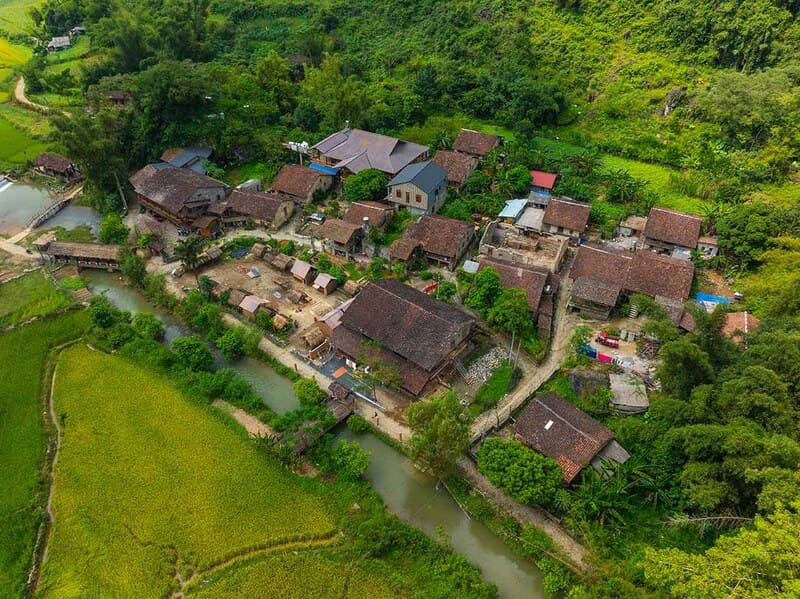
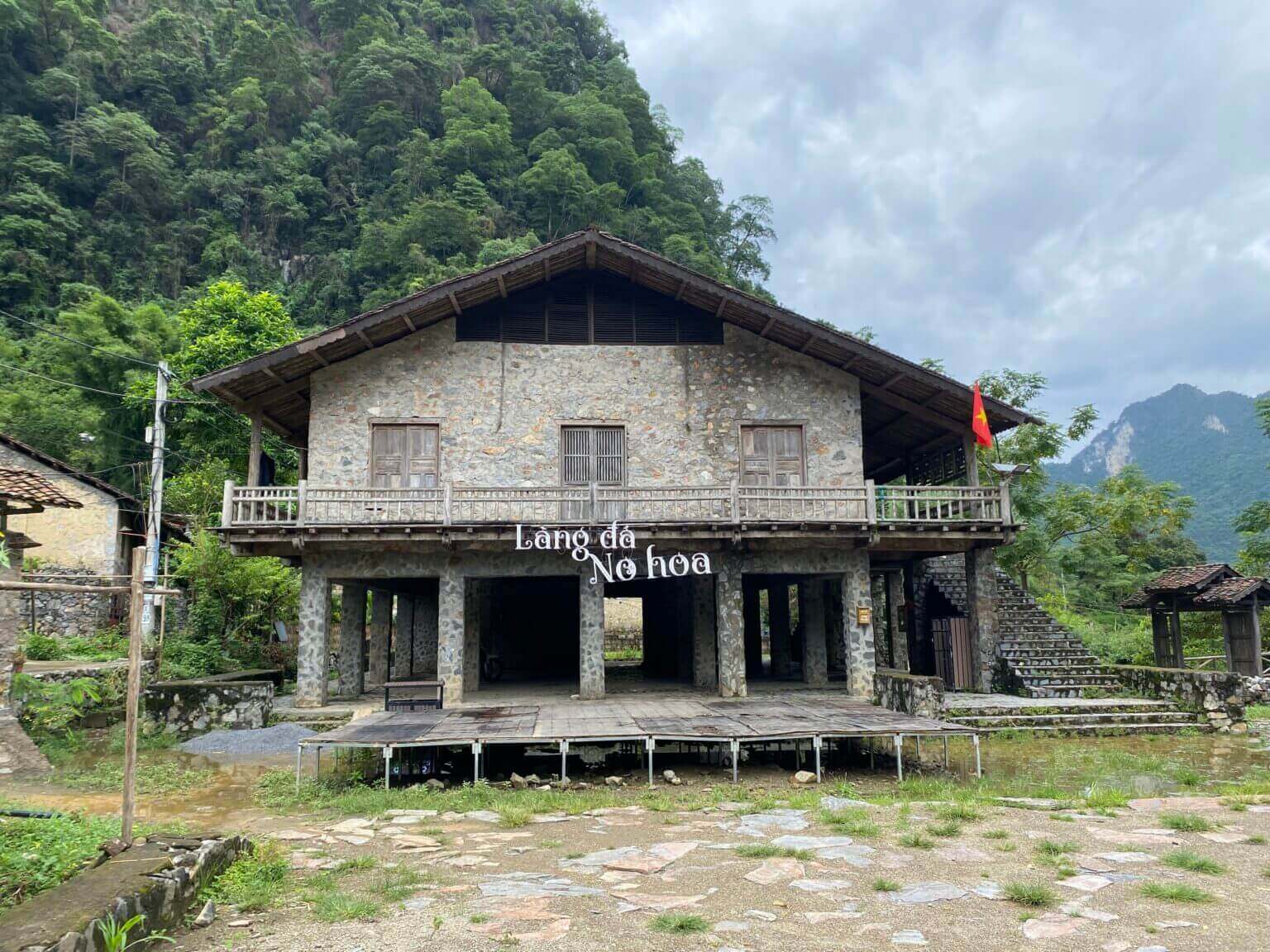
Khuoi Ky is known for its cluster of more than a dozen traditional stone stilt houses built by the Tay people, many of them centuries old. Unlike the familiar wooden stilt houses, these homes feature:
- Stone walls, foundations, steps, rice mortars, and water troughs, all hand-hewn and carefully stacked by generations past.
- Dark brown yin-yang tiled roofs, weathered with moss over the years.
- Wooden frames and floors, with living quarters upstairs and space for livestock and farming tools below.
This style of architecture keeps the houses cool in summer, warm in winter, and resilient in the harsh border-region climate.
A Peaceful Village Setting
As you stroll through the village, you’ll see low stone fences, narrow stone-paved lanes, rice mortars set outside homes, and the shade of ancient trees. Rice fields stretch out in front of the village, with deep green limestone mountains beyond – a picture-perfect setting for photography.
3. The Best Time to Visit Khuoi Ky
- May–June: The rice is green and the landscape feels fresh and vibrant.
- September–October: Golden rice fields are at their most beautiful, and Ban Gioc Waterfall is at its fullest.
- November–December: It’s chestnut season in Trung Khanh, with cool weather and drifting morning mist.
- Spring (January–March): Plum and peach blossoms bloom, and you can pair your visit with early-year festivals.
Visit early in the morning or late in the afternoon for the best light and a particularly peaceful atmosphere.
4. How to Get to Khuoi Ky Ancient Stone Village
From Hanoi to Cao Bang: Overnight sleeper buses take around 7–8 hours. You can also drive or ride a motorbike along National Highway 3.
From Cao Bang City to Khuoi Ky: Head toward Trung Khanh and Ban Gioc. Near the waterfall area, follow the signs for a few more kilometers to the village. The road is paved, though some sections are steep and winding, so take care while driving.
Many visitors combine Khuoi Ky with Ban Gioc Waterfall and Nguom Ngao Cave in a single day, as all three attractions are close to one another.
5. Things to Do in Khuoi Ky
- Walk around the village to admire the stone houses and take photos by the stone fences and rice fields.
- Chat with local residents and learn about Tay traditions and how the stone houses are built.
- Stay overnight in a stone stilt-house homestay to experience the village’s peaceful atmosphere.
- Share a home-cooked meal with your hosts and, if the opportunity arises, listen to then singing and tinh lute music.
- Cycle or walk to Ban Gioc Waterfall along quiet village roads.
6. What to Eat in Khuoi Ky
When visiting the Trung Khanh area, don’t miss these local specialties:
- Trung Khanh chestnuts – rich, fragrant, and sweet, and Cao Bang’s most famous specialty.
- Seven-spice roast duck – crisp skin and richly flavored meat.
- Cao Bang rice rolls served with bone broth.
- Grilled stream fish, mountain greens, and five-color sticky rice.
- Banh khao and ant-egg cakes (seasonal).
7. Where to Stay
- Homestays in Khuoi Ky Village: A good choice for experiencing local culture at an affordable price.
- Guesthouses and homestays near Ban Gioc Waterfall: Plenty of options with convenient access to the sights.
- Hotels in central Trung Khanh or Cao Bang City: More amenities, but farther from the village.
8. Tips for Visiting Khuoi Ky Ancient Stone Village
- Respect local residents: Ask before photographing people or entering homes.
- Help preserve the heritage site: Don’t climb on, write on, or remove stones from the fences.
- Don’t litter; bring a bag for your rubbish.
- What to wear: Wear shoes with good grip, as stone paths can be slippery when wet; bring warm clothes in winter.
- Bring cash, as few places in the village accept cards.
- As this is a border area, carry your ID and don’t enter restricted areas without permission.
9. Suggested Itinerary
Day 1: Cao Bang City → Thang Hen Lake → Trung Khanh → overnight stay in Khuoi Ky.
Day 2: Morning walk around Khuoi Ky → Ban Gioc Waterfall → Truc Lam Ban Gioc Phat Tich Pagoda → Nguom Ngao Cave.
Day 3: Return to the city, stopping at Pac Bo Historical Site if time allows.
Frequently Asked Questions
Is there an admission fee to visit Khuoi Ky Ancient Stone Village?
Visitors can usually explore the village for free, but it’s best to check with local residents, as policies may change.
How long should I spend in Khuoi Ky?
One to two hours is enough to stroll around the village. For a fuller experience, consider staying overnight.
Is Khuoi Ky suitable for families with young children?
Yes. The village paths are flat and the air is fresh, making it a lovely place for a relaxed family outing.
Khuoi Ky Ancient Stone Village is quiet and unassuming, yet that very simplicity makes it a treasure of the Cao Bang borderlands. Spend a morning there, or better still, stay overnight to listen to the stream, watch smoke rise from kitchen fires, and experience a way of life that has endured for centuries within its stone walls.


