Nam Lin Historical Relic Site – Where the First Spark of the Cao Bang Revolution Was Lit
Nam Lin Historical Relic Site – where the first spark of the Cao Bang revolution was lit
Some relics are famous for their scale, while others are worth visiting for a single moment in time. Nam Lin belongs to the latter kind. There are no grand temples here, only a small stream, an ancient water trough, and a stone relief set amid the mountains and forest. Yet it was in this secluded spot, nearly a century ago, that three people did something that changed the course of Cao Bang’s history.
Where is Nam Lin?
The relic site sits by the Nam Lin stream, in Hao Lich Village, Hoang Tung Commune, Hoa An District (under the old administrative boundaries). Following the 2025 administrative restructuring, the site now falls under Hao Lich Residential Group, Thuc Phan Ward. When searching maps, it’s worth looking up both the old and new names.
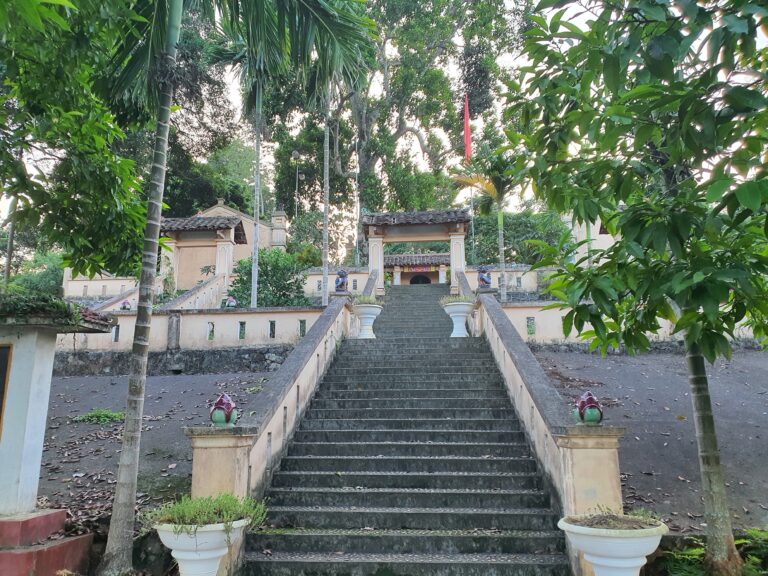
Hoang Tung is also home to Le King Temple and the Na Lu Citadel relic, so you can easily combine these sites into a single day trip on the outskirts of Cao Bang City.
A name that captures the landscape
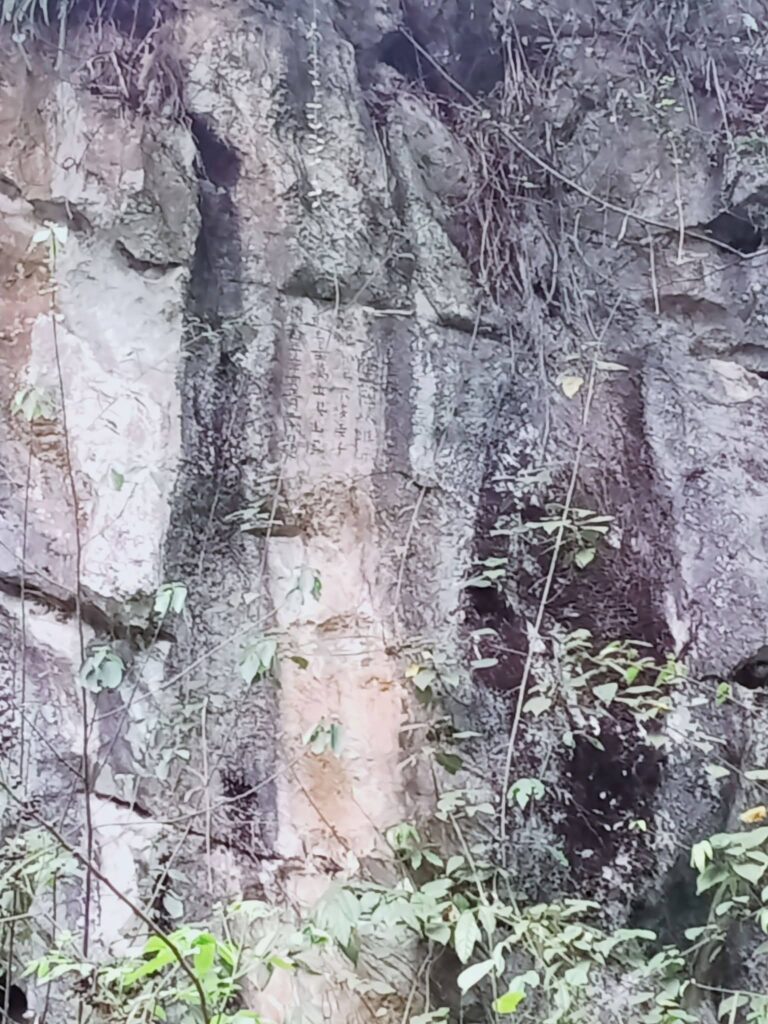
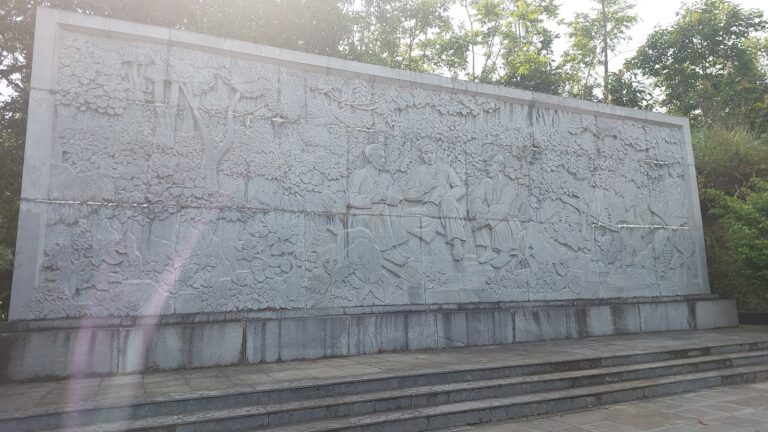
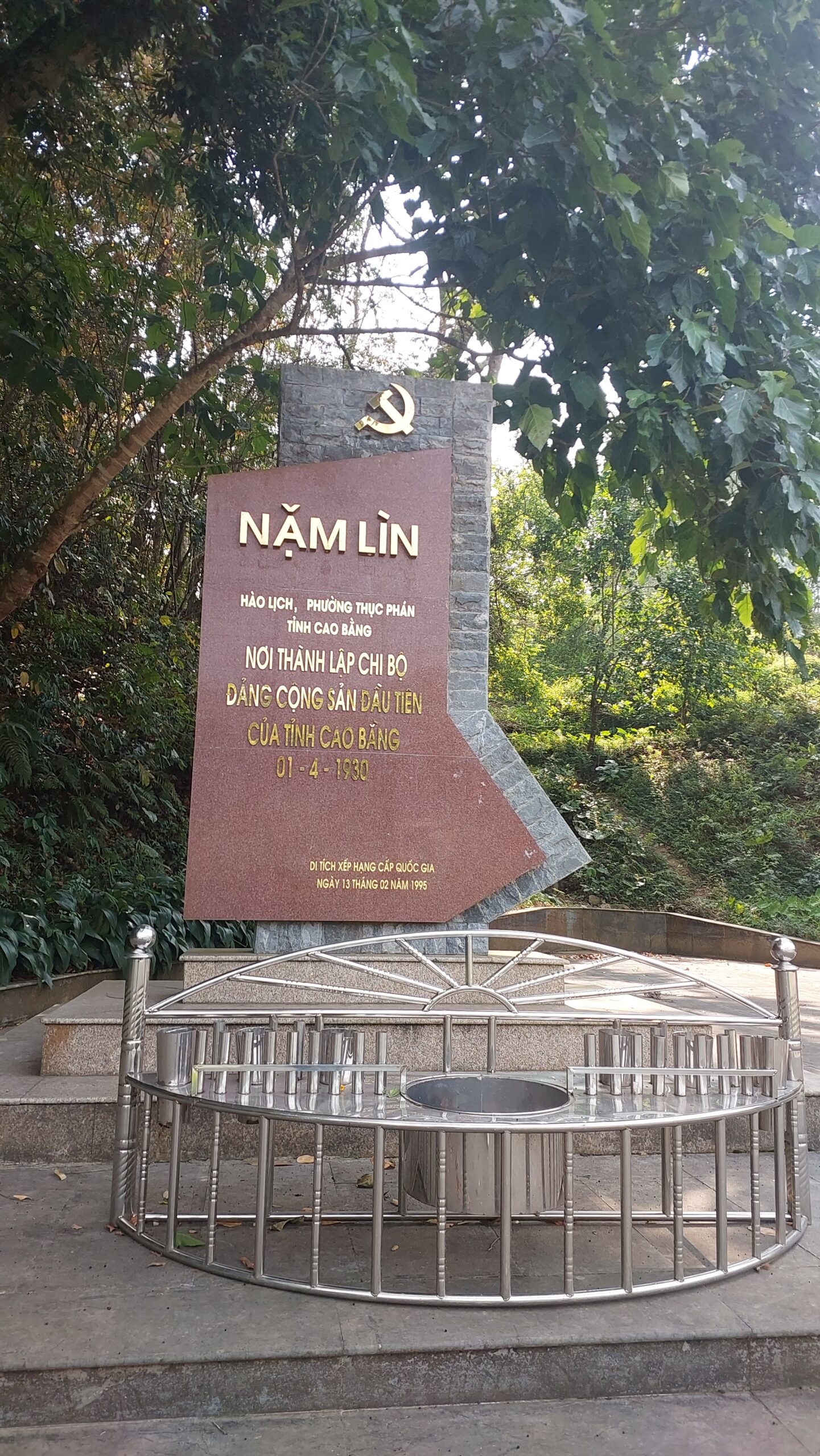
In the Tay language, “nam” means water and “lin” means a water trough. That simple name still fits the scene today. Amid still-pristine natural surroundings, an ancient water trough remains, just about 5 meters from the stone relief bearing the words “Nam Lin – birthplace of the first Communist Party cell of Cao Bang Province (April 1, 1930)”.
Standing beside that small stream, it’s easy to picture why the first Communists chose this place. The stream is secluded, far from any main road, making it ideal for a meeting that demanded absolute secrecy.
The story of April 1, 1930
To understand Nam Lin, we need to go back to early 1930. The Communist Party of Vietnam had just been founded, and the Overseas Cell in Long Chau (China) sent comrade Hoang Van Non back to Cao Bang to prepare the conditions for establishing the province’s first Party cell.
The man behind these preparations was comrade Hoang Dinh Giong, a native son of Cao Bang. In December 1929, he was admitted into the Indochinese Communist Party and elected Secretary of the Overseas Cell in Long Chau. He directed the founding of the province’s first Party cell at Nam Lin.
On April 1, 1930, by the Nam Lin stream, comrade Hoang Van Non, acting on behalf of the Long Chau Cell, admitted comrades Le Doan Chu and Nong Van Do into the Party. He then declared the founding of the first Communist Party cell of Cao Bang Province and became its Secretary.
Just two months after the founding of the Party, Cao Bang already had its own Party organization. This was the first Communist cell in Cao Bang, and also the first in the entire Viet Bac region.
Three people, three lives
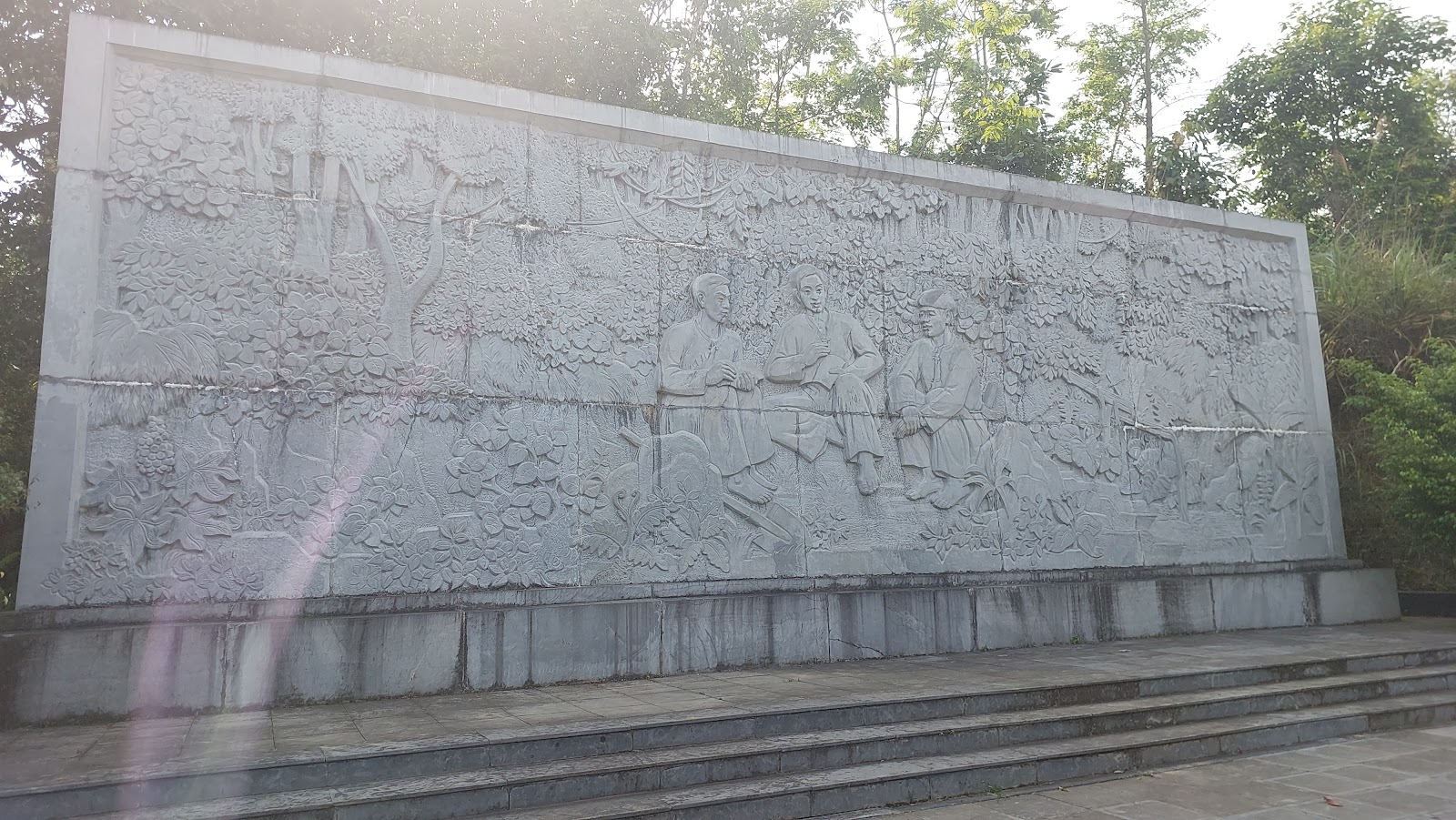
The first three Party members were Hoang Van Non (1907–1968), Le Doan Chu (1901–1979), and Nong Van Do (1905–1962). At the time, they were still very young, most of them in their twenties.
The life of comrade Hoang Van Non is especially worth recounting. In 1928, he traveled to Long Chau at the invitation of Hoang Dinh Giong. In late 1929, together with Hoang Dinh Giong and Hoang Van Thu, he was admitted into the Indochinese Communist Party. Later, he was sent as an official delegate to the 7th Congress of the Communist International in Moscow in 1935. From a small stream in Hoa An, his path led him remarkably far.
When you visit the site, be sure to pause before the stone relief depicting the first three Party members. Looking at their faces and considering their age at the time, you’ll gain a deeper sense of just how courageous that choice was.
From a single spark to a blazing torch
Nam Lin’s greatest significance lies in what followed. From the moment it was founded, the Nam Lin cell took on the role of the provisional Provincial Party Committee, leading the revolutionary movement across the whole province.
From those first three members, by 1935 the Party organization in Cao Bang had grown to 10 cells, operating across five districts: Hoa An, Ha Quang, Quang Uyen, Thach An, and Nguyen Binh. The Nam Lin cell is also linked to the birth of the province’s revolutionary press: the newspaper Co Do (Red Flag), founded by comrade Hoang Dinh Giong, which published its first issue on April 1, 1932, exactly two years after the cell’s founding.
Today, from that original three-member cell, the provincial Party organization has grown to more than 63,600 members across 539 grassroots Party organizations. That is why the people of Cao Bang describe Nam Lin as the place where a small spark was lit, one that would later blaze into a torch.
Visiting the relic site today
The Nam Lin Historical Relic Site was recognized as a National Historical Relic by the Ministry of Culture and Information on February 13, 1995.
When you visit, it’s worth setting aside time for three highlights:
- The stone relief depicting the first three Party members, where visiting delegations often lay flowers and offer incense.
- The ancient water trough and stream near the relief, the silent witnesses to that founding ceremony long ago.
- The memorial house, which preserves documents about the founding of the province’s first Communist Party cell.
The people of Hao Lich take great pride in their homeland. Stories about the first Party cell have been preserved and passed down by locals through many generations. If you get the chance, strike up a conversation with the elders in the village — their stories will make your visit all the more vivid.
Best Time to Visit
On April 1 every year, officials, Party members and people across the province gather at Nam Lin to commemorate the founding site of the province’s first Party cell. Visiting during this time, you’ll witness the solemn atmosphere of the flower-offering ceremony and thematic activities.
On ordinary days, the relic site is peaceful, making it ideal for those who want to explore at a leisurely pace. The dry season, from around October to April of the following year, offers the easiest access and the clearest streams.
A Few Tips
- Dress modestly and maintain a solemn atmosphere, as this is a memorial site.
- Wear comfortable walking shoes if you plan to stroll around the stream.
- Help preserve the landscape — don’t litter or climb on the relief sculptures.
- Combine your visit with the Hoang Dinh Giong Memorial Site in Na Toan and King Le Temple in Hoang Tung for a fuller picture of this land.
Nam Lin doesn’t need grand scale to prove its worth. A stream, a water trough and three people were enough to tell a great story: that from the smallest beginnings, with enough faith, an entire chapter of history can unfold. If you come to Cao Bang wanting to understand where this land’s revolutionary spark began, spend an afternoon by the Nam Lin stream.