Ngu Che Ma Nhai Stele – A King’s Poem Carved in Stone, Guarding the Spirit of Cao Bang’s Border
Amid the rolling limestone mountains of Hoa An lies a quiet cliff face carrying nearly 600 years of history. No roof, no ornate carvings, no grand temple — the Ngu Che Ma Nhai Stele is simply a line of Chinese characters carved straight into the rock, yet it stands as one of Cao Bang’s most treasured National Treasures. If you’re heading to this land, here’s what to know before standing before the cliff of Phja Tem.
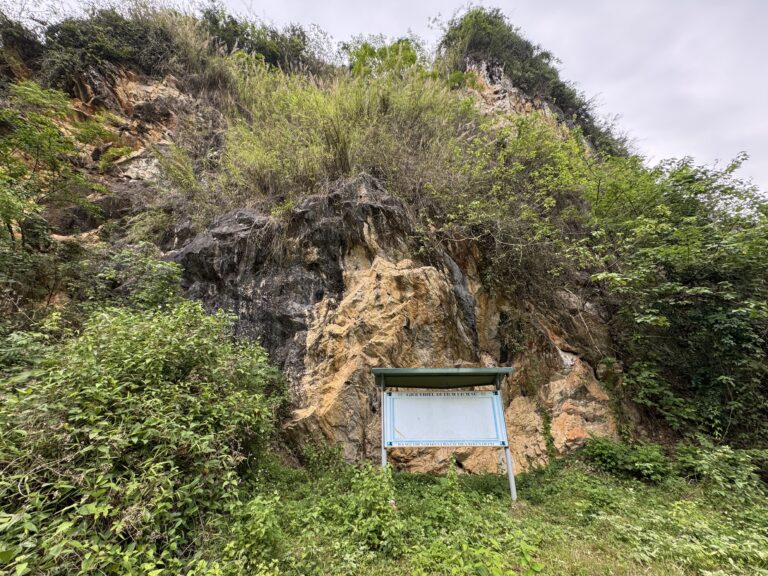
Featured image of the Ngu Che Ma Nhai Stele – National Treasure in Hoa An Commune
What Is the Ngu Che Ma Nhai Stele?
“Ma nhai” means engraving characters directly onto a rock face, while “Ngu che” refers to a work composed by the king himself. Together, the name describes a royal poem carved straight into the mountainside.
Its author was King Le Thai To (Le Loi). Interestingly, the founding emperor of the Later Le dynasty rarely wrote poetry, yet he left behind three poems for posterity, all carved into rock faces — and the one in Cao Bang is among them.
The History Behind the Cliff
The stele records a significant event: in the 4th year of the Thuan Thien era (1431), Le Thai To personally led troops north to capture the rebellious local chieftain Be Khac Thieu. At the time, the Le dynasty had only recently driven out the Ming army, and carving a poem into the rock of this border region carried deep meaning — asserting Dai Viet’s sovereignty over its territory under Le rule.
So standing before the stele is more than admiring an ancient relic — it’s touching a milestone that affirmed the nation’s borders at this northern frontier outpost.
Where Is the Stele Located?
The stele is carved into Phja Tem Mountain in Binh Long Commune, Hoa An District, Cao Bang Province. Phja Tem (also known by its old name, Ba Diem) is a small mountain overlooking the Re Dao River. The site is considered an excellent spot by feng shui standards: a rugged cliff face fronted by a picturesque river.
Note: Since 2025, Cao Bang has reorganized its commune-level administrative units and eliminated the district level, so the current name of the commune may have changed. When navigating, search for “Ngu Che Stele” or “Phja Tem Mountain” on the map and ask local residents for directions.
What Does the Stele Look Like in Person?
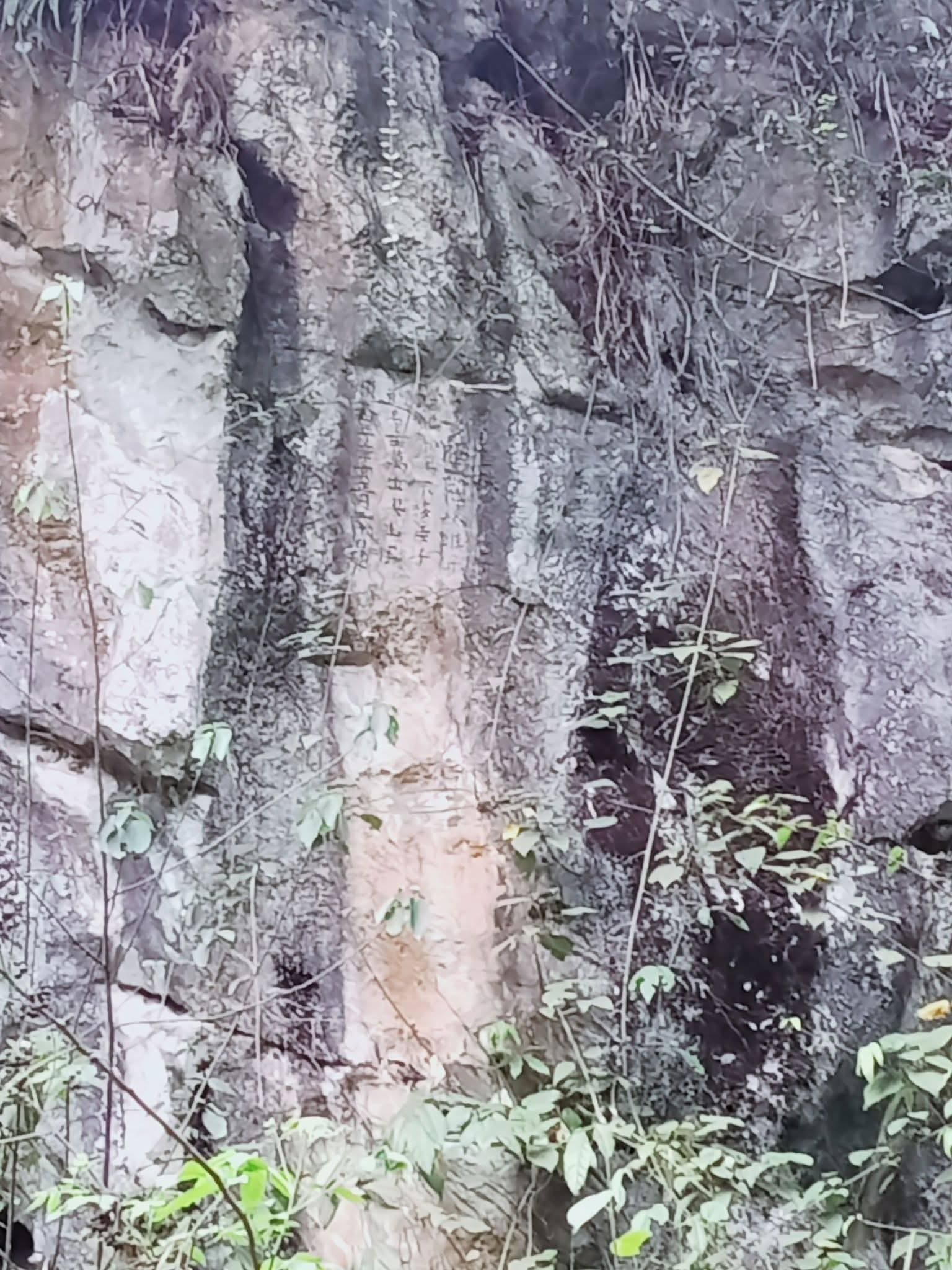
Don’t picture an upright stone slab like those at the Temple of Literature. The Ngu Che Stele is much simpler:
- The poem consists of 56 Chinese characters arranged in 8 vertical columns, read continuously from left to right.
- The characters are carved in regular script (khai style) — large, clear, and easy to read.
- Since they were carved directly into the cliff, the surface isn’t flat, has no decorative border, and no roof covering it.
- After nearly six centuries of sun and rain, some strokes have worn down and moss now covers parts of the surface.
It’s exactly this rustic quality, blending into the mountain itself, that gives the site its distinctive sense of reverence.
Significance: A National Treasure
In early 2020, the Ngu Che Ma Nhai Stele in Cao Bang was officially recognized as a National Treasure. Among Le Loi’s rock-carved poems is also a stele in Lai Chau — a poem carved into a mountain in Le Loi Commune (Nam Nhun, Lai Chau), which was likewise recognized as a National Treasure back in 2018. For anyone who has visited the Northwest region, these two make a fascinating pair of heritage sites to compare.
Tips for Visiting the Ngu Che Ma Nhai Stele
Best time to visit: The dry season (roughly October to March) offers dry, easy-to-travel roads and clear skies. During the rainy season, the cliff face turns slippery with heavy moss, and dirt roads can get muddy. The current month of October is actually an ideal time to go.
Getting there: A motorbike or self-driven car from central Cao Bang is the most convenient option. The final stretch to the base of the mountain is usually a narrow road, so it’s best to ask locals for directions before heading in.
What to wear: Wear shoes with good grip and long pants, and bring water and mosquito repellent, as the area is near the river and surrounded by vegetation.
Visitor etiquette: Don’t touch the surface, scrape off the moss, or write or draw on the rock face. The already-worn characters are very easily damaged further. If you wish to burn incense, do so only in the designated area and keep the site clean.
Photography tips: Visit in the early morning or late afternoon — the slanting light brings out the carved characters more clearly in photos.
Do your research first: Reading the poem’s translation and the story of 1431 beforehand will make your visit far more meaningful than simply looking at a cliff with inscriptions on it.
Combine with Other Sites Around Hoa An
The Ngu Che Stele makes a great stop on a journey through Hoa An’s historic sites. You can pair it with:
- Na Lu Citadel – remnants of an ancient citadel in Hoa An
- Ky Sam Temple and the Twin Bells of Vien Minh Pagoda
- Nui Thung (Hollow Mountain) – Ngu Lao
- Pac Bo Relic Site
If you have more time, don’t miss Ban Gioc Waterfall and Nguom Ngao Cave, the two standout destinations of the Non Nuoc Cao Bang UNESCO Global Geopark.
The Ngu Che Ma Nhai Stele isn’t flashy, and it’s far from a crowded “check-in” spot. But that’s exactly why it retains the solemn quiet of a true historical witness: a few dozen carved characters, enough to remind us that nearly 600 years ago, the territory at this remote frontier was affirmed by both sword and verse. On a trip to Cao Bang, spending half a day at Phja Tem is a truly worthwhile experience for anyone who loves history.