Mac Dynasty Citadel Relic Site – Traces of Nearly 80 Years as a Capital in the Heart of Cao Bang
Amid the peaceful fields and hamlets of Thuc Phan Ward, few would guess that the ground beneath once held the capital of a royal dynasty. More than four centuries ago, the Mac dynasty withdrew from Thang Long, moved up to Cao Bang to rebuild its power, and ruled from here for nearly 80 years. The Mac Dynasty Citadel Relic Site in Ban Thanh, with its earthen ramparts, ancient well, and artifacts buried underground, is a place where you can touch this little-told chapter of history.
Where Is the Relic Site?
The relic site lies in the Cao Binh area, Ban Thanh Hamlet, Thuc Phan Ward (formerly part of Hung Dao Commune, Cao Bang City). Since July 2025, Thuc Phan Ward has been established from the former Song Hien, De Tham, and Hop Giang Wards together with Hung Dao and Hoang Tung Communes.
The ancient land of Cao Binh stretched along both banks of the Bang Giang River, at the center of the Hoa An basin. On the map, search for “Mac Dynasty Citadel Relic Site” to get directions.
When the Mac Dynasty Moved to Cao Bang
In 1592, Le dynasty forces marched north and recaptured Thang Long. The Mac dynasty withdrew to Cao Bang, choosing the central Hoa An area as its capital and relying on the rugged mountain terrain to build its stronghold. Two sites were chosen as royal capitals: Na Lu (Hoang Tung) and Cao Binh (Hung Dao), with the royal palace established at Cao Binh.
To guard against attacks from Le forces, the Mac dynasty repaired and reinforced Na Lu Citadel and Ban Phu Citadel, turning the area into a political and military center. The Mac dynasty held power in Cao Bang from roughly 1594 to 1677.
In the writings of feudal-era historians, the Mac dynasty was once branded an “illegitimate court.” But according to Cao Bang Newspaper, the period when the Mac dynasty ruled from Cao Bang brought remarkable socio-economic development to Cao Bang and the northeastern provinces, while leaving behind a rich legacy of tangible and intangible cultural heritage for local ethnic communities.
Ban Phu Citadel – Where the King Governed
Ban Phu Citadel was the inner citadel, where the king carried out his royal duties. After moving to Cao Bang, the Mac dynasty built higher ramparts atop the old walls, on a flat stretch of land surrounded by rivers and rice fields.
Interestingly, this site is also tied to an even older legend. According to the Tay people of Cao Bang, Ban Phu Citadel was built by Thuc Che, father of Thuc Phan An Duong Vuong, and is linked to Nam Binh, the capital of the ancient Nam Cuong kingdom, as well as the legend of the “Nine Lords Vying for the Throne.” The Mac dynasty later restored the inner citadel of this old capital as its royal palace.
Discoveries from Beneath the Ground
The Mac Dynasty Citadel Relic Site has undergone several archaeological excavations, each uncovering new secrets.
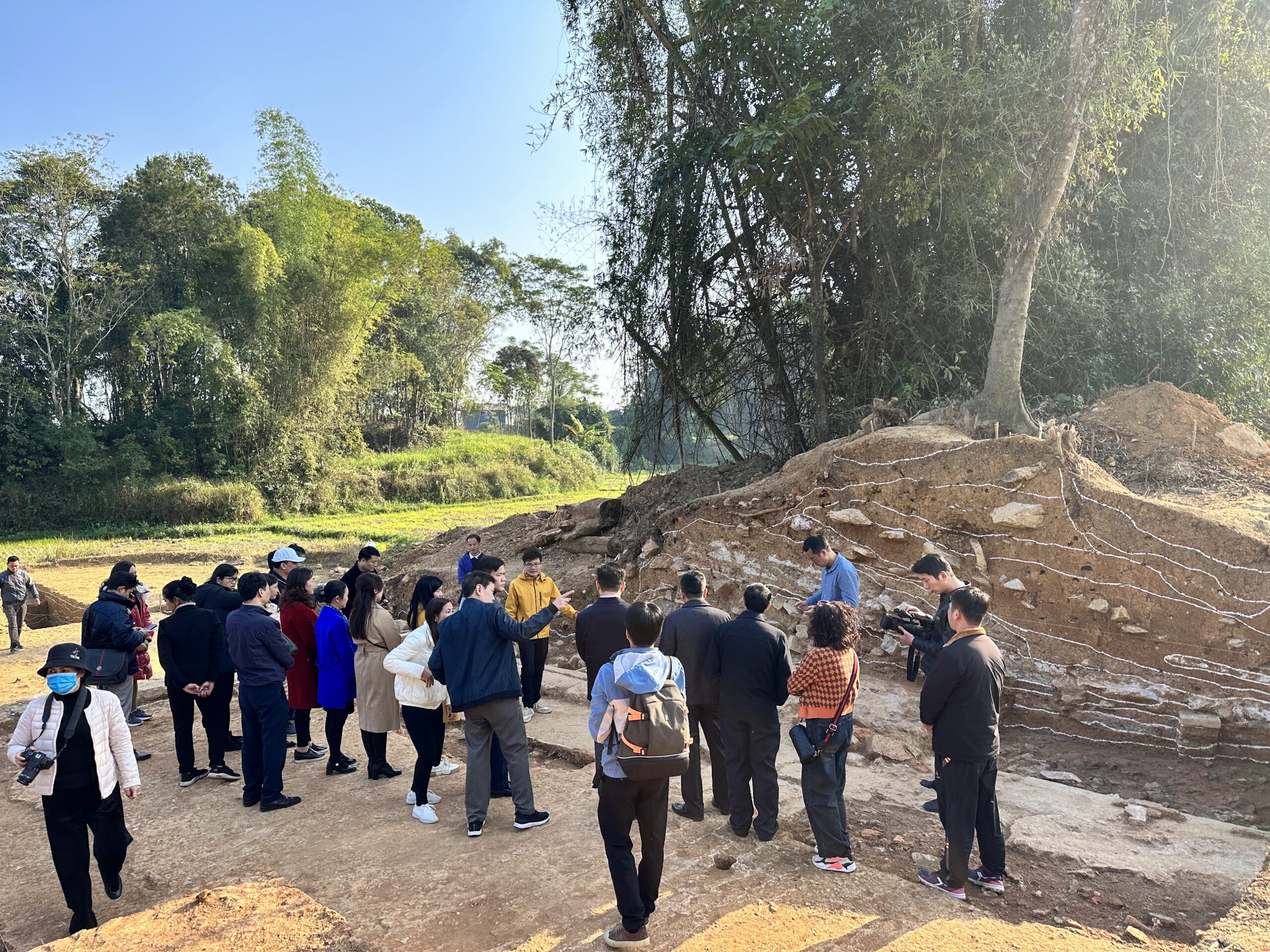
2010: An archaeological team dug a cross-section through the rampart in Ban Phu Hamlet. The results showed the top of the wall was over 1m wide and 2.5m high, with the base flaring out to nearly 6m wide, made up of about eight layers of compacted earth stacked on top of one another.
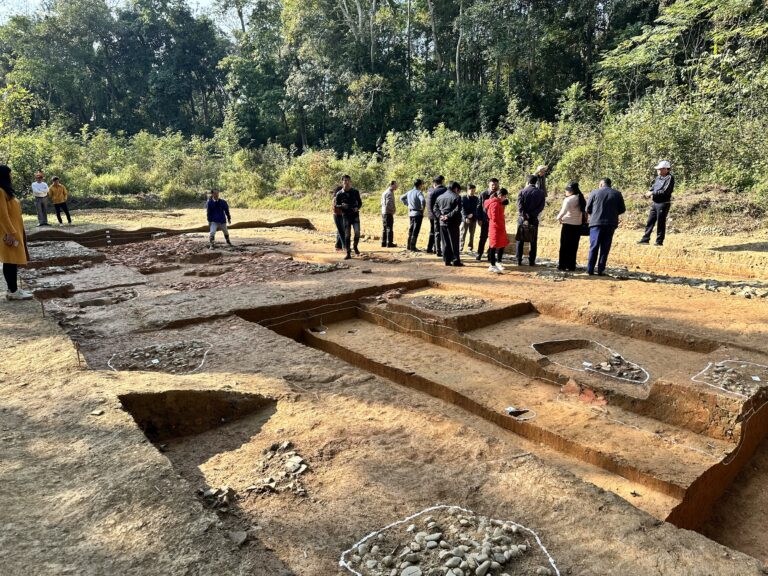
2023: The Institute of Archaeology, in coordination with the Cao Bang Department of Culture, Sports and Tourism, carried out excavations at Ban Phu Citadel, Na Lu Citadel, and Ban Thanh Hamlet. Based on the artifacts uncovered, the research team concluded that Ban Phu Citadel was built around the 17th century, corresponding to the period when the Mac dynasty ruled from Cao Bang.
2026: At a seminar presenting the findings, scientists reported that Ban Phu Citadel was essentially built from gravel-mixed earth. At the Vuon Dan site, structures emerged dating from the late Tran dynasty, the early Le dynasty, and the Le Trung Hung–Mac period. At the nearby “Ban Thanh Stone Clogs” megalithic site, large stone slabs were found resting on stone pillars, chamfered bricks, and reinforcing wooden stakes, alongside numerous feudal-era artifacts and fragments of Chinese Ming-dynasty porcelain dating to the early 15th century.
These discoveries confirm that Cao Bang is an ancient land, home to large-scale architectural works and layers of historical value spanning from the 9th to the 17th century.
Exploring the Relic Site
Rampart Remains: Despite more than four centuries having passed, the earthen rampart line is still fairly clearly visible amid the fields and local gardens. Walking along it, you can picture the scale of the ancient capital.
Ancient Well from the Mac Era: Visitors here often stop by the ancient well dating back to the Mac dynasty. According to locals, its water is clear and sweet. The well is also regarded as a spiritual site of the area.
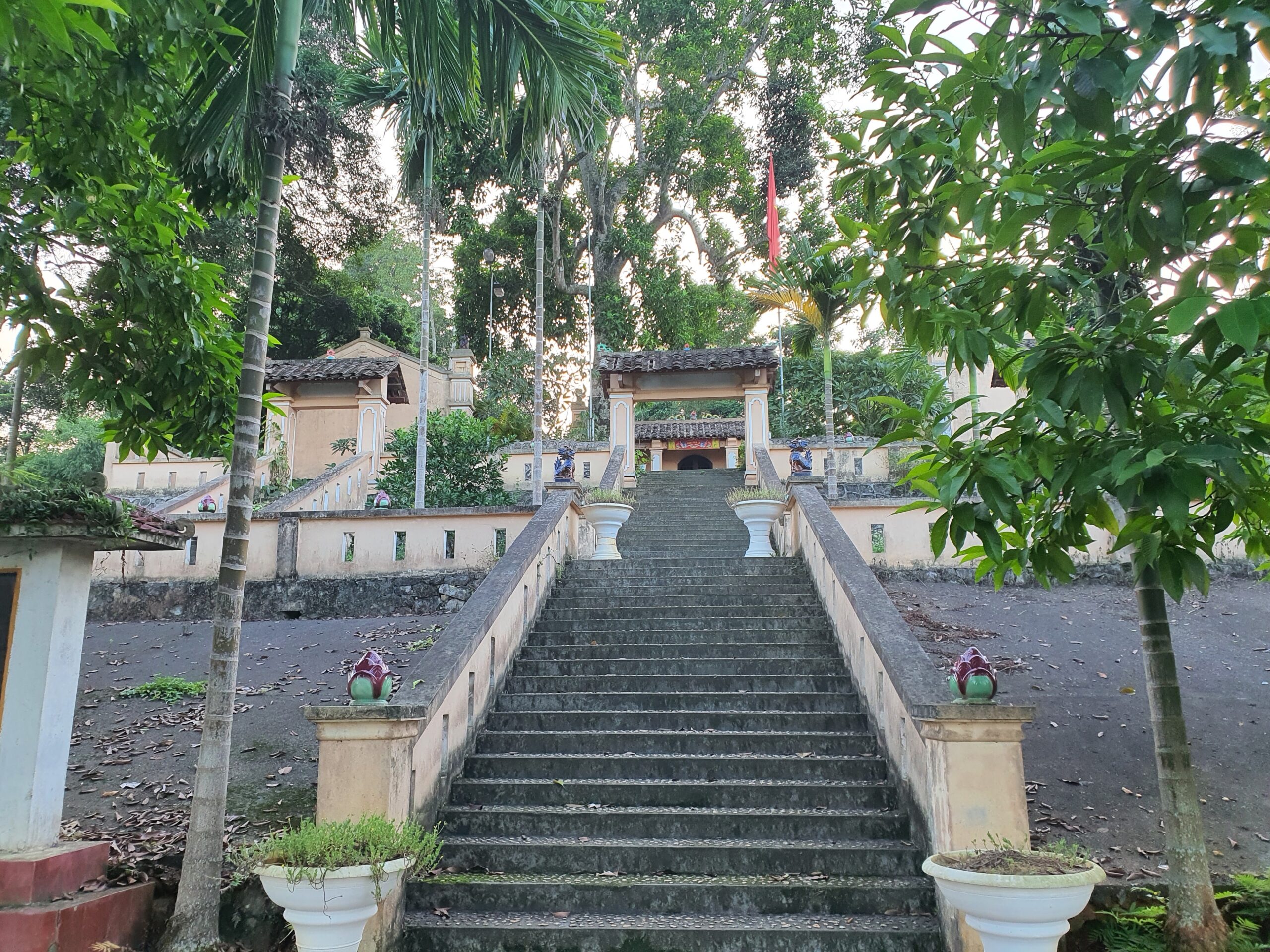
Nearby relics: Around the site, there are several other locations linked to the Mac Dynasty, such as the Ban Thanh Royal Academy, Ngoc Well – Bo Phu, and the lotus pond.
Ban Thanh Stone Steps: a nearby megalithic relic where archaeologists have made several new discoveries.
Tracing the Mac Dynasty’s Footsteps in Cao Bang
The Mac Dynasty Citadel Relic Site is part of a cluster of Mac Dynasty relics in Thuc Phan Ward:
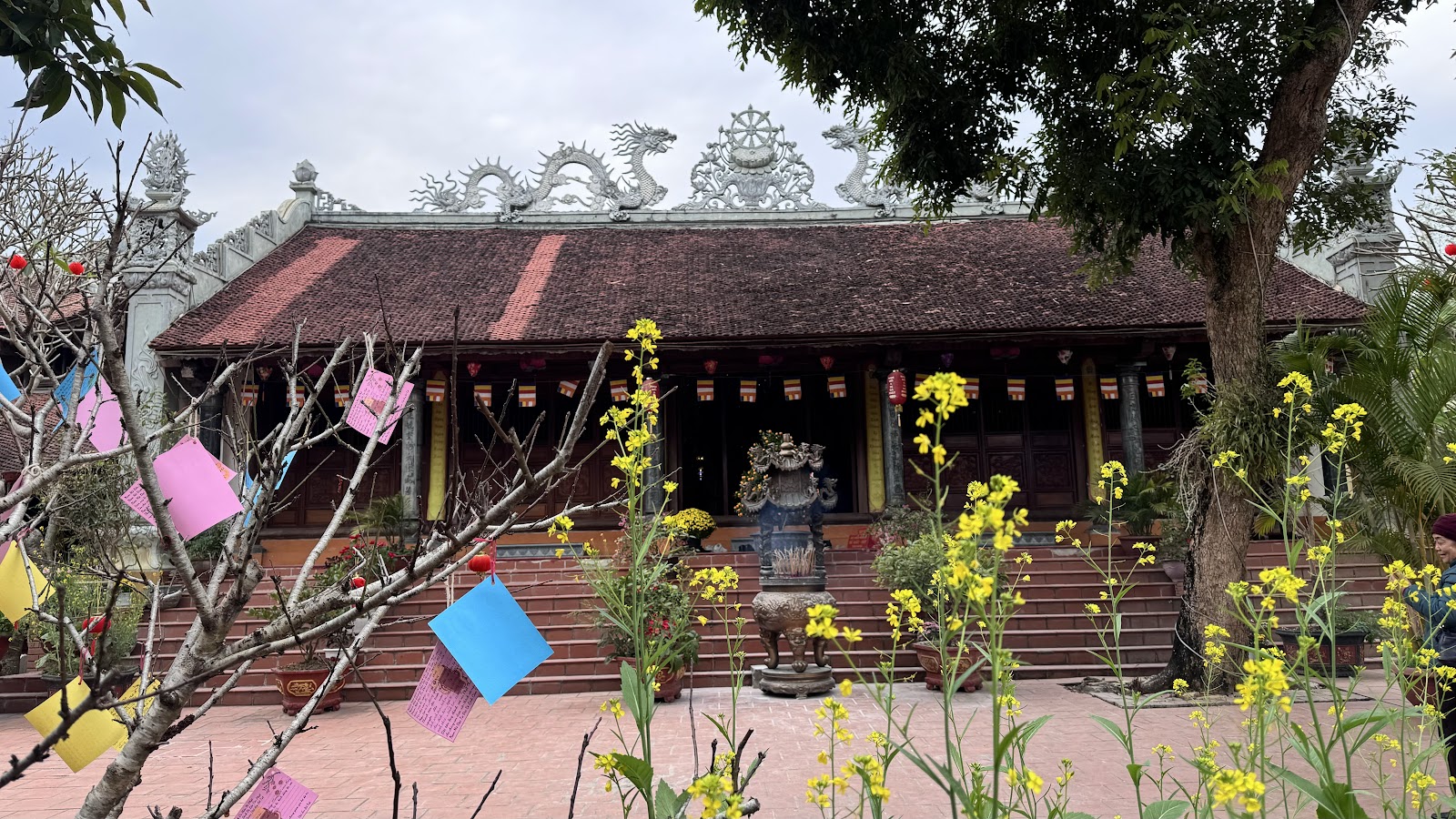
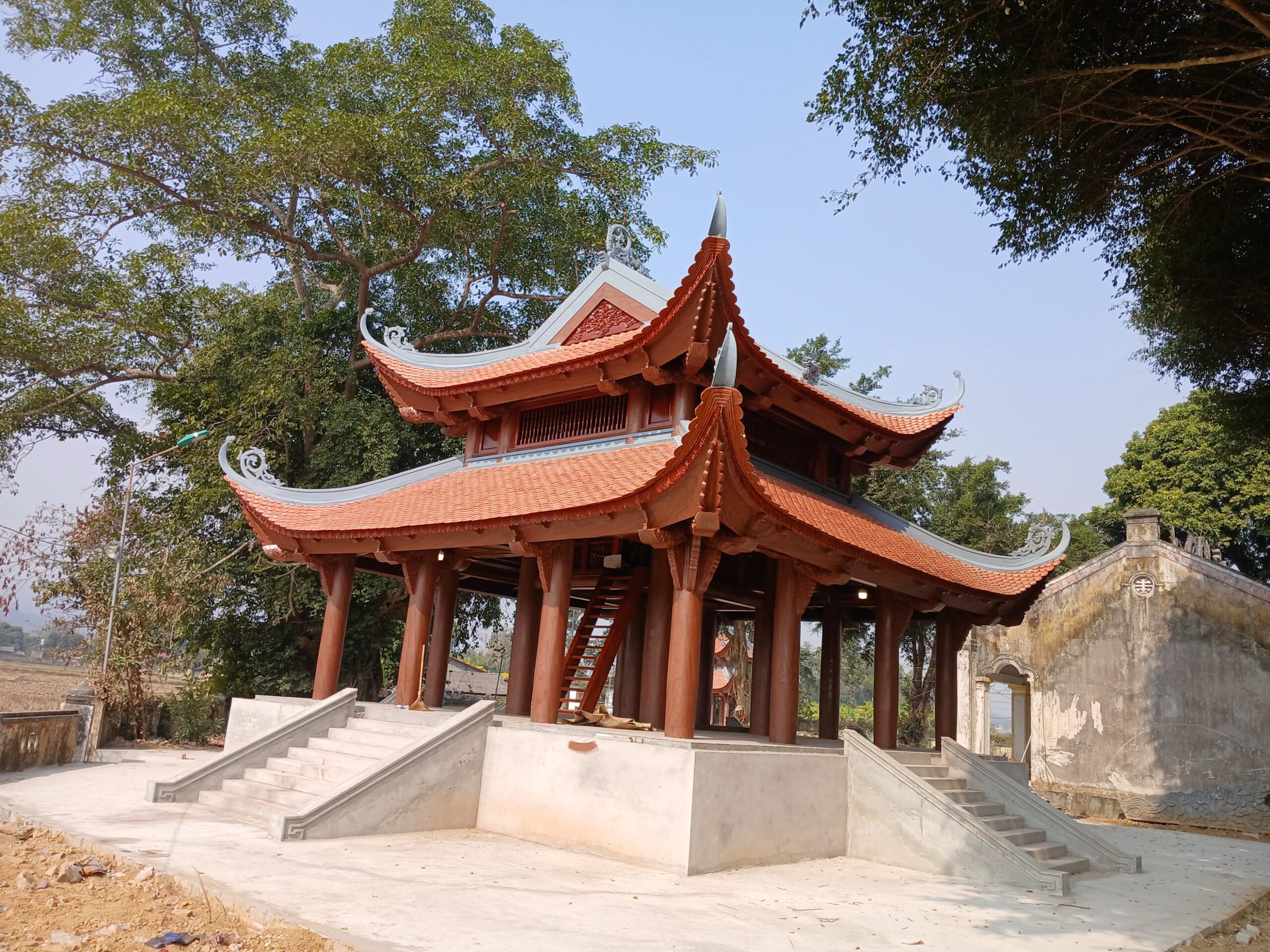
- King Le Temple (Hoang Tung): built on the foundation of Na Lu Citadel, once a Mac Dynasty palace before being converted into a temple dedicated to Le Thai To.
- Dong Lan Pagoda: a pagoda rebuilt by a Mac Dynasty empress in 1611, with traces of a Mac Dynasty detached palace behind it.
Visiting all three sites will give you a complete picture of nearly 80 years of Mac Dynasty rule on Cao Bang soil.
Visiting Tips
- The site sits within a residential area: ask local residents for permission before entering gardens or fields to view the remaining wall traces.
- Do not dig or collect artifacts: every artifact belongs to the heritage site and must be protected.
- Keep the ancient well clean: do not litter or pollute the water source used by local residents.
- Consider going with a knowledgeable guide or doing some research beforehand to fully appreciate the site’s value, since the remains are mostly earthen walls with no reconstructed structures.
Final Thoughts
The Mac Dynasty Citadel Relic Site has no grand palaces or sturdy stone walls. There are only earthen embankments, an ancient well, and artifacts buried deep underground. Yet this very place once served as the capital of a dynasty for nearly 80 years. Standing in the middle of the Ban Thanh fields, you’ll realize that Cao Bang’s history runs far deeper than most people imagine.