


Ban Gioc Waterfall – A Guide to Cao Bang’s Most Majestic Waterfall
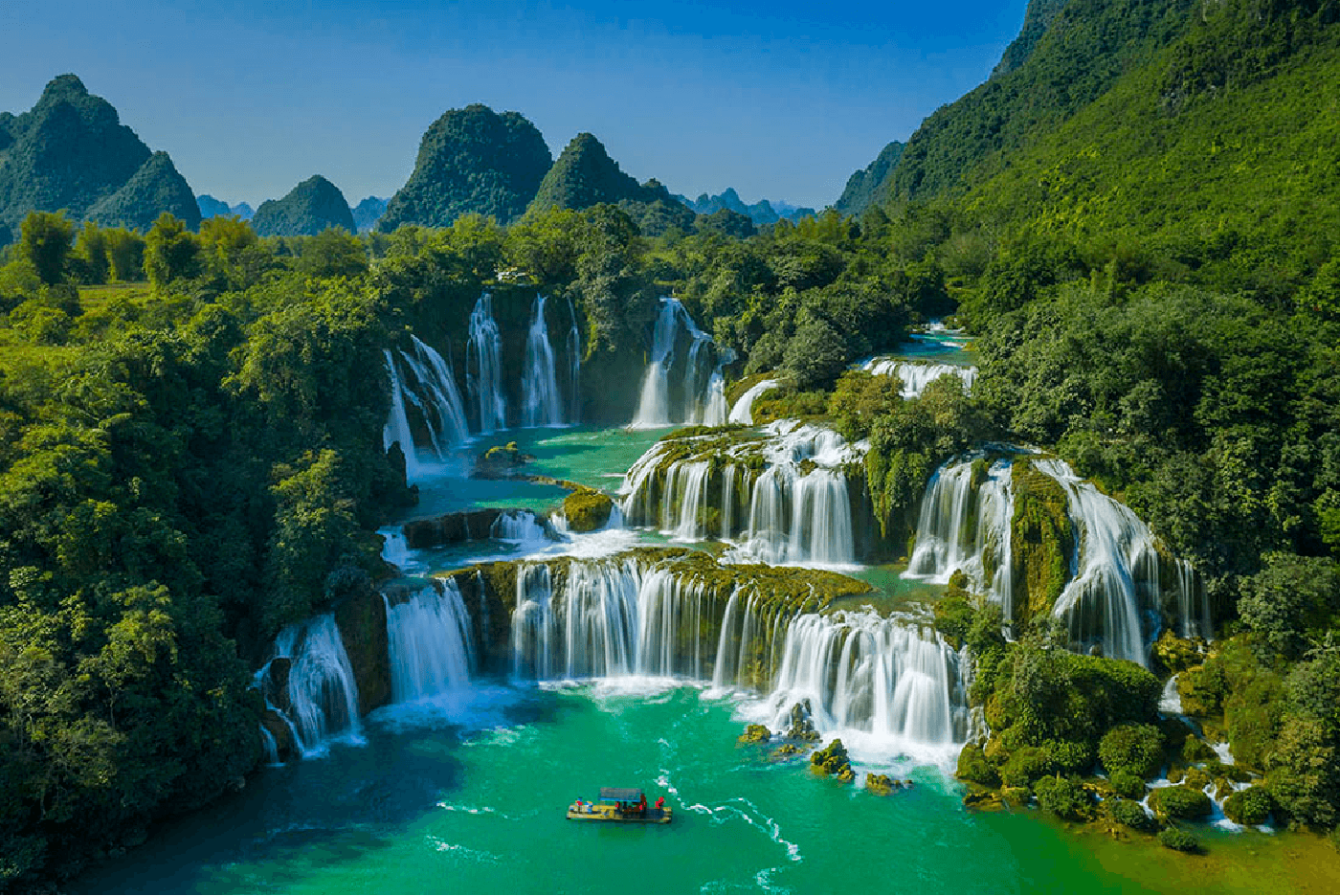
Amid the rolling limestone mountains and terraced rice fields of northeastern Vietnam, Ban Gioc Waterfall appears like a giant white silk ribbon cascading into the emerald waters of the Quay Son River. It is the largest natural waterfall in Southeast Asia and a must-see on any trip to Cao Bang. This guide covers everything you need to know before visiting Ban Gioc Waterfall.
Where is Ban Gioc Waterfall?
Ban Gioc Waterfall lies on the Quay Son River in Dam Thuy Commune, Cao Bang Province (formerly part of Trung Khanh District), right on the Vietnam–China border. It is about 85 km from Cao Bang city center and 335–360 km from Hanoi. On the Chinese side, the waterfall is known as Detian Waterfall.
The waterfall is about 53 m high, with three tiers and a total width of more than 200 m. Ban Gioc is often ranked among the world’s largest border waterfalls, after Iguazu, Victoria and Niagara. It has two sections: the main falls, known locally as the Big Falls, plunge powerfully downstream, while the smaller falls flow gently in several narrow streams through the greenery.
When is the best time to visit Ban Gioc Waterfall?
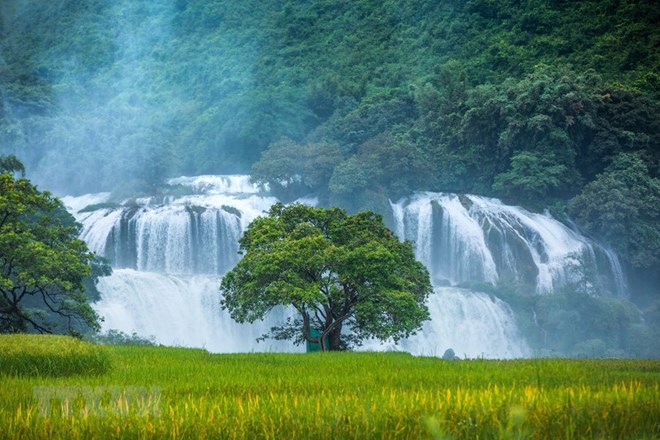
Ban Gioc Waterfall takes on a different character in each season. The ideal time to visit is from August to October.
| Time of year | What to expect | Best for |
|---|---|---|
| June–July | High water levels, roaring falls and lush green rice fields | Thrill seekers; keep an eye on rain and flooding |
| August–October | Full falls, clear skies and golden rice fields around the waterfall | Photography and family trips—the best time of year |
| November–December | Clear turquoise water, cool weather and scattered buckwheat flowers | Those seeking a quieter visit |
| January–May | Dry season, gentler falls and crystal-clear water | Budget travelers and those looking to avoid crowds |
Tip: Visit early in the morning, when the low-angle sunlight creates a rainbow in the spray and the viewing area is still quiet. Avoid days of prolonged heavy rain, as bamboo raft rides may be suspended.
How to get to Ban Gioc Waterfall
From Hanoi to Cao Bang: You can travel by coach or sleeper bus (6–8 hours). Some operators run direct services from Hanoi to Ban Gioc, saving time. Those driving or riding a motorbike usually take the Hanoi–Thai Nguyen Expressway, then National Highway 3.
From Cao Bang city center to the waterfall: The journey is about 85 km and takes around 2–2.5 hours. The road is paved and in good condition, but has many bends, especially at Ma Phuc Pass. You can take a bus from Cao Bang Bus Station, hire a taxi or a car with a driver, or rent a motorbike and ride yourself.
On arrival: Cars and motorbikes can park in local lots beside the ticket entrance. After parking, buy your admission ticket and walk straight into the waterfall area. The shuttle electric carts that used to operate here are no longer available.
See also: Tips for riding a motorbike on the Cao Bang route
Ban Gioc Waterfall ticket prices and opening hours
Prices are indicative and may change. Please check at the ticket counter.
| Item | Price (VND) |
|---|---|
| Adult admission | 40,000 per person |
| Child admission (ages 6–10) | 20,000 per person |
| Bamboo raft ride near the foot of the waterfall | 50,000 per person per ride |
| Parking in local lots near the entrance | Rates vary by lot; ask before parking |
Opening hours: 7:30 am–5:00 pm daily; in summer, hours may extend to 8:00 pm.
Things to do at Ban Gioc Waterfall
- Take a bamboo raft to the foot of the waterfall. This is the highlight: the raft brings you close to the cascade, where cool mist hits your face and the falls roar around you. Wear a life jacket and protect your phone.
- Take in the view from above. Viewpoints along the approach road and at Truc Lam Ban Gioc Pagoda offer sweeping views of the main and smaller falls and the rice fields.
- Walk along the banks of the Quay Son River. A path beside the rocky shore leads to the smaller falls, where clear cascades make a great backdrop for photos.
- Visit border marker 836 (836/1 and 836/2). The marker highlights the waterfall’s unique border location. Follow posted signs and instructions from border guards.
- Take photos in traditional Tay or Nung clothing. Several vendors near the waterfall rent traditional outfits, making for distinctive photos of the region.
Places to visit near Ban Gioc Waterfall
The waterfall is in the Non Nuoc Cao Bang UNESCO Global Geopark, so there are many worthwhile stops within a few dozen kilometers:
- Nguom Ngao Cave: About 5 km from the waterfall, this cave stretches for more than 2 km and is filled with sparkling stalactites. It is easy to visit on the same day.
- Truc Lam Ban Gioc Pagoda: Set on a hill beside the waterfall, it is both a place of worship and a scenic viewpoint.
- Phuc Sen Blacksmithing Village and Phua Thap Incense-Making Village: Two traditional Nung craft villages along the route from the city to the waterfall.
- Ma Phuc Pass: A winding mountain pass with a series of sharp bends and a popular photo stop.
- Pac Bo Historical Site and Ba Be Lake: Often combined with Ban Gioc Waterfall on a three-day, two-night itinerary.
What to eat at Ban Gioc Waterfall
Dining near Ban Gioc Waterfall is easy, with plenty of restaurants and eateries ranging from casual spots to places that can accommodate large groups. Most serve local specialties. Ask about prices before ordering, especially for dishes priced by weight, such as river fish. Local favorites include:
- Trung Khanh chestnuts: Rich and nutty, they are in season from August to October and sold at many roadside stalls.
- Quay Son River fish: Try it grilled or fried at one of the eateries near the waterfall.
- Roast duck and roast pork with mac mat leaves: Cao Bang specialties known for crisp skin and fragrant mac mat leaves.
- Banh cuon with bone broth, sour pho and banh ap chao: Popular breakfast dishes in the city.
See also: Top Cao Bang specialties
Where to stay near Ban Gioc Waterfall
Staying near the waterfall means less time on the road and a chance to catch sunrise over the Quay Son River. Two popular options are:
- Homestays in Dam Thuy Commune: Stay in a stilt house or a traditional Tay or Nung home. Many overlook the rice fields and waterfall. Book ahead during rice harvest season and on weekends.
- Hotels and resorts near the waterfall: A more comfortable option, especially for families traveling with older adults or young children.
If you are short on time, you can stay in Cao Bang city center and make a day trip.
Tips to keep in mind when visiting Ban Gioc Waterfall
- Bring identification: This is a border area, and you may be asked to show your documents.
- Respect the border: Do not enter restricted areas or take photos where signs prohibit them.
- What to wear: Wear shoes with good grip for slippery rocks and bring a light rain jacket to protect against the heavy spray. Bring warm clothes in winter.
- Cash: Bring cash, as many small shops and service providers do not accept bank transfers.
- Mobile signal: Near the border, your phone may connect to a Chinese network and incur roaming charges. Turn off international roaming.
- Keep the area clean: Take your rubbish with you and do not carve or write on the rocks.
Frequently asked questions about Ban Gioc Waterfall
How long does a visit to Ban Gioc Waterfall take?
Allow around 2–3 hours for the waterfall and pagoda, or a full day if you also visit Nguom Ngao Cave.
Do I need a passport to visit?
No, not for the Vietnamese side of the waterfall. However, visiting the shared scenic area on the Chinese side involves separate procedures, so check with the management board in advance.
Can young children and older visitors make the trip?
Yes. The parking area is right by the ticket gate, so the walk to the waterfall is short, and the main path is fairly level. Just take care when riding a raft and walking on the rocky banks.
Can I swim at the waterfall? It’s not recommended. The current at the base of the falls is strong and unpredictable, especially during the rainy season.
Ban Gioc Waterfall is more than a beautiful cascade. It offers a vivid glimpse of the Northeast’s dramatic mountains and forests, as well as the peaceful daily life of communities along the border. Visit in the right season, prepare well, and set aside at least a full day—your trip to Ban Gioc Waterfall is sure to leave you with lasting memories. For an even more rewarding visit, check out our 3-day, 2-night Cao Bang itinerary.


