Dong Lan Pagoda – the Ancient Bell on Cao Bang’s Lan Mound
Dong Lan Pagoda – the Ancient Bell on Cao Bang’s Lan Mound
Some pagodas are places people visit to pray for peace. Some are places people visit to hear a good story. Dong Lan Pagoda is both. Behind its triple gate, carved with the words “Tu Bi” (Compassion), lie tales of two brothers who slew a monster, of Thach Sanh from Tay legend, and of Mac dynasty queens and princesses who once chanted sutras here. If you want to understand the spiritual life of Cao Bang, set aside a leisurely morning for this pagoda.
Where is the pagoda?
The pagoda sits on Dong Lan Mound, called “Doong Lan” in Tay, northwest of Cao Bang City, beside Provincial Road 203. It used to belong to Hung Dao Commune. Since July 2025, Hung Dao Commune has been merged into Thuc Phan Ward, so when searching the map, look for both the old and new names.
From the city center, it’s just a few minutes away by motorbike or car. The area sits close to King Le Temple and the Na Lu Citadel relic site, making it easy to combine into one Le–Mac dynasty heritage trip.
A name wrapped in mystery
The name “Dong Lan” has several explanations, each tied to legends from different eras. One theory holds that it derives from “Tong Lan,” meaning “rolling drum,” later mispronounced as “Dong Lan.” Another holds that the pagoda sits on a mound shaped like a “lan” (a mythical unicorn-like creature).
This very uncertainty is part of what makes the visit so fascinating. Ask the local elders when you arrive — each seems to have their own version of how the name came to be.
From a shrine to heroes to a place of meditation
The pagoda’s history unfolds in many layers. Legend has it that before the pagoda was built, a shrine already stood on Dong Lan Mound dedicated to two brothers, Tran Quy and Tran Kien. Gifted with extraordinary powers, the two young men slew a monster and freed the people from its menace. In gratitude, villagers built a shrine and made offerings every spring and autumn. The chronicle “Cao Bang Thuc Luc” records many details of the brothers’ origins and talents.
Their merit was also recognized by the royal court. Under the Le dynasty, Tran Kien was honored with the title Cai Cong Dai Vuong, and Tran Quy with the title Dong Lan Dai Vuong.
According to local records, the pagoda was built to worship the Buddha from the late 11th century, under the Ly dynasty. What began as a shrine to folk heroes gradually became a place of Buddhist meditation.
The pagoda of the Mac dynasty queens
The most fascinating layer of the pagoda’s history is tied to the Mac dynasty. In the Year of the Pig, the 19th year of the Can Thong reign (1611), a Mac dynasty queen had the pagoda built in the traditional “Dinh” shape, with side corridors, a rear hall, and monks’ quarters. Behind the pagoda stood the Mac dynasty’s secondary palace, and the pagoda itself became a place where the queen and princesses came to chant sutras and recite prayers.
The context of the time was extraordinary. After losing Thang Long, the Mac dynasty retreated to Cao Bang. According to historical records, Ban Phu Citadel in the Hung Dao area was where the three Mac kings — Mac Kinh Cung, Mac Kinh Khoan, and Mac Kinh Vu — held court. Amid this court in exile at the frontier, the pagoda on Lan Mound became a refuge of peace for the women of the royal household.
Standing in the pagoda courtyard today, try to picture that scene: the sound of sutras and wooden fish drums echoing from the main hall, with the palace of a dynasty in its final years rising just behind.
Thach Sanh inside a Buddhist pagoda
One truly distinctive feature of Dong Lan Pagoda is its incense bowl dedicated to Thach Sanh, a legendary hero of the Tay people. In the legend, Thach Sanh slays a giant python-demon to bring peace back to the village. For this reason, the pagoda is also known as Thach Sanh Pagoda.
This blending of Buddhism, the folk cult of monster-slaying heroes, and Tay legend is a striking cultural feature, one that shows how spiritual beliefs in Cao Bang have always been woven into the life and stories of the community.
Architecture and scenery
Through many upheavals, the pagoda has suffered heavy damage time and again, only to be restored each time. What you see today is the result of many rounds of restoration.
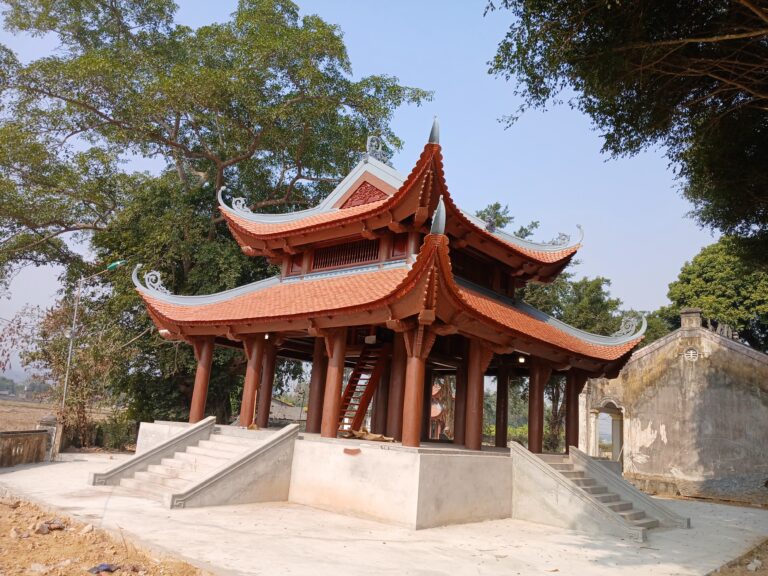
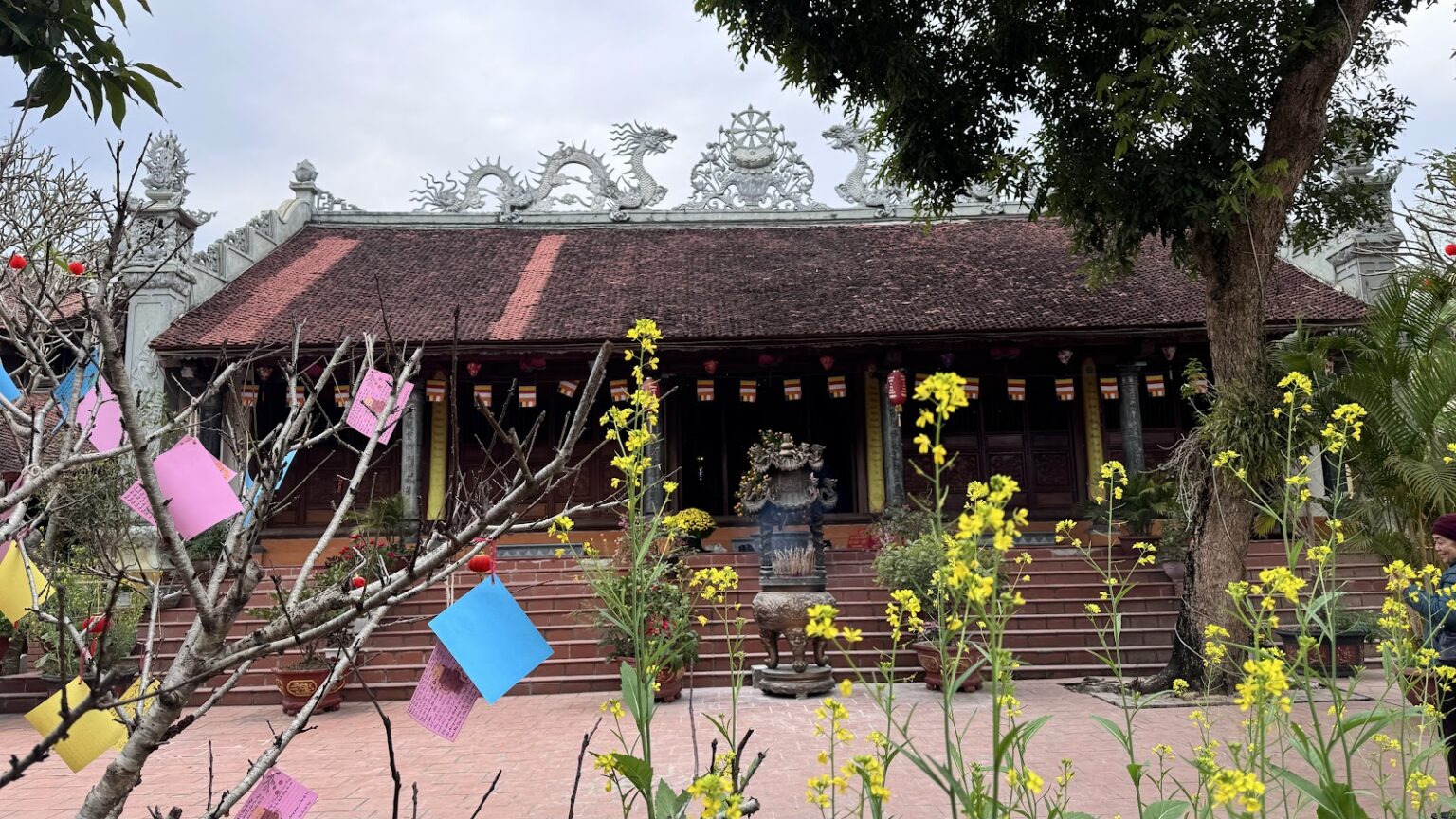
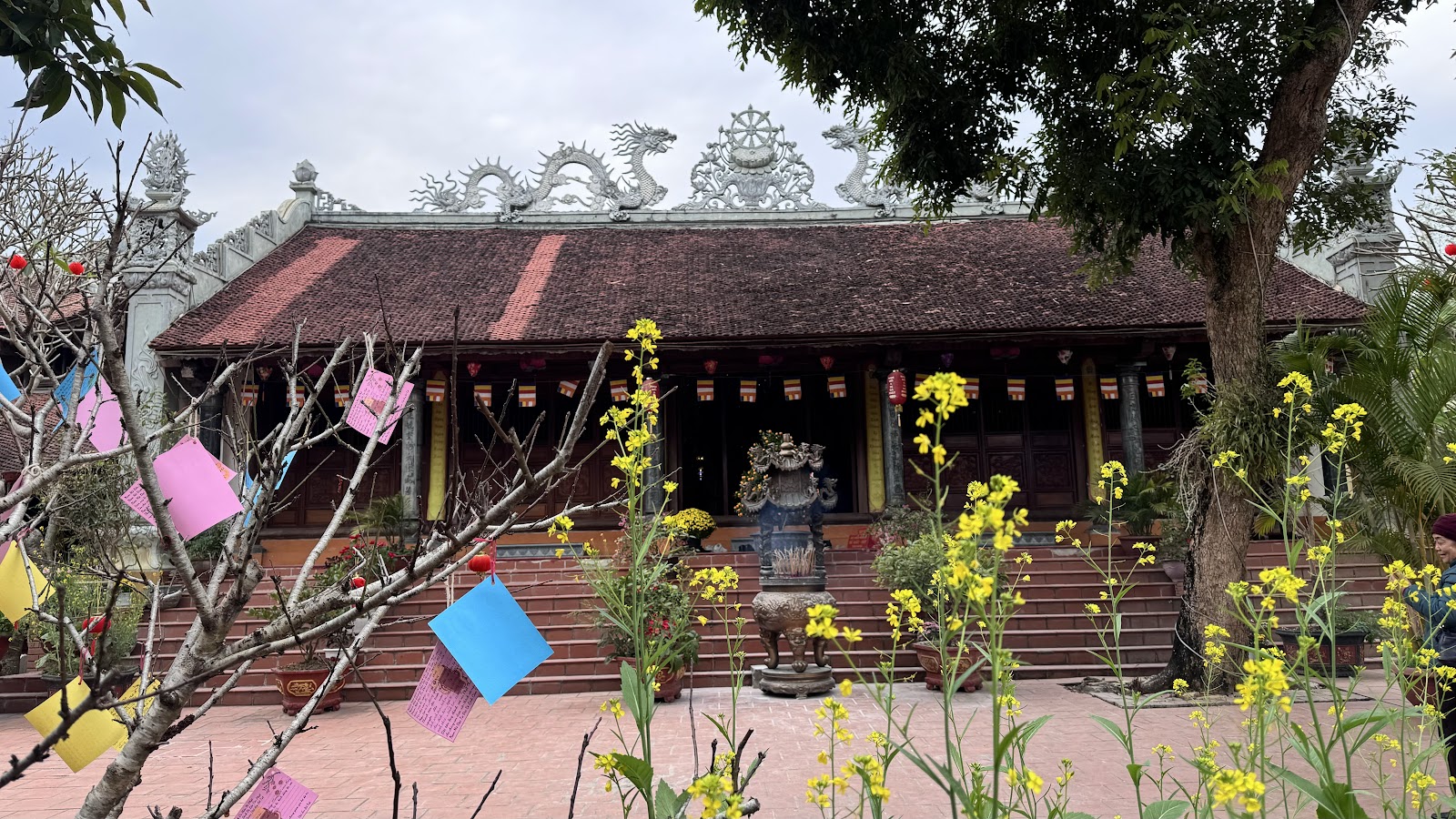
The pagoda retains its traditional “Dinh”-shaped layout, comprising a main sanctuary, a five-bay front hall, and an ancestral worship hall. The front hall is spacious and airy. At its highest tier, just below the roof, sit three Tam The statues, representing the Buddhas of the three ages: past, present, and future.
In the courtyard stands a 3-meter white marble statue of Avalokitesvara (Quan The Am Bo Tat), holding a vase of nectar. In late 2014, the pagoda added a Quan Am shrine hall, over 100 square meters in size, built from carved ironwood featuring the Four Sacred Creatures, funded through public donations. In 2015, the pagoda received further investment of nearly 10 billion VND to restore its roof and walls and relay its flooring.
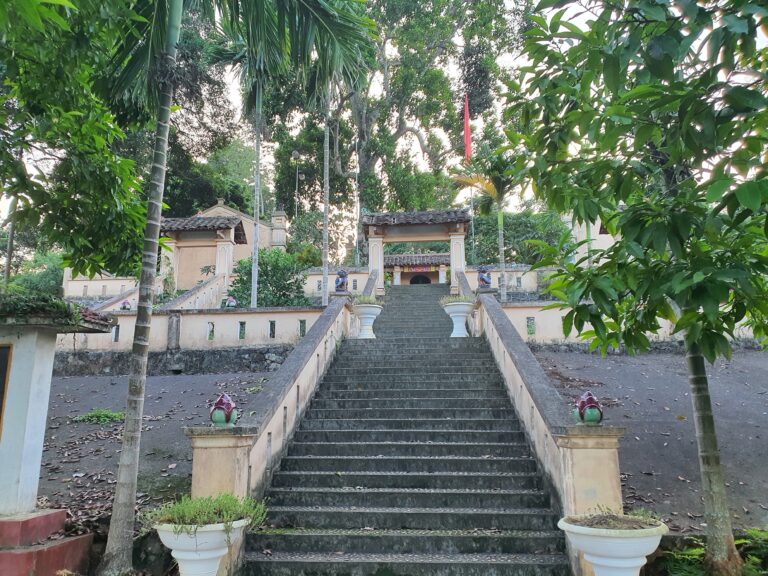
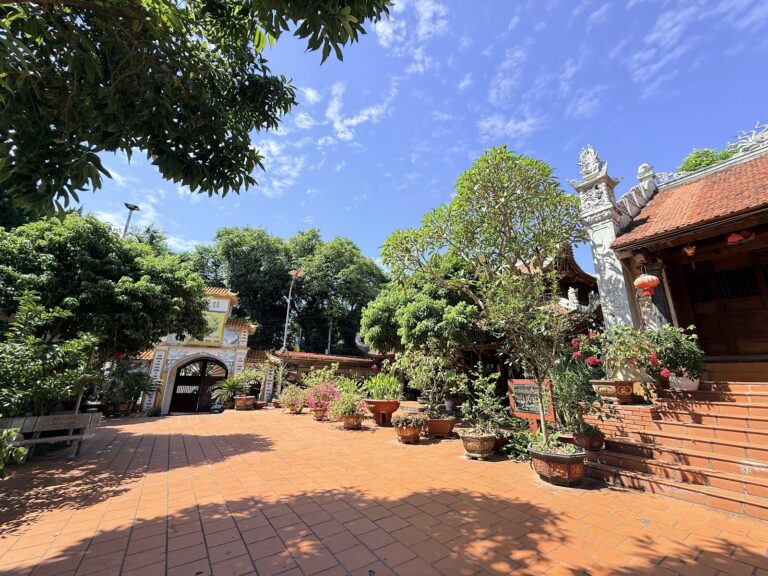
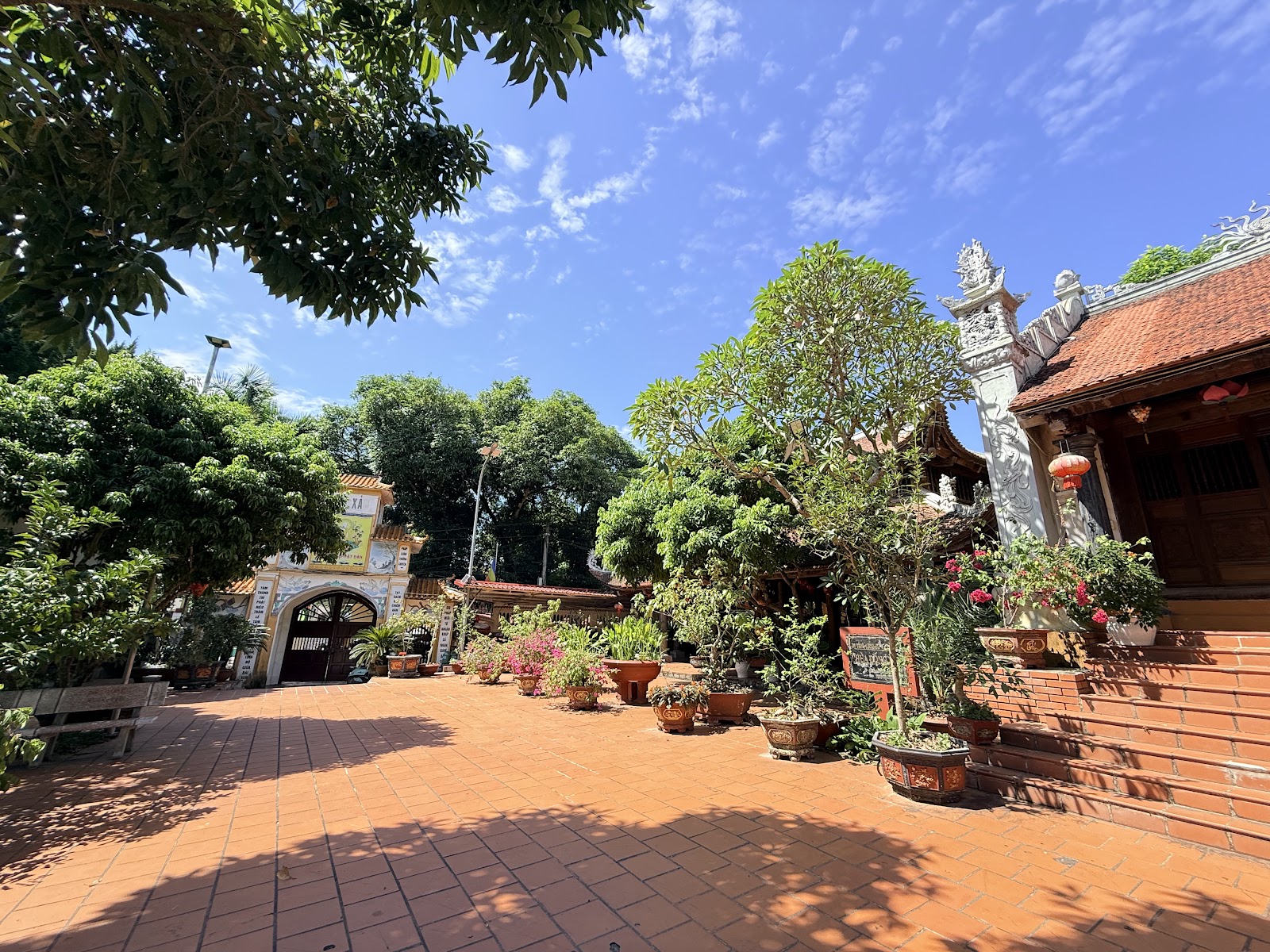
What many visitors remember most about Dong Lan, though, is its greenery. The pagoda is planted thick with trees, from the veranda out across the courtyard and surrounding gardens. The moment you pass through the triple gate, you’ll feel the cool, pleasant air at once.
A Provincial Buddhist Heritage Site and Center
On January 15, 1997, the pagoda was recognized by the Cao Bang Provincial People’s Committee as a provincial-level historical and cultural relic.
In 2007, the Vietnam Buddhist Sangha appointed a monk to serve as abbot. Since then, the pagoda has become a destination for Buddhist followers from across the province to come and worship. Dong Lan is also one of the rare pagodas repeatedly chosen by the provincial Buddhist association to host the Vesak Festival and other major Buddhist celebrations.
Dong Lan Pagoda Festival
The best time to visit the pagoda is during its festival, held on the 8th day of the first lunar month every year. The festival draws large crowds of locals and visitors who come to burn incense and pray for a healthy new year, favorable weather, peace, and good fortune.
The opening ceremony includes many rituals: a procession of offerings, prayers and recitations honoring the deities and Buddhas enshrined in the pagoda, prayers for bountiful harvests and national peace, the ceremonial opening drum, storytelling about the pagoda’s history for the community, and festive performances.
The storytelling segment is a highlight rarely found elsewhere. If you visit during the festival, take a moment to stop and listen. It’s how the people of Cao Bang pass down the story of their land to the next generation.
On ordinary days, the pagoda welcomes Buddhist followers to worship on the 1st and 15th of each lunar month. If you prefer a quieter visit, it’s best to avoid these dates.
A Few Tips for Visiting the Pagoda
- Dress code: Wear modest, respectful clothing; avoid shorts or sleeveless tops.
- Etiquette: Speak softly and avoid boisterous behavior inside the main hall. Ask the pagoda caretaker’s permission before taking photos indoors.
- Incense offering: Follow the pagoda’s guidance. Many visitors offer incense in the courtyard before entering the front hall.
- Best time to visit: Early morning is the quietest time, when the lush garden is cool and bathed in soft sunlight.
- Nearby attractions: Combine your visit with the King Le Temple, the Mac Dynasty Citadel Site, the Na Lu Citadel relic, or the nearby Nam Lin Historical Site. In the evening, head to Kim Dong Walking Street to unwind.
Dong Lan Pagoda isn’t grand in scale, nor does it sit along any famous tourist route. What it offers instead is a sense of peace amid green gardens, along with stories that stretch back a thousand years: two brothers who vanquished a demon, the Tay ethnic group’s version of Thach Sanh, and the silent prayers of Mac dynasty queens. If you’re looking for a place in Cao Bang to still your mind and listen to the land’s stories, come visit Lan Mound.