Lung Luong Ammonite Fossils – A 260-Million-Year-Old “Clock” from an Ancient Sea in the Rocky Highlands
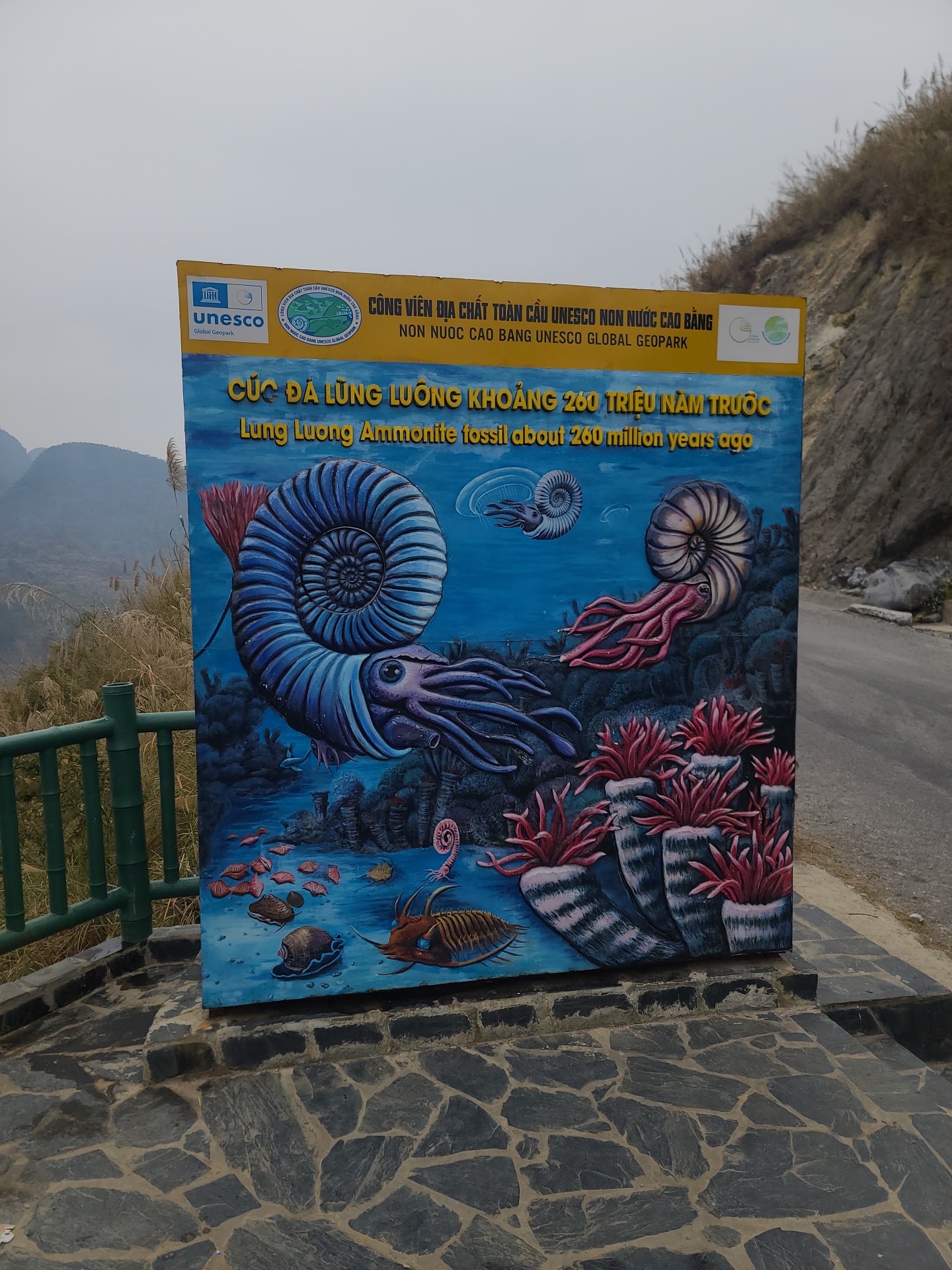
Can you imagine Cao Bang’s rugged limestone mountains once lying beneath an ocean? At Lung Luong Hamlet, the answer is etched in stone: tightly coiled shells like rams’ horns, preserved in dark gray rock for 260 million years. These ammonite fossils are a defining geological heritage feature of the UNESCO Non Nuoc Cao Bang Global Geopark and the inspiration for its emblem.
Where is the fossil site?
The ammonite fossil site is in Lung Luong Hamlet. It was formerly part of Keo Yen Commune (the former Ha Quang District) and is now in Lung Nam Commune. The site lies along the Geopark’s northern “Return to the Roots” route.
The site is open from 7 a.m. to 6 p.m., with free admission. Allow about two hours to explore and enjoy the surrounding scenery.
What are ammonites?
Ammonites were a group of extinct marine invertebrates. They are considered among the most highly evolved mollusks. Compared with animals alive today, ammonites were more closely related to octopuses and squid than to shelled species such as the nautilus.
The name “ammonite” comes from their coiled shells, which resemble rams’ horns and are often associated with the Egyptian god Ammon. In Vietnamese, they are called “cuc da,” meaning “stone chrysanthemum,” because their neatly coiled shells look like a daisy blooming on a rock.
Ammonites disappeared from Earth about 66 million years ago, leaving traces only in layers of rock.
260 million years ago: traces of an ancient sea
At Lung Luong, ammonite fossils are well preserved in thin to medium layers of dark gray limestone formed about 260 million years ago, in the late Permian. These rocks belong to the Dong Dang Formation, which formed in a warm, shallow sea.
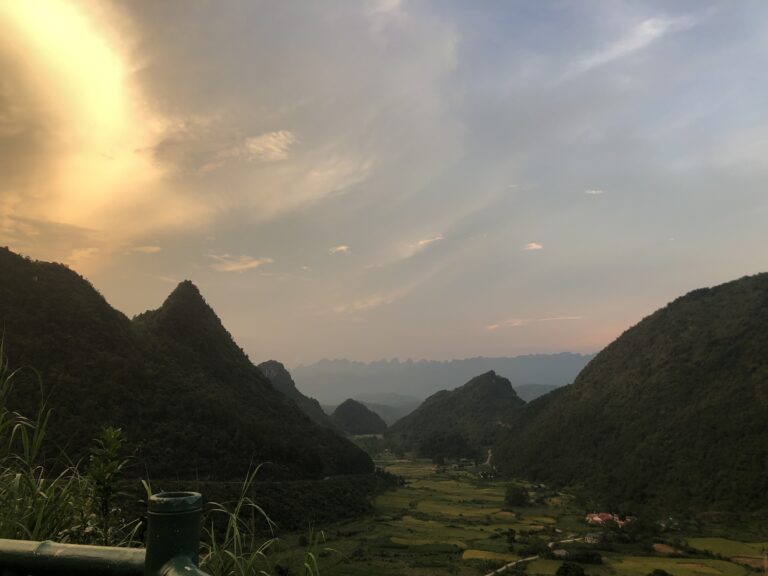
In other words, where you stand today amid the mountains and forests of Ha Quang was once a sea, where ammonites swam. Over millions of years, immense tectonic forces lifted the seabed, creating the rugged limestone mountain ranges we see today.
Alongside the fossils, Lung Luong also has a series of folded rock layers, vividly demonstrating the immense forces that bent even the hardest stone.
A geological “clock”
To geologists, ammonite fossils are like a clock through time. Each ammonite genus or species typically lived during a specific period. Finding them in a rock layer helps scientists date it with reasonable accuracy and identify breaks in the geological record.
The fossils at Lung Luong are therefore a valuable resource for studying the evolution of life and changes in the natural environment over hundreds of millions of years.
An emblem of Non Nuoc Cao Bang Global Geopark
Ammonite fossils feature in the logo of Non Nuoc Cao Bang Global Geopark. The image represents the science behind two characteristic geological landscapes—young and mature karst—and also symbolizes Cao Bang’s distinctive cultural value.
Beyond Lung Luong, other ammonite fossil sites can be found within the Geopark, including Noi Thon (in the same Dong Dang Formation, alongside brown and blue-gray bauxite ore) and Binh Long. Lung Luong, however, is the most prominent and accessible site for visitors.
To protect this geological heritage site, Cao Bang Province has built a retaining wall around the ammonite fossil area at Lung Luong.
Things to do in Lung Luong
Look for fossils: Examine the surface of the dark gray rock layers for ammonites’ spiral patterns. Each fossil is a snapshot of life from 260 million years ago.
Observe the folded rock layers: Take in the folded ridges and imagine the force of movements in the Earth’s crust.
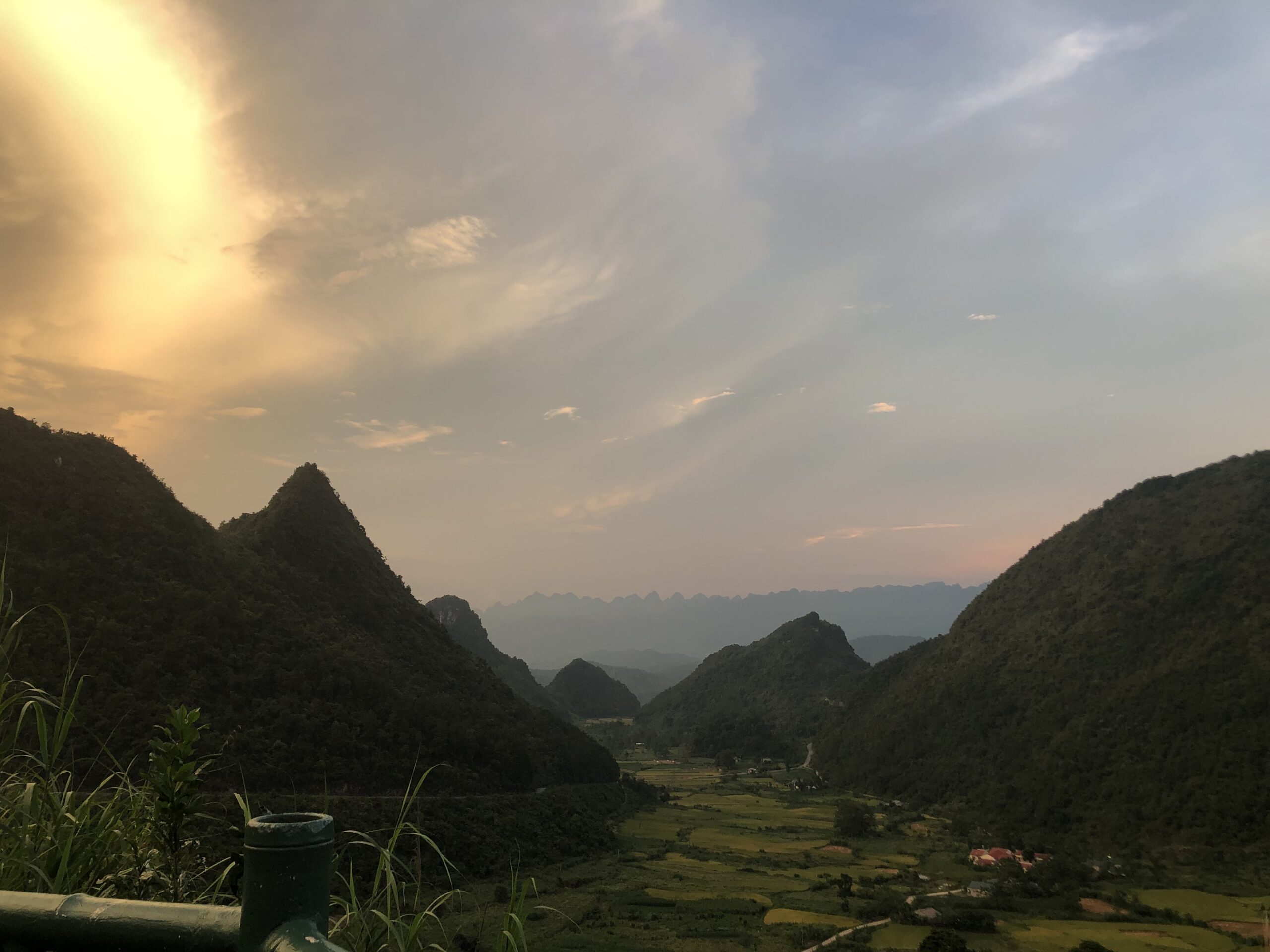
Admire the Keo Yen landscape: The Keo Yen area is known for its distinctive limestone mountains, formed from shallow marine limestone around 300 million years ago. Local people live alongside the rocks, shaping a unique “rock culture.”
Learn geology in the field: This is an ideal destination for school and university students, as well as anyone curious about science and eager to explore Earth’s history firsthand.
Combine Your Visit with a Trip Around Ha Quang
- Lung Ngan Cloud-Spotting Point and Luc Khu Valley: A rocky plateau with a sea of clouds in winter.
- Temple of Dai Vuong Nung Tri Cao (Truong Ha Commune): A temple beside a 300-year-old dracontomelon tree.
- Ban Giang Waterfall: A ribbon of water along the route to Ha Quang.
- Nam Ngua Ecotourism Area (Thanh Long Commune): A waterfall over 100 meters high amid forested mountains.
Visitor Tips
- Never chisel, extract, or remove fossils in any way. This protected geological heritage is irreplaceable.
- Do not write, draw, or carve on the rock surfaces.
- Do not climb onto protective embankments or dangerous cliffs.
- Take photos and leave only footprints; take your rubbish with you.
- Consider going with a guide or reading up beforehand to make fossils easier to spot.
Final Thoughts
Lung Luong Rock Chrysanthemums are not as spectacular as waterfalls or caves. But take a moment to look closely at the tiny spirals in the rock, and you will discover a story spanning 260 million years: of an ocean that vanished, creatures that went extinct, and mountain ranges born from the seabed. At Lung Luong, you are not just admiring the scenery—you are reading the Earth’s history, one page at a time.