Ho Chi Minh Road Km 0 Marker: Where Vietnam’s Longest Road Begins
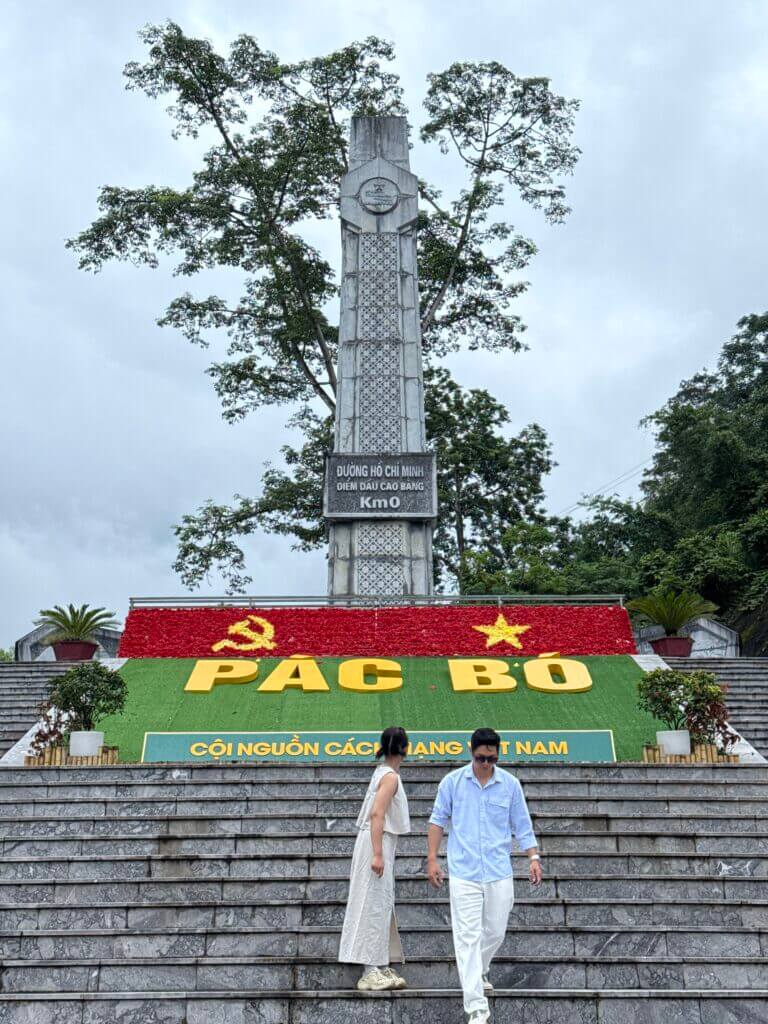
Some markers simply measure distance. Others tell a story. The Ho Chi Minh Road Km 0 Marker in Pac Bo is one of the latter. At the foot of Cao Bang’s forested border mountains, where Nguyen Ai Quoc returned to his homeland in 1941, begins a road that runs the length of the country to Mui Ca Mau. Standing before this marker, you’re at the starting point in two senses: the beginning of a road and of a chapter in history.
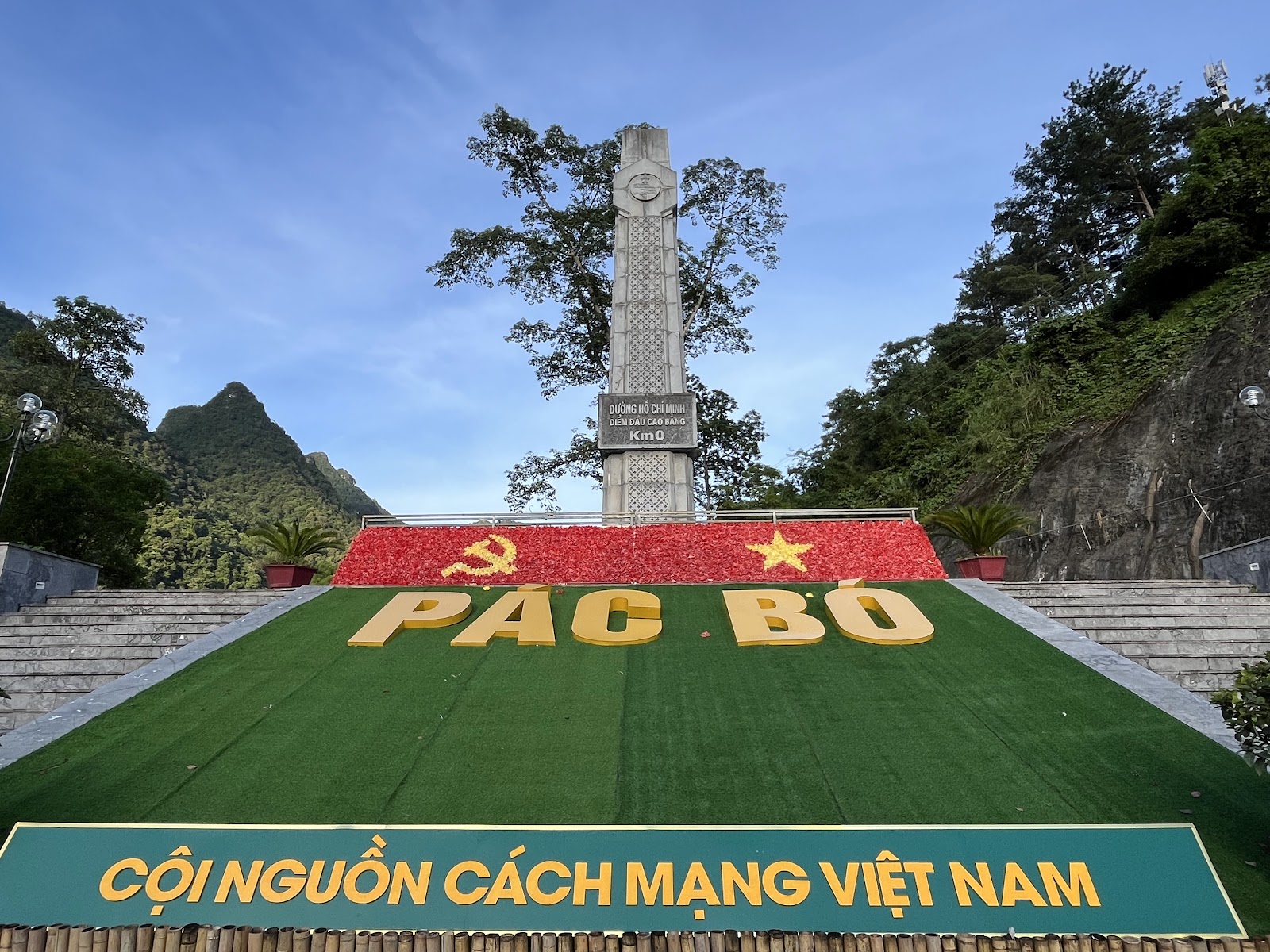
Where Is It?
The marker stands within the Pac Bo Special National Relic Site, in Truong Ha Commune, about 52 km north of Cao Bang city center. It faces the site’s central courtyard, below the temple dedicated to President Ho Chi Minh.
From central Cao Bang, follow Provincial Road 203; the drive takes a little over an hour. An electric shuttle bus stop beside the marker offers rides into the historic site.
One Road, Two Kilometre Zero Markers
Many visitors are surprised to learn that the Ho Chi Minh Road has two Km 0 markers.
The first is in Tan Ky, Nghe An, and commemorates the wartime Truong Son Road. The memorial site was inaugurated in July 2005.
The second marker is in Pac Bo and dates to 2014. While the Tan Ky Km 0 represents the war years, the Pac Bo Km 0 marks the upgraded route built during Vietnam’s industrialization. It was placed here because Pac Bo is the site of a pivotal moment in Vietnam’s revolution: Nguyen Ai Quoc’s return to the country in 1941.
The idea of a road spanning Vietnam dates to the late 20th century. In 1997, at the age of 74, Lieutenant General Dong Sy Nguyen was appointed by the government to identify a route for a north-south expressway. Later renamed the Ho Chi Minh Road, it would run from Pac Bo to Mui Ca Mau.
From Pac Bo to Dat Mui
The Ho Chi Minh Road stretches about 3,167 km, linking Pac Bo in Cao Bang with Dat Mui in Ca Mau. At one end, an inscription reads, “Ho Chi Minh Road – Starting Point: Cao Bang – Km 0.” At the other, it reads, “Ho Chi Minh Road – End Point: Ca Mau – Km 2436.” Visitors who have been to both places share the same sense of wonder at standing before markers nearly a country’s length apart.
A fun idea for road trip enthusiasts: take a photo at Pac Bo Km 0 today, then complete the journey one day with a photo at Ca Mau Km 2436.
The Road Is Still Growing
The story of Km 0 is still unfolding. The Ministry of Construction has approved plans to upgrade and widen the roughly 38.8 km stretch from Pac Bo to Cao Bang to four lanes, with a design speed of 60 km/h. The project begins at Km 0, in front of the President Ho Chi Minh Memorial House. Construction is expected to start in 2027 and finish in 2029. In a few years, the road to Pac Bo should be much wider and easier to travel.
What to Do at Km 0
Take a keepsake photo. The Km 0 marker is Pac Bo’s most popular photo spot. Visit in the morning, when the sun is still gentle and the site is quieter.
Begin a journey into Vietnam’s history. Km 0 is an ideal starting point for exploring the entire historic site:
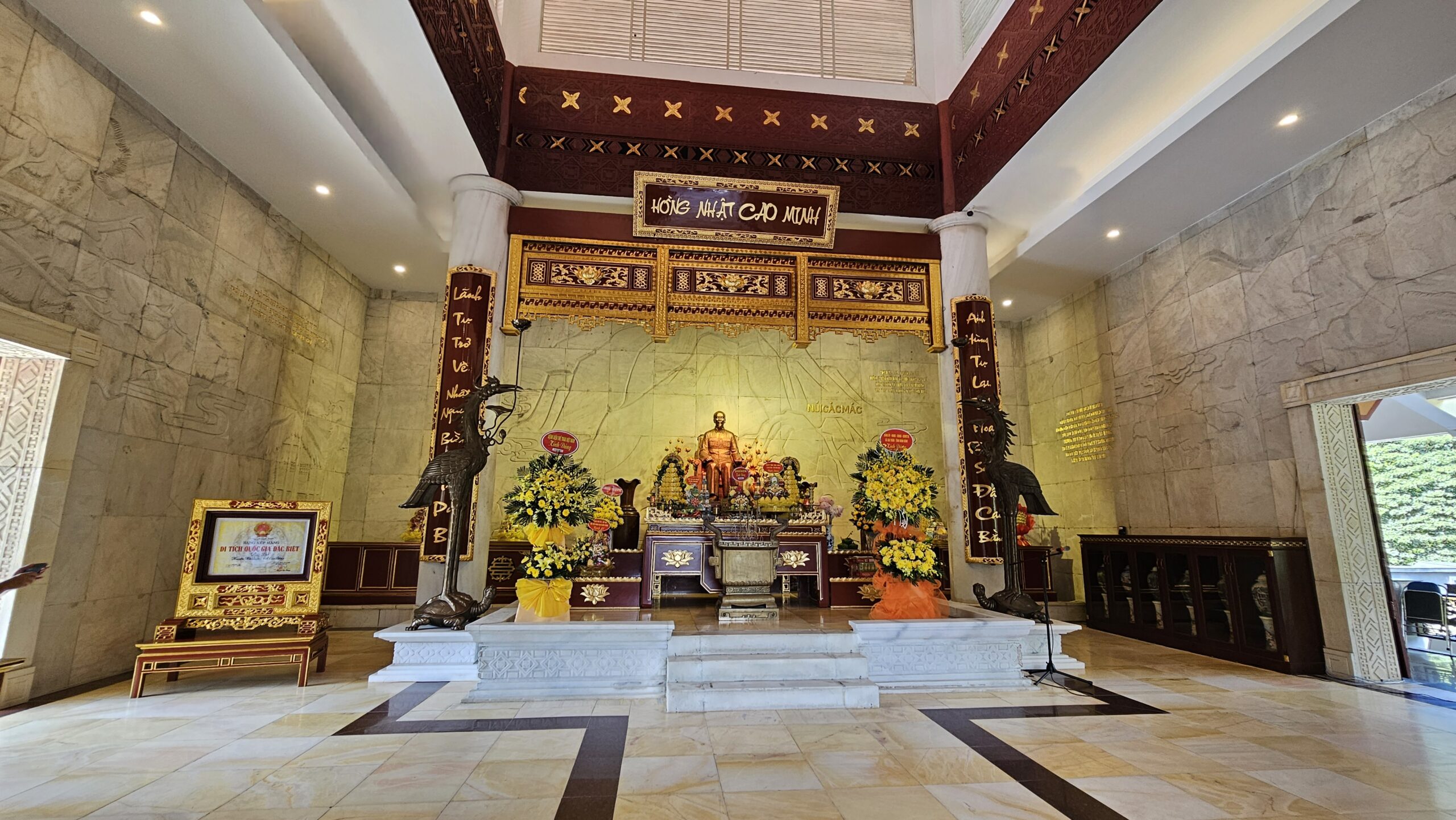
- The temple dedicated to President Ho Chi Minh sits atop a hill and was inaugurated in May 2011.
- The site’s exhibition hall features a statue of Uncle Ho observing the Battle of Dong Khe from Bao Dong Mountain.
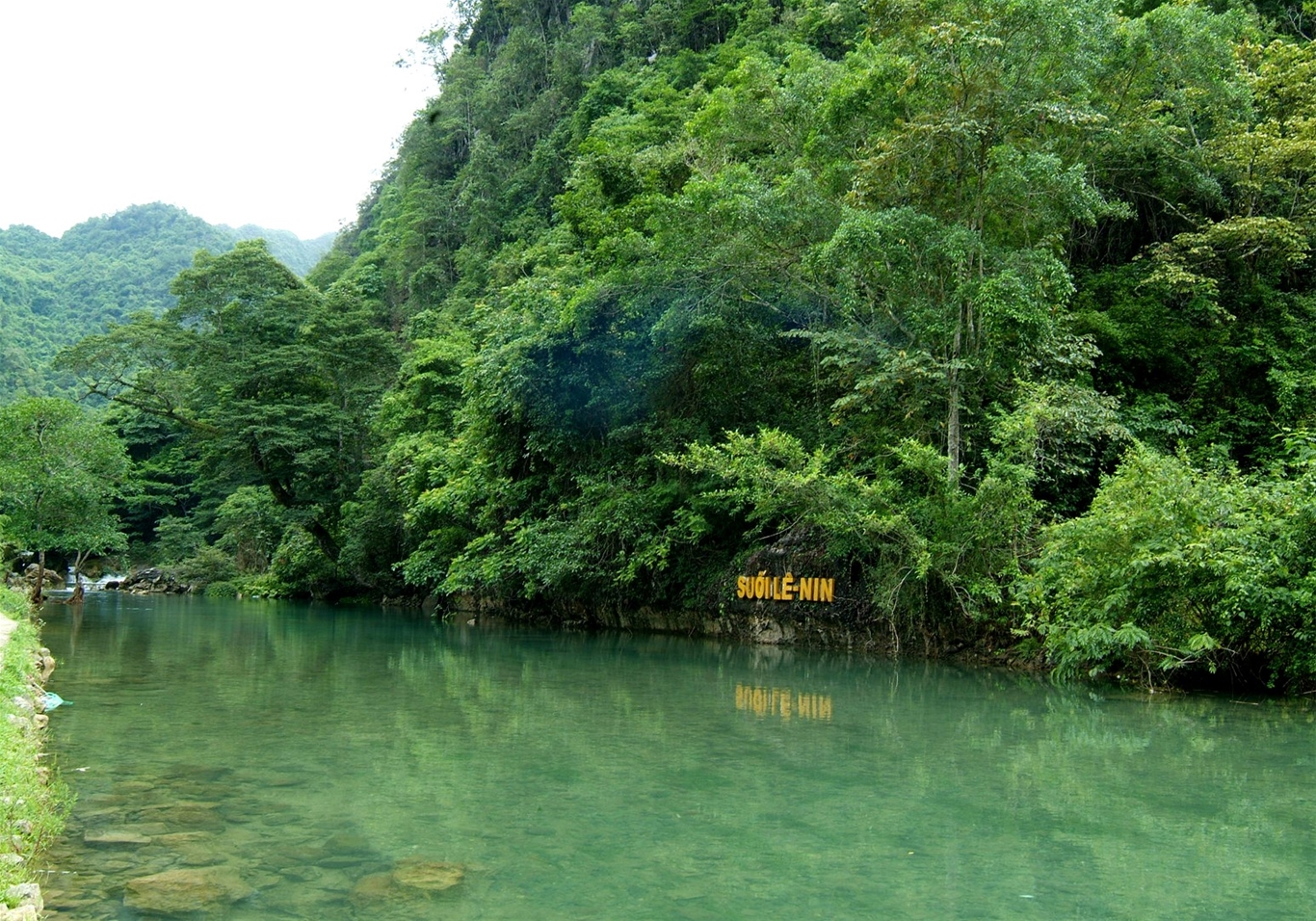
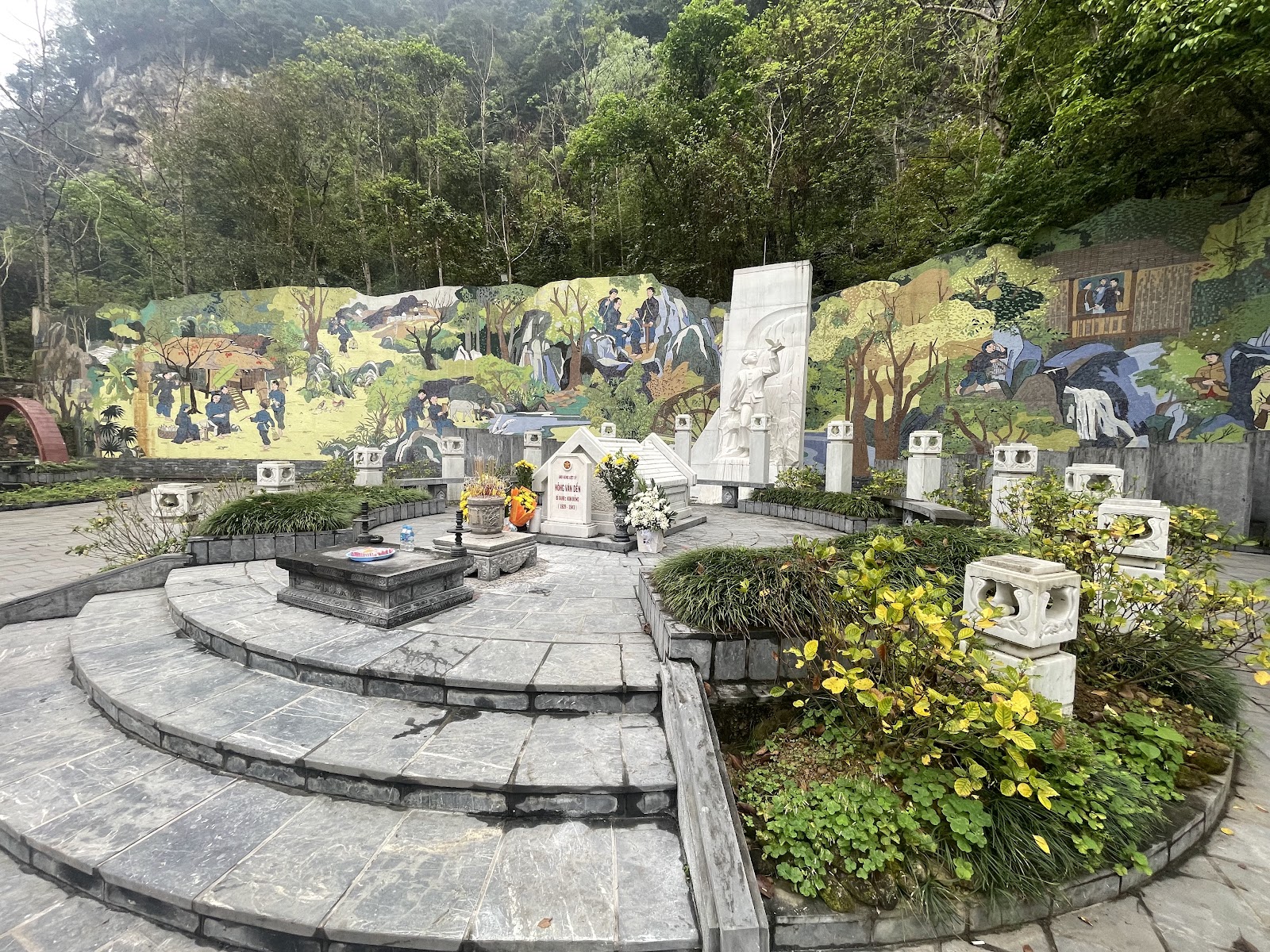
- Coc Bo Cave, Lenin Stream, Marx Mountain and the stone table where Uncle Ho worked.
- Border Marker 108, where Nguyen Ai Quoc and five comrades set foot on their homeland on January 28, 1941.
Walk from Km 0 deeper into the historic site, and the marker’s story comes into fuller view: today’s modern road begins where the revolution’s first steps were taken.
Visitor Tips
- This is a solemn site. Dress respectfully, especially when visiting the temple.
- Visit on a weekday to avoid crowds. Major holidays bring many groups on history-focused trips.
- Wear comfortable walking shoes; reaching Coc Bo Cave and Border Marker 108 involves quite a bit of walking.
- The site is near the border, so follow marked routes and carry identification.
In Conclusion
The Pac Bo Km 0 Marker is more than a roadside landmark. It marks the start of a road stretching over 3,000 km, right where a historic journey began in 1941. Standing here, you’ll understand why Pac Bo was chosen as the starting point: every great journey begins with a single step.