Phia Thap Incense – A Century-Old Nung An Village at the Foot of Phia Hung Mountain
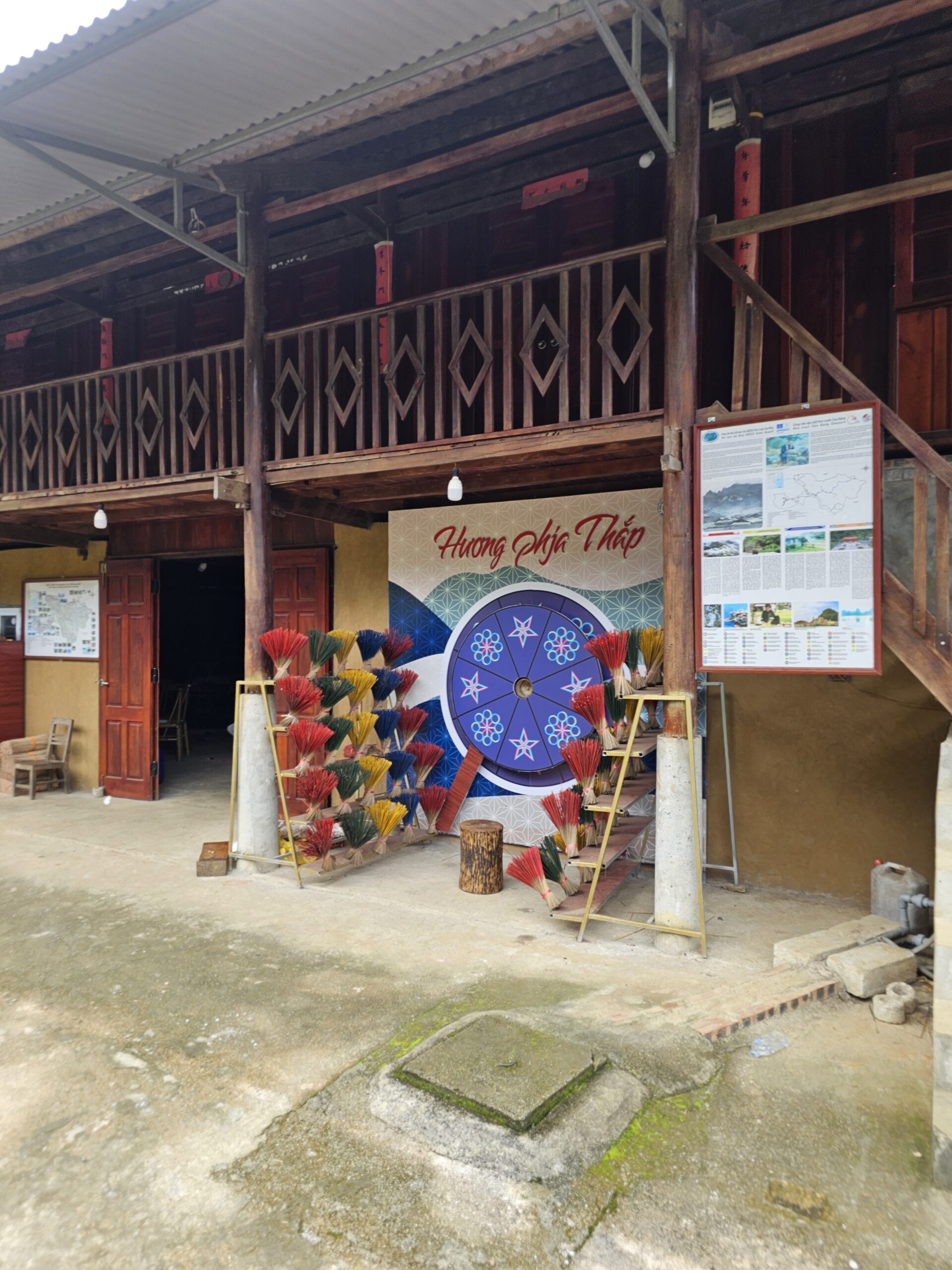
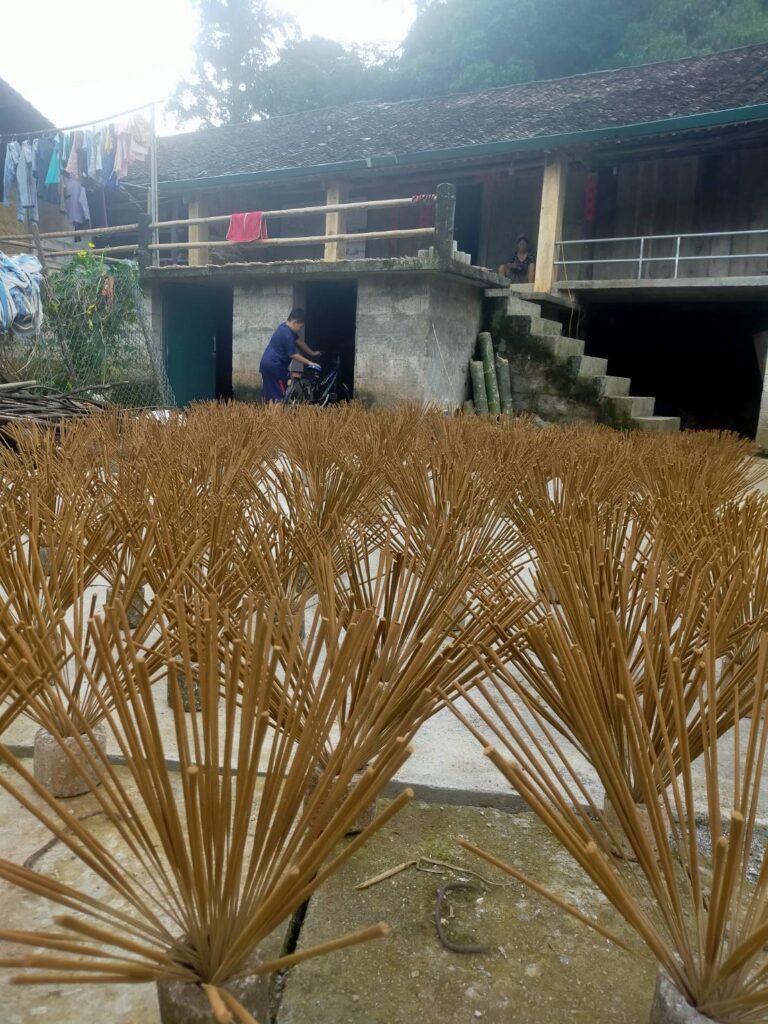
Along National Highway 3, at the foot of Phia Hung Mountain, there is a village where a faint fragrance greets you as soon as you arrive. In front of the stilt houses, thousands of red-based incense sticks are spread out to dry like flowers. This is Phia Thap, a traditional incense-making village of the Nung An people, where incense is still made entirely by hand from forest plants and leaves, using techniques passed down for more than a century.
Where Is Phia Thap Incense Village?
Phia Thap Incense Village (also written as Phja Thap) was formerly part of Phuc Sen Commune in the former Quang Hoa District. Following the 2025 administrative reorganization, it is now part of Quang Uyen Commune. Since July 2025, the new Quang Uyen Commune has comprised Quang Uyen Town and the communes of Phi Hai, Phuc Sen, and Chi Thao.
From Cao Bang City, take National Highway 3 northeast for about 26 km to reach Phia Thap Hamlet. The village lies along the road from the city to Trung Khanh, nestled at the foot of Phia Hung Mountain, which means “Big Mountain.”
A Village Craft with More Than a Century of History
Today, more than 50 Nung An households in Phia Thap continue the centuries-old craft of making incense by hand from natural materials. Residents believe incense-making has been part of Nung An life since the community first settled and built its village at the foot of Phia Hung Mountain.
Phia Thap is one of the few craft villages in Cao Bang Province recognized as a traditional craft village, with a history spanning more than 100 years. Since 2016, it has also been selected as one of seven hamlets and villages to receive provincial investment in community-based tourism rooted in local cultural heritage.
In Phia Thap, stilt houses are designed with a small lower floor for incense-making, showing just how deeply the craft is woven into daily life.
Incense Made from Forest Plants and Leaves
What sets Phia Thap incense apart is its all-natural ingredients sourced from the limestone mountains, with no chemicals used.
- Mai wood (called “may muoi” in Tay): Used for the incense sticks because it is flexible, straight, and easy to light.
- Bau hat leaves: The most important ingredient, these grow naturally on cliff faces and serve as a binding agent.
- Bombax tree bark and sawdust: Used to make the incense powder.
- Aromatic plants: Including red ironwood, thung trees, and red pine bark, which give the incense its distinctive fragrance.
Each family in Phia Thap has its own method for preparing the incense powder and blending the ingredients to produce a fragrant burn and attractive ash.
How Incense Is Made
Incense-making in Phia Thap involves no machinery; every step is done by hand:
1. Picking bau hat leaves: Villagers head into the forest and climb cliff faces to gather bau hat leaves. The leaves are dried and then ground into a fine powder.
2. Making the incense sticks: While the leaves dry, villagers prepare the sticks. Mai wood is cut into pieces about 40 cm long, split into chopstick-thin strips, shaved smooth and round, then soaked in water for two to three days.
3. Coating with powder: The mai sticks are dipped in water mixed with bau hat leaf powder to make them tacky, then rolled in a blend of Bombax bark powder and sawdust. This step is repeated four times to make each stick sturdy and smooth. The amount of binder must be carefully measured: too much bau hat leaf powder and the incense will not form properly.
4. Drying the incense: This is the most time-consuming step. In sunny weather, the incense dries in a day; otherwise, it takes two to three days, and sometimes must be dried over the kitchen hearth.
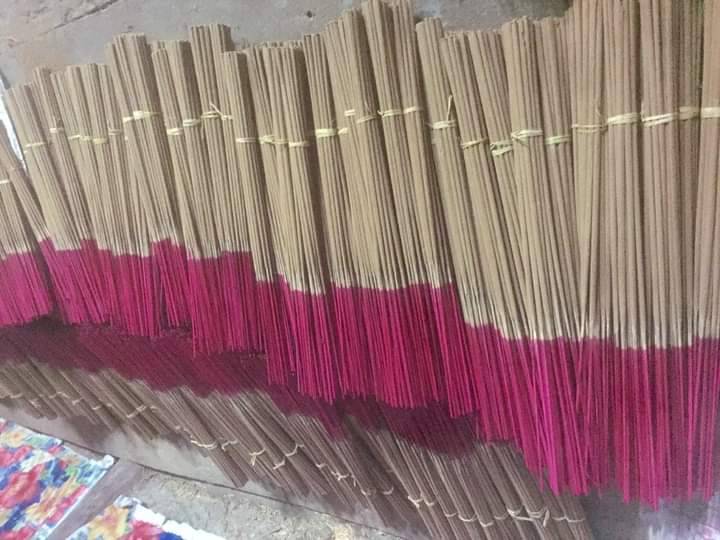
5. Dyeing the stick ends: Unlike many other incense-making villages, where the sticks are usually dyed red first, in Phia Thap the ends are dyed red at the final stage using leaves from the “cham che” plant grown around the home. The incense is then left to dry again.
6. Bundling: Once dry, the incense sticks are tied into bundles of 20.
Visit the Lunar New Year Markets
Phia Thap incense is sold at Lunar New Year markets throughout the province and in cities and provinces across northern Vietnam. It is popular for being safe to use, naturally fragrant, easy to light, and long-lasting. The village’s incense makers take pride in their work and uphold the same quality standards passed down by their ancestors.
Experiences in the Incense Village
Watch and make incense by hand: Join local residents to observe and try each step, from splitting the bamboo sticks and coating them with incense powder to drying the finished incense.
Photograph the “incense flowers”: Bundles of incense with red bases are spread into circular fans and dried in front of stilt houses, creating a colorful and distinctive photo opportunity.
Stay at a homestay: Spend the night in a Nung An stilt house, sample local dishes, and hear stories about incense making and village life.
Buy incense as a souvenir: These handmade bundles carry the scents of the mountains and the warmth of the Nung An people.
Take in the village from above: Climb to Pha Hung Panorama on Pha Hung Mountain for sweeping views of the incense village, the valley at sunset, or an early-morning sea of clouds.
When to Visit
From October to the twelfth lunar month: This is peak incense-making season as the village prepares for Lunar New Year. The village comes alive, with bundles of incense drying in vivid red across courtyards. It is the best time for photography.
More incense is laid out to dry on sunny days, so plan your visit for clear weather.
Keeping the Tradition Alive Amid Challenges
Today, materials for making Phia Thap incense are becoming increasingly scarce. Some makers have tried substitutes, but the incense has not yet matched the desired quality. Handmade incense also faces competition from cheaper, factory-made products. Every visit and every bundle purchased helps keep this centuries-old craft alive.
Add These Stops to Your Quang Uyen Itinerary
- Pha Hung Panorama: a viewpoint overlooking the incense village from Pha Hung Mountain.
- Bach Linh Temple: an ancient shrine associated with the firework festival, a national intangible cultural heritage.
- Nung Tri Cao Temple (Quang Uyen).
- Dia Tren Paper Village: a traditional paper-making village of the Nung people in the same commune.
Visitor Tips
- Respect the workspace: Do not step on incense laid out to dry or touch materials without permission.
- Ask before taking photos of residents or entering their homes.
- Contact the village in advance if you would like to try making incense or stay at a homestay.
- Support local artisans by buying products in the village.
In Closing
Every stick of Phia Thap incense is shaped by forest leaves, rocky cliffs, mountain sunshine, and the skilled hands of the Nung An people across generations. In the incense village, you can see how each stick is made and feel the resilience of a community preserving its traditional craft amid modern life. When you light that incense during Lunar New Year, you’ll remember the small village at the foot of Pha Hung Mountain.