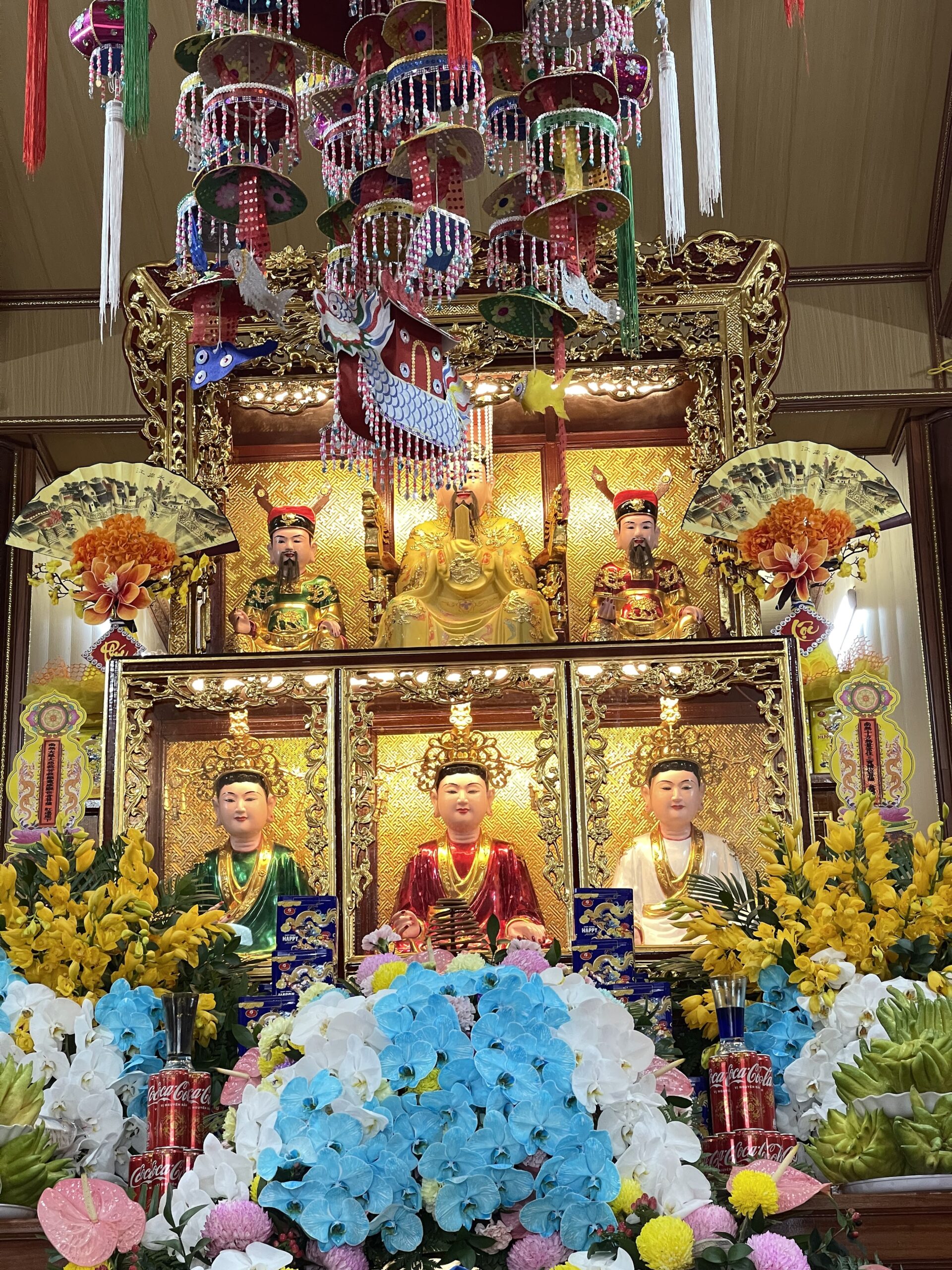
Long Vuong Temple – the sacred temple beside the Bac Vong River in the old town of Thong Hue
On the way to eastern Cao Bang, many travelers pass through Thong Hue town without realizing that just about a kilometer from the market, on a hillside overlooking a green river, stands an ancient temple linked to a one-of-a-kind lantern festival. This is Long Vuong Temple, where generations of Thong Hue locals have prayed for favorable weather and bountiful harvests.
Where is the temple located?
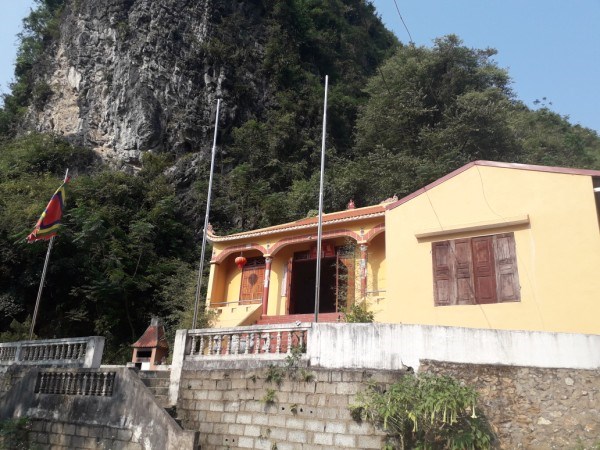
The temple is located in Thong Hue 1 hamlet, Doai Duong Commune (formerly Trung Khanh District). Since July 2025, the new Doai Duong Commune has been formed from the merger of three former communes: Trung Phuc, Cao Thang, and Doai Duong.
The temple sits on the bank of the Bac Vong River, at the foot of Tam Tien Mountain, about 300 meters from Thong Hue Market. Locals also call this mountain Ba Co Tien Mountain. With mountains behind and the river in front, the temple creates a picturesque setting for the old town of Thong Hue.
Who is worshipped here, and since when?
The temple is dedicated to Nam Hai Long Vuong Ngao Thuan, a water deity believed to govern rivers and seas, bringing bountiful harvests and peaceful lives to the people.
According to local elders, the temple was first built during the Le Dynasty. Its walls are made of limestone, its roof covered with yin-yang tiles, and a spacious courtyard lies in front. In the past, the temple followed a two-section “Nhi” layout, consisting of a front hall and a rear sanctuary. In 2005, the people of Thong Hue contributed their labor to rebuild the temple.
The elders also believe the temple’s location embodies the four auspicious feng shui elements – “Dragon, Lair, Water, and Sand” – marking it as a site of excellent geomancy.
In 2018, the temple was recognized as a Provincial Historical and Cultural Relic and is now a heritage site along the Eastern Experience Route of the Non Nuoc Cao Bang UNESCO Global Geopark.
Legends and sacred tales
The people of Thong Hue have passed down many stories about this temple. One legend tells of a kind-hearted but childless couple in Thong Hue town who worked as market sweepers. Because of their good deeds and virtuous lives, the Dragon King ordered Nam Hai Long Vuong to be reincarnated as their son.
Locals also share tales of a “sacred snake” said to appear around the temple. Mr. Chung Van Han, the temple’s caretaker, recounts something that still amazes many visitors: although the temple sits at a low elevation, floodwaters have never once submerged it, even during the heaviest floods.
The Lantern Festival – the soul of the temple
By tradition, the Long Vuong Temple Festival is held every leap year of the lunar calendar. It is the only festival in eastern Cao Bang featuring a floating lantern ceremony, held to pray for favorable weather, bountiful crops, fertility, peace, and prosperity.
The festival lasts about three days:
Day one: The tao priest and the female ritual officiant perform the opening ceremony. The organizing committee, delegates, and the people of Thong Hue town observe a vegetarian fast together.
Day two: This is the most important day. In the morning, a purification ritual is performed. In the afternoon, the deity’s palanquin is carried in a procession throughout Thong Hue town to bestow blessings, and each household receives a paper talisman to paste on their door to ward off evil and welcome good fortune. Around 8 p.m., the tao priest performs a ceremony on the riverbank before releasing about 200 lanterns onto the Bac Vong River.
Locals believe that whoever retrieves a lantern will enjoy great luck and prosperity. Those who catch a lantern bring it to the temple to burn incense and report to the deity.
Day three: The people of Thong Hue town and visitors share a communal meal to receive the deity’s blessings.
Alongside the religious rites, the temple courtyard and Thong Hue Market host cultural performances, sports, and folk games. Many natives who have moved away also return for the occasion to release lanterns and listen to the sweet melodies of Da Hai singing.
Besides the main festival, locals also prepare offerings to worship the deity at the temple on the 13th day of the 6th lunar month, the deity’s death anniversary.
Best time to visit
The most recent festival took place on March 24–25, 2025, corresponding to the 25th–26th day of the 2nd lunar month. The exact date varies each year, so it’s best to check local announcements before planning your trip.
On ordinary days, the temple is peaceful and quiet, making it a lovely spot to admire the Bac Vong River and stroll around the old town of Thong Hue.
Tips for visiting the temple
- Dress modestly and maintain a respectful atmosphere.
- If attending the festival, respect the vegetarian fasting ritual on the first day and avoid pushing or crowding when retrieving lanterns.
- Be careful near the riverbank in the evening.
- Take a stroll around the old town and Thong Hue Market to experience the rhythm of life in this small eastern town.
Long Vuong Temple is modest in size and not located along any famous tourist route. But on a leap-year night, as hundreds of lanterns drift along the Bac Vong River beneath Ba Co Tien Mountain, you will understand why the people of Thong Hue continue to cherish this temple as an inseparable part of their homeland.