Standing beside the statue and looking toward Dong Khe, you can picture the scene from that day: President Ho Chi Minh seated amid the mountains, his gaze fixed on the battlefield as he followed every advance of the troops.
Bao Dong Mountain Historical Site – Where President Ho Chi Minh Climbed the Mountain with a Walking Stick to Observe the Opening Battle of the 1950 Border Campaign
Early on September 16, 1950, atop a rocky mountain in the border region of Thach An, President Ho Chi Minh sat on a rocky outcrop, intently watching the battle for the Dong Khe stronghold—the opening battle of the Border Campaign. The moment was captured by photographer Vu Nang An and became one of the best-known historical photographs of Uncle Ho. The mountain was Bao Dong, now an important site within the Special National Relic Site of the 1950 Border Campaign Victory.
Where Is Bao Dong Mountain?
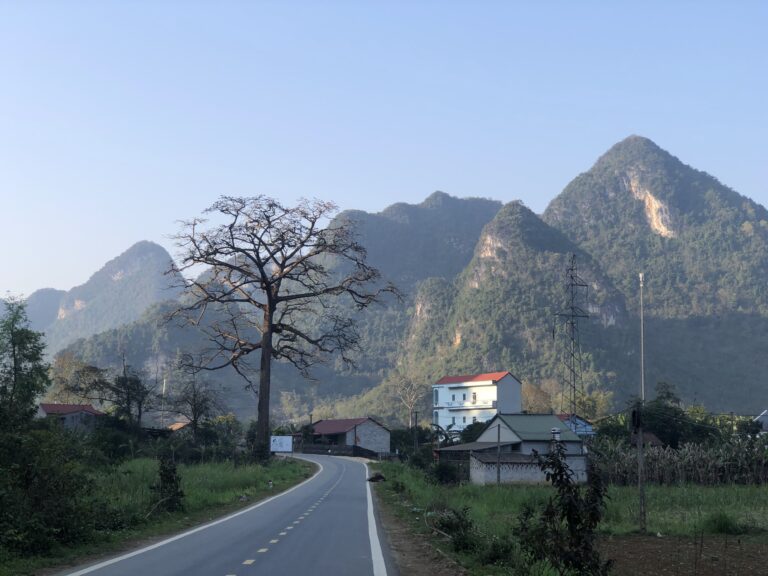
Bao Dong Mountain is in Ban Po Hamlet, Duc Long Commune (formerly in Thach An District), Cao Bang. The 1950 Border Campaign Historical Site is in Na Lan, Duc Long Commune, about 60 km from Cao Bang City via National Highway 4.
From the Dong Khe stronghold relic complex, beside National Highway 4A in central Dong Khe, continue about 17 km to the relic complex commemorating President Ho Chi Minh and the 1950 Border Campaign victory in Duc Long Commune. From there, begin the climb up Bao Dong Mountain.
The 1950 Border Campaign
In June 1950, the Party Central Committee decided to launch the Border Campaign, also known as the Le Hong Phong II Campaign or the Cao–Bac–Lang Campaign. General Vo Nguyen Giap was appointed Secretary of the Front Party Committee. It was the first major offensive campaign conducted by the Vietnam People’s Army during the resistance war against French colonial rule.
On September 13, 1950, the Campaign Command moved from Quoc Phong Commune (Quang Uyen) to Duc Long Commune. At the foot of Bao Dong Mountain, in Coc Dua Hamlet, the forward command post was re-established. Command units quickly set up at several locations: the home of Vi Van Cam, the operations cave, communications cave, military intelligence cave, and observation post.
That same day, President Ho Chi Minh left the Campaign Command and traveled to the forward command post in Na Lan. He stayed and worked in Khong Hau Cave, nearly 2 km from the forward command post and close to the Vietnam–China border.
The Morning of September 16, 1950 – Ho Chi Minh at the Observation Post
On the morning of September 15, 1950, at Khong Hau Cave, after hearing a briefing from Cao Pha, head of military intelligence, President Ho Chi Minh said that he wanted to observe the battlefield the next day. At his request, in the early hours of September 16, 1950, the Campaign Command took him to the observation post atop Bao Dong Mountain.
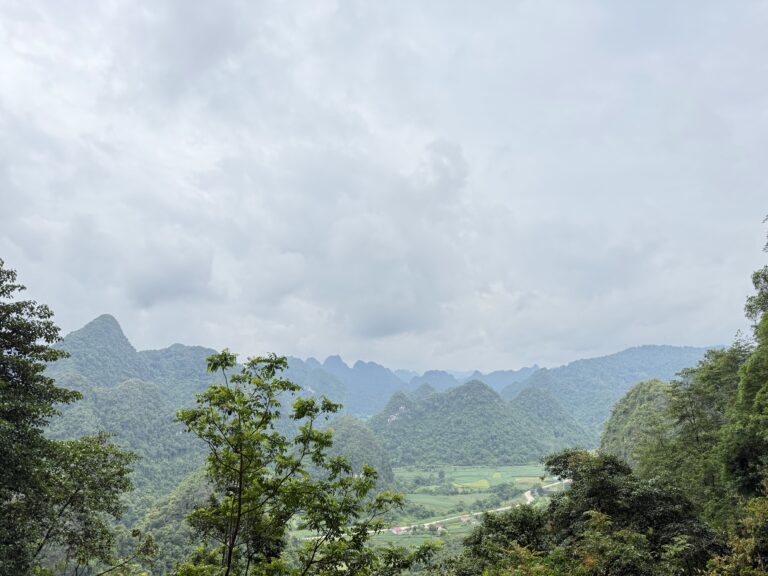
From this position, about 11 km from Dong Khe as the crow flies, he watched closely and directed the battle for the Dong Khe stronghold. President Ho Chi Minh’s presence at the front underscored the campaign’s importance and greatly inspired the troops and the people.
Here, while surveying the battlefield, President Ho Chi Minh was inspired to write his famous poem “Climbing the Mountain,” capturing the image of the leader amid the campaign’s mountainous landscape.
After 29 days and nights of continuous fighting (September 16–October 14, 1950), the Border Campaign ended in victory, marking a turning point in the resistance war against the French.
846 Stone Steps – 79 Springs
The observation post atop Bao Dong Mountain commands sweeping views and is about 3 km from the Campaign Command headquarters at the foot of the mountain. In 2004, the Ministry of National Defence funded the construction of a path to the observation post with 846 stone steps divided into 79 flights, symbolizing the 79 springs of President Ho Chi Minh’s life.
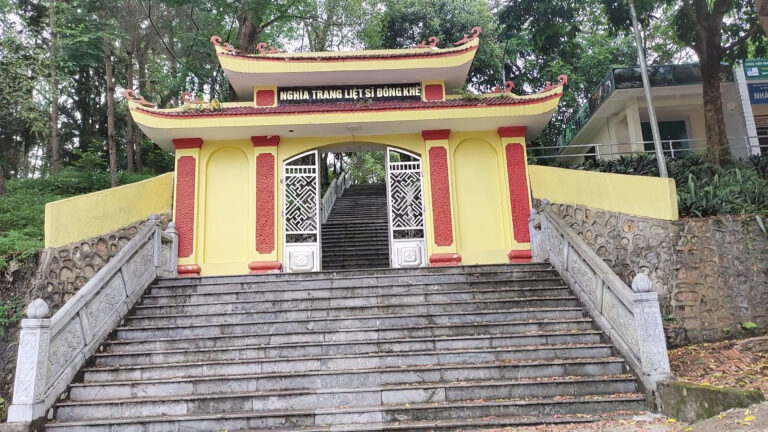
Today’s stone steps follow the same path President Ho Chi Minh once took up the mountain. Along the way, visitors will find markers identifying the former military intelligence office, the Campaign Command site, and the campaign communications switchboard.
The Monument Complex on the Summit
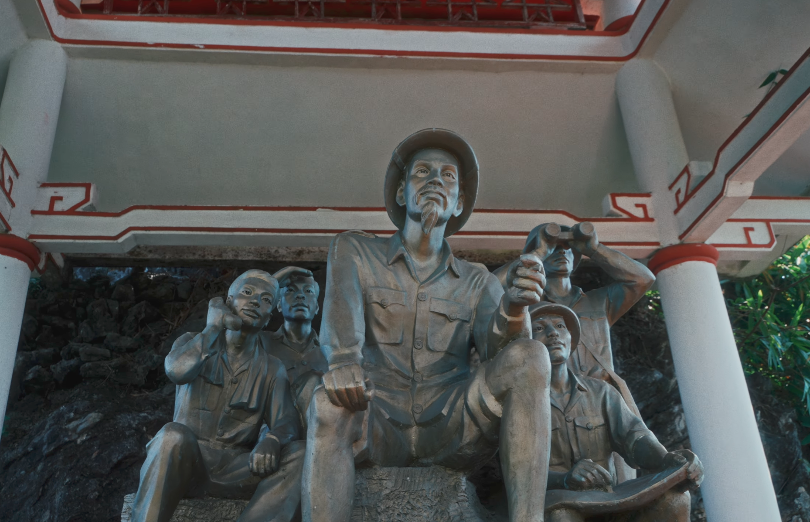
At the summit of Bao Dong is the monument complex “President Ho Chi Minh Observing the Dong Khe Battlefield,” modeled on photographer Vu Nang An’s famous image. Made of bronze-finish composite, the statue stands 2.8 m tall, weighs 418 kg, and rests on a stone pedestal faced with decorative tiles.
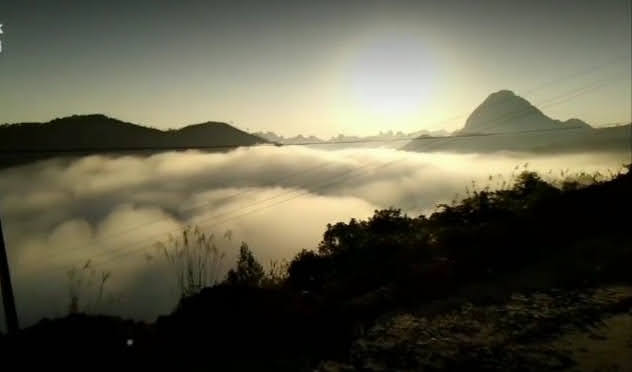
Standing beside the statue and looking toward Dong Khe, you can picture the scene from that day: President Ho Chi Minh seated amid the mountains, his gaze fixed on the battlefield as he followed every advance of the troops.
Special National Historic Site
On December 25, 2017, the Prime Minister designated the sites associated with the 1950 Border Campaign Victory as a Special National Historic Site. The site comprises 19 locations arranged in four clusters across what are now Duc Long and Dong Khe Communes.
Notable sites include the Campaign Headquarters, Thong Tin Cave, Tac Chien Cave, Quan Bao Cave, Khong Hau Cave, a former French fort, and the observation post atop Bao Dong Mountain. Earlier, on December 12, 2008, the Campaign Headquarters site in Coc Dua Hamlet was recognized as a provincial-level historic site.
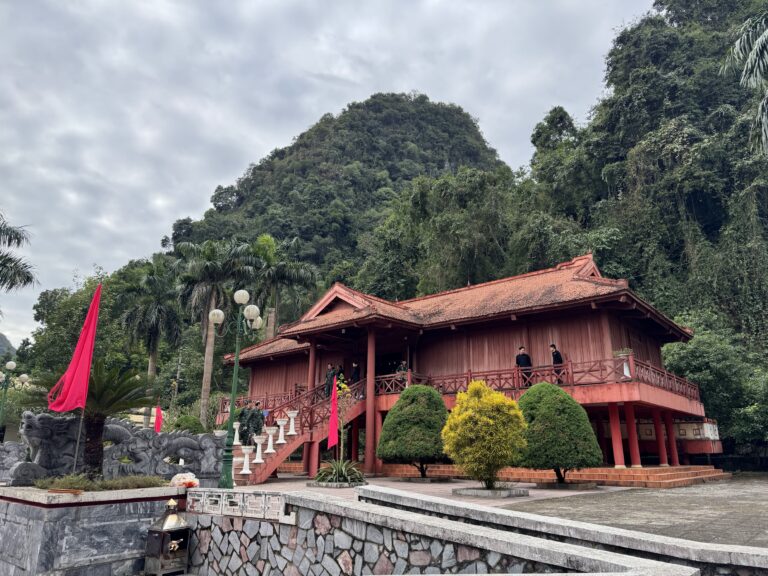
The Ho Chi Minh Historic Site commemorating the 1950 Border Campaign Victory at Na Lan has two main parts: the Ho Chi Minh Memorial and the statue complex depicting Uncle Ho observing the Battle of Dong Khe from Bao Dong Mountain.
Suggested Itinerary
- Dong Khe Fortification Historic Site Cluster (beside National Highway 4A): where the opening battle took place.
- Ho Chi Minh Memorial at Na Lan: pay your respects and explore records about the campaign.
- Campaign Headquarters and the Tac Chien, Thong Tin, and Quan Bao Caves at the foot of the mountain.
- Climb 846 stone steps to the summit of Bao Dong Mountain and visit Uncle Ho’s statue complex.
- Khong Hau Cave: where Uncle Ho stayed and worked during the campaign.
Visitor Tips
- Dress respectfully and maintain a solemn demeanor at the memorial and statue complex.
- Wear walking shoes and bring water, as the 846 stone steps are a long, steep climb. Take breaks on the landings if needed.
- Visitors with heart conditions or high blood pressure should consider their fitness before climbing.
- Avoid rainy days when the stone steps can be slippery.
- Do not write, draw, or carve on plaques, statues, or rock faces.
- Do not litter; help preserve the historic site’s surroundings.
- Contact the site management board if visiting as a group to arrange a guided explanation.
In Closing
Bao Dong Mountain is not especially high, yet every stone step to the summit recalls the nation’s proud days during the campaign. After climbing all 846 steps, stand beside Uncle Ho’s statue amid the mountains along the border and look toward Dong Khe. You will sense the scale of the victory and picture the leader standing alongside soldiers on the front lines. When visiting Thach An, don’t miss this meaningful journey into Vietnam’s past.