

Hoang Luc Temple: The Sacred Legacy of a Tay General Who Defended Cao Bang’s Borderlands
On a journey through eastern Cao Bang, home to Ban Gioc Waterfall and Nguom Ngao Cave, few travelers know that Trung Khanh is also home to a historic site with nearly a thousand years of history: Hoang Luc Temple. Neither grand nor ornate, the temple is where the Tay people express their gratitude to the general who stood with them to defend their land and villages during the Ly dynasty. For anyone looking to gain a deeper understanding of the border region’s culture and history, it is a worthwhile stop.

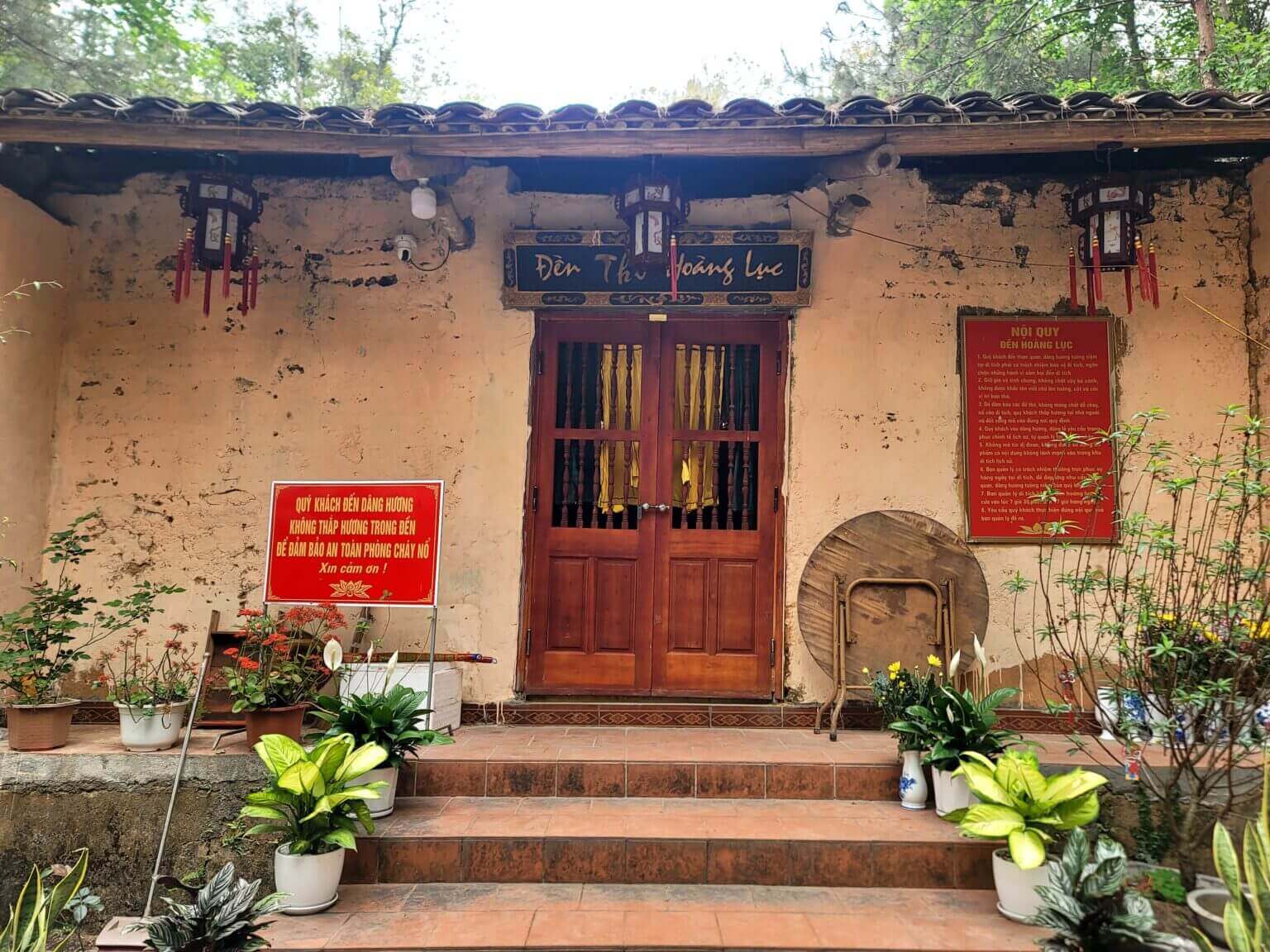
Featured image of Hoang Luc Temple in Trung Khanh, Cao Bang, in Dinh Phong Commune
Where is Hoang Luc Temple?
Hoang Luc Temple is in Dinh Phong Commune, Cao Bang Province. It is a site of special historical, cultural, and spiritual significance, closely tied to the local community’s religious life. Before the 2025 administrative reorganization, this area was part of the former Trung Khanh District, along the road from Cao Bang City to Ban Gioc Waterfall.
Its location makes the temple an easy stop if you are on your way to Trung Khanh’s best-known attractions.
Who was Hoang Luc?
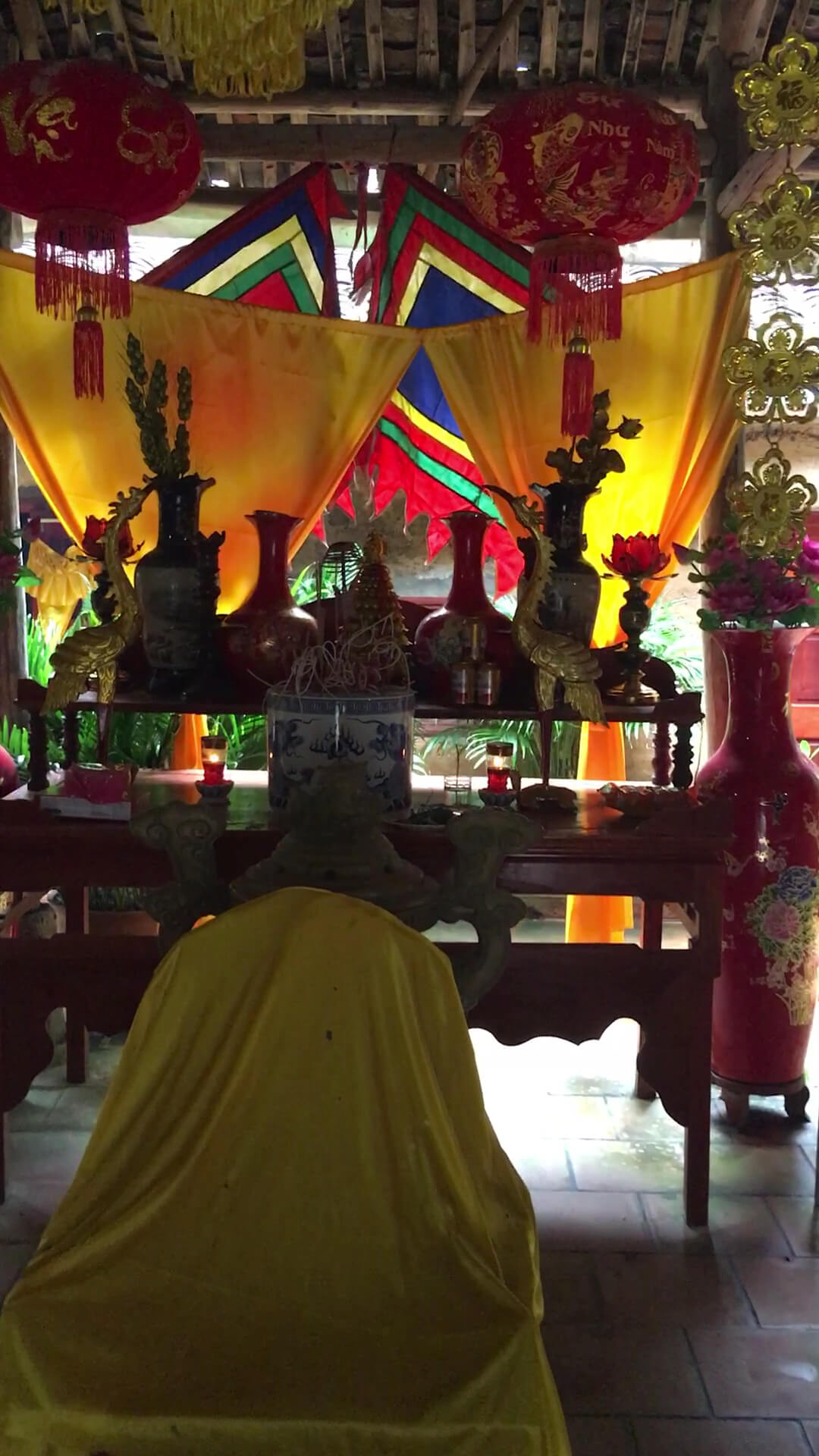
Hoang Luc Temple in Dinh Phong Commune, Trung Khanh, Cao Bang
The figure worshipped at the temple is Hoang Luc, whom locals honor as General An Bien. He was a Tay leader in the former Quang Nguyen region, credited with organizing forces and leading the people against northern invaders during the Ly dynasty.
According to legend, he was born in the 11th century in Lung Dinh, in the former Thuong Lang District, now Dinh Phong Commune. In local folklore, Hoang Luc is often mentioned alongside Nung Tri Cao, and the people supported the armies of both leaders wherever they went.
Hoang Luc is remembered not only as a general, but also as a protector of local villages. After his death, the people built a temple in his honor and made him the village guardian deity, regarding him as the divine protector of the region.
Historical significance and royal decrees
The temple’s collection of royal decrees gives it particular significance. Successive rulers granted Hoang Luc decrees recognizing his service. The surviving decrees, now being recreated in a style that reflects the originals, are rare Han-Nom documents of great historical and religious value.
In 2004, Cao Bang Province recognized the temple as a provincial-level historical and cultural site.
The architecture of Hoang Luc Temple
One thing to know before visiting: only traces of Hoang Luc Temple’s architecture remain today. This is not a grand temple for taking photos; it is a place to learn about and reflect on history.
Based on surveys and local accounts, the temple may once have looked like this:
- Layout: The temple was built with two bays in the shape of the Chinese character er (二), covering about 100 m². It had a timber frame, a roof of yin-yang tiles, and a south-facing entrance.
- Rammed-earth walls: Locals have often described a traditional Tay building technique that used clay mixed with sugarcane molasses to make rammed-earth walls. This distinctive feature reflects local knowledge of how to make use of available materials.
- Worship spaces: The temple was divided into a front hall and an inner sanctuary, separated by a thick wall. A horizontal lacquered board above the altar bore the four characters “Tu cach chi than.” The couplets on either side praised Hoang Luc’s virtue and authority during the resistance against the Song army.
- Historic artifacts: According to locals, the temple once housed a bronze statue of Hoang Luc, flanked by earthen statues of civil and military officials, as well as a bronze bell. Most of these items were lost to war, natural disasters, and historical upheaval.
Festivals and rituals at the temple
The Hoang Luc Temple Festival is now held annually on the 28th day of the second lunar month, drawing thousands of people from Cao Bang and visitors from elsewhere. Locals also observe the spring and autumn rites on the full moon of the first lunar month and after the harvest. These occasions feature folk activities such as con throwing, courtship singing, and qilin dancing.
The temple’s rituals reflect the agricultural traditions of the northern highlands. Offerings are mostly local produce, including rice, rice wine, chicken, pork, and traditional cakes and fruit. They express hopes for favorable weather, abundant harvests, and a peaceful life along the border. Rituals are usually led by elders well versed in local customs.
To experience the festival atmosphere, plan your visit for around the end of the second lunar month or the full moon of the first lunar month. As festival dates may change from year to year, check with the commune authorities or local residents in advance.
How to Get to Hoang Luc Temple
From Hanoi: Take a coach or limousine bus to Cao Bang City (about 6–7 hours).
From Cao Bang City: Head toward Trung Khanh and Ban Gioc Waterfall. When you reach Dinh Phong Commune, ask locals for directions to the temple. There are few signs pointing to the historic site, so asking for directions is quicker than relying on a map alone.
Getting around: You can travel along the main route by motorbike or car. The road to Trung Khanh has many steep mountain passes, so check your vehicle carefully before setting out.
Suggested Itinerary
Hoang Luc Temple is easy to include on a trip through Trung Khanh. A suggested sightseeing route takes in Ban Gioc Waterfall, Nguom Ngao Cave, Khuoi Ky Stone Village and the Hoang Luc historic site.
- Morning: Leave Cao Bang City and stop at Hoang Luc Temple to learn about its history.
- Midday: Visit Ban Gioc Waterfall and enjoy a local lunch of seven-flavor roasted duck and Trung Khanh chestnuts.
- Afternoon: Explore Nguom Ngao Cave and Khuoi Ky Stone Village, then stay overnight at a homestay near Ban Gioc.
Tips for Visiting Hoang Luc Temple
- Set your expectations: The temple is now mostly in ruins, making it a better fit for visitors interested in history and culture than those looking for a spectacular photo spot.
- Dress respectfully: This is a place of worship, so dress modestly and keep noise to a minimum.
- Do not touch or move artifacts, incense burners or any remaining parts of the historic site.
- Ask permission before photographing the worship area or local people taking part in a ceremony.
- Ask village elders to share stories about Hoang Luc. It is the best way to gain a deeper understanding of the historic site.
- Bring water and snacks as there are few services near the site.
- Keep the area clean and take your rubbish with you to help protect the historic site.
Hoang Luc Temple makes its impression not through grand architecture, but through its rich history and the border community’s deep affection for the general who defended their village and land. A visit offers insight into the Cao Bang Tay people’s tradition of resisting foreign invaders and helps bring the site greater recognition, supporting its preservation and restoration in the future. If you’re on your way to Ban Gioc, take some time to stop here.


