

Voice of Vietnam Historic Site at Nguom Chieng Cave – Where the National Broadcast Echoed from the Mountains of Trung Khanh
Just a few kilometers from the center of Trung Khanh, a quiet cave sits amid the rice fields of Bo Da Hamlet. Few people would guess that during the Vietnam War, the Voice of Vietnam broadcast from deep inside this cave, carrying the voice of the nation to people and soldiers across the country. This is Nguom Chieng Cave, once home to A3 Radio Station and now a nationally recognized historical site.
Where Is the Site?
The site is at Nguom Chieng Cave in Bo Da Hamlet. It was formerly in Trung Khanh Town (the former Trung Khanh District) and is now part of Trung Khanh Commune.
Getting there: From the center of Trung Khanh, take National Highway 4A toward Ban Gioc Waterfall for about 3 km. At Na Lung Bridge, turn left and continue for about 200 m to reach the site. On Google Maps, it is listed as “Vov history centre”.
The National Broadcast Goes Underground
During the wars against France and the United States, the Voice of Vietnam had to evacuate 14 times to keep the national broadcast safe. Its first evacuation site was Tram Cave in Hanoi, from where the station broadcast President Ho Chi Minh’s Appeal for National Resistance at dawn on December 20, 1946.
As the war against the United States intensified and northern Vietnam came under heavy attack, the station needed secure, discreet backup sites to keep broadcasts on the air without interruption. The limestone mountains of Trung Khanh, in the border region of Cao Bang, were chosen for the task.
From CK3 Backup Station to A3 Radio Station
From August 19 to September 5, 1964, a survey team from the station visited the Trung Khanh area. While waiting for the A3 Radio Station facilities to be completed, the team selected Phia De Cave in Ban Da Hamlet, Dinh Minh Commune (now Bo Da Hamlet) as the site for a network of backup transmitters broadcasting the Voice of Vietnam. It was named CK3.
With its rugged terrain and defensible position, Nguom Chieng Cave was chosen as a backup site for the Voice of Vietnam, known as A3 Radio Station. During construction, it was called Construction Site 50. Over the two years of construction, as many as 300 civilian workers were mobilized at times to build roads and clear the surrounding area, helping get broadcasts on the air as quickly as possible.
From 1966 to 1978, the A3 transmitter inside Nguom Chieng Cave served as an evacuation site for the Voice of Vietnam. For more than a decade, the Voice of Vietnam continued to broadcast from deep inside the mountains of Trung Khanh, contributing to the victory of national liberation and reunification.
Behind those broadcasts were the efforts of the station’s staff and technicians, along with the support and contributions of Trung Khanh’s ethnic communities.
The Historic Site Today
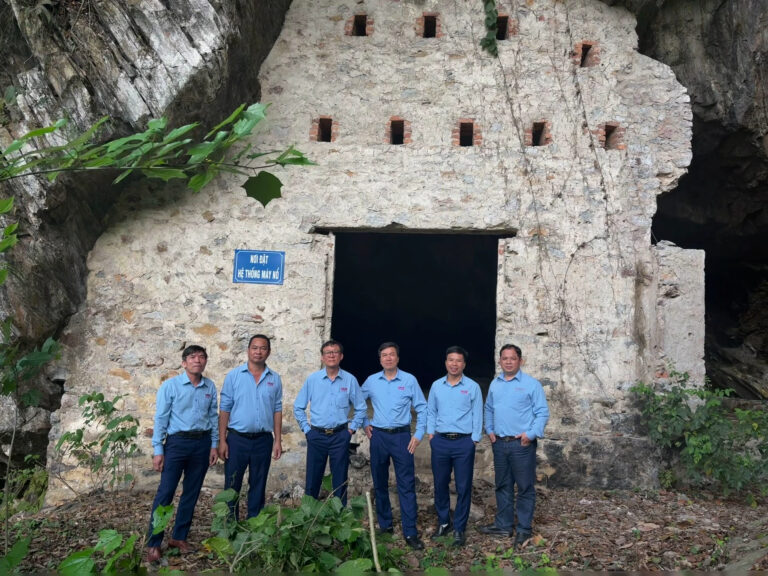
Over time, natural forces and human activity destroyed the rooms built inside Nguom Chieng Cave to house the broadcasting equipment. Only the tiled floor and foundations remain. At the far end of the cave, 124 steps leading to the rear exit, where the receiver once stood, are still intact.
The land where antenna masts once stood has since become rice fields cultivated by families in Bo Da Hamlet.
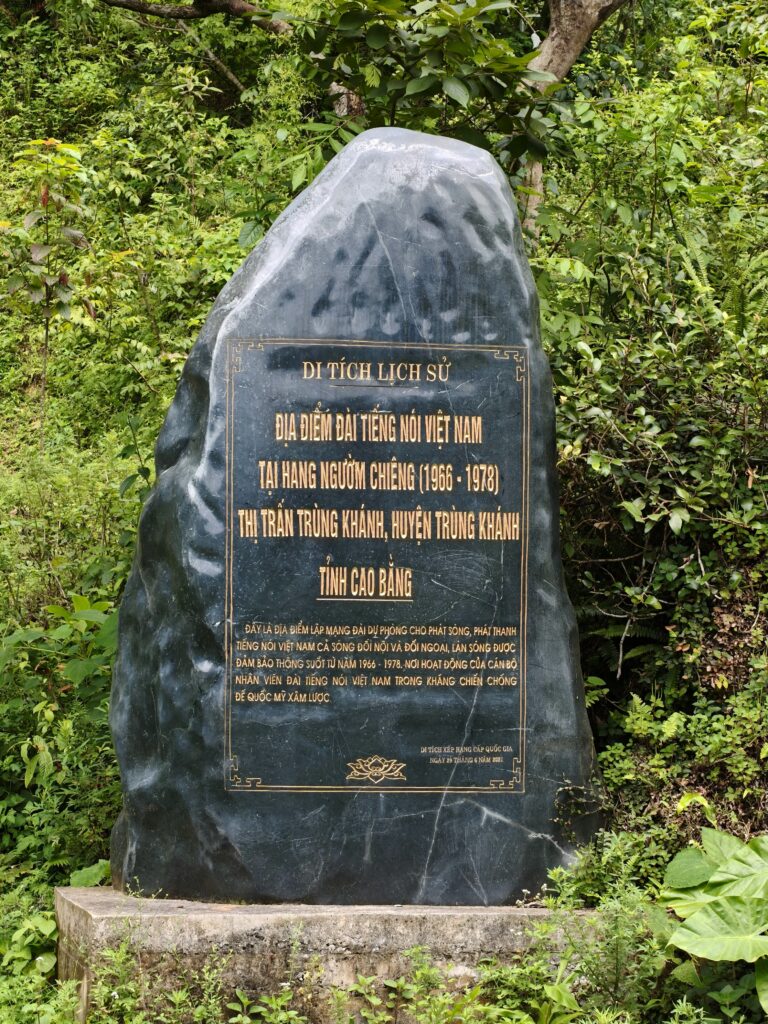
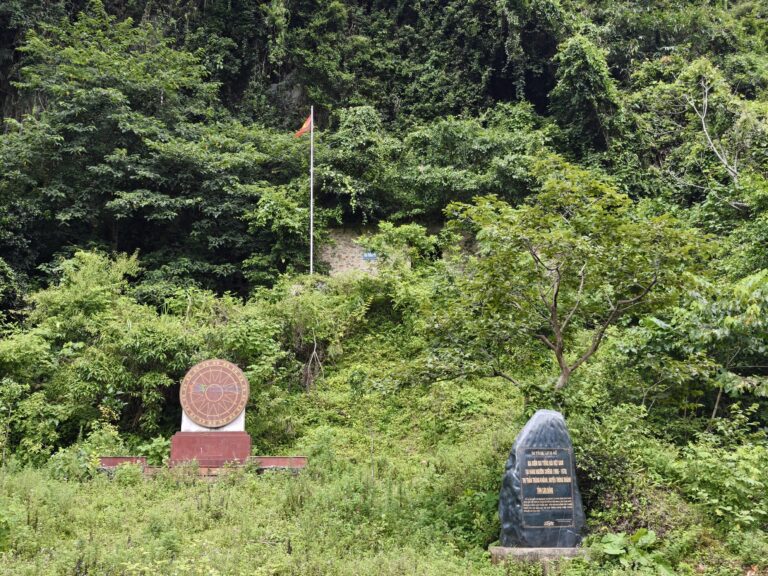
In 2014, the Voice of Vietnam installed a commemorative plaque reading: “Voice of Vietnam – A3 Radio Station. A radio transmitter was located here from 1966 to 1978,” and erected the station’s emblem near the cave.
On June 29, 2021, the Minister of Culture, Sports and Tourism issued Decision No. 1987/QD-BVHTTDL, recognizing the Voice of Vietnam Site at Nguom Chieng Cave (1966–1978) as a national historical site.
What to See at the Site
Discover its history: Standing before the commemorative plaque and the station’s emblem, you can picture the years when the national broadcast had to go into hiding deep inside the mountains.
Explore Nguom Chieng Cave: Look for the surviving traces, including the tiled floor, foundations, and especially the 124 steps leading to the rear exit.