

God’s Eye Mountain in Cao Bang – A Surprising Sight in the Northeastern Mountains
God’s Eye Mountain in Cao Bang is a distinctive stop on a journey through the Northeast’s mountainous region. Its appeal lies not in man-made structures, but in the unusual shape of a limestone mountain with a large hole running right through it.
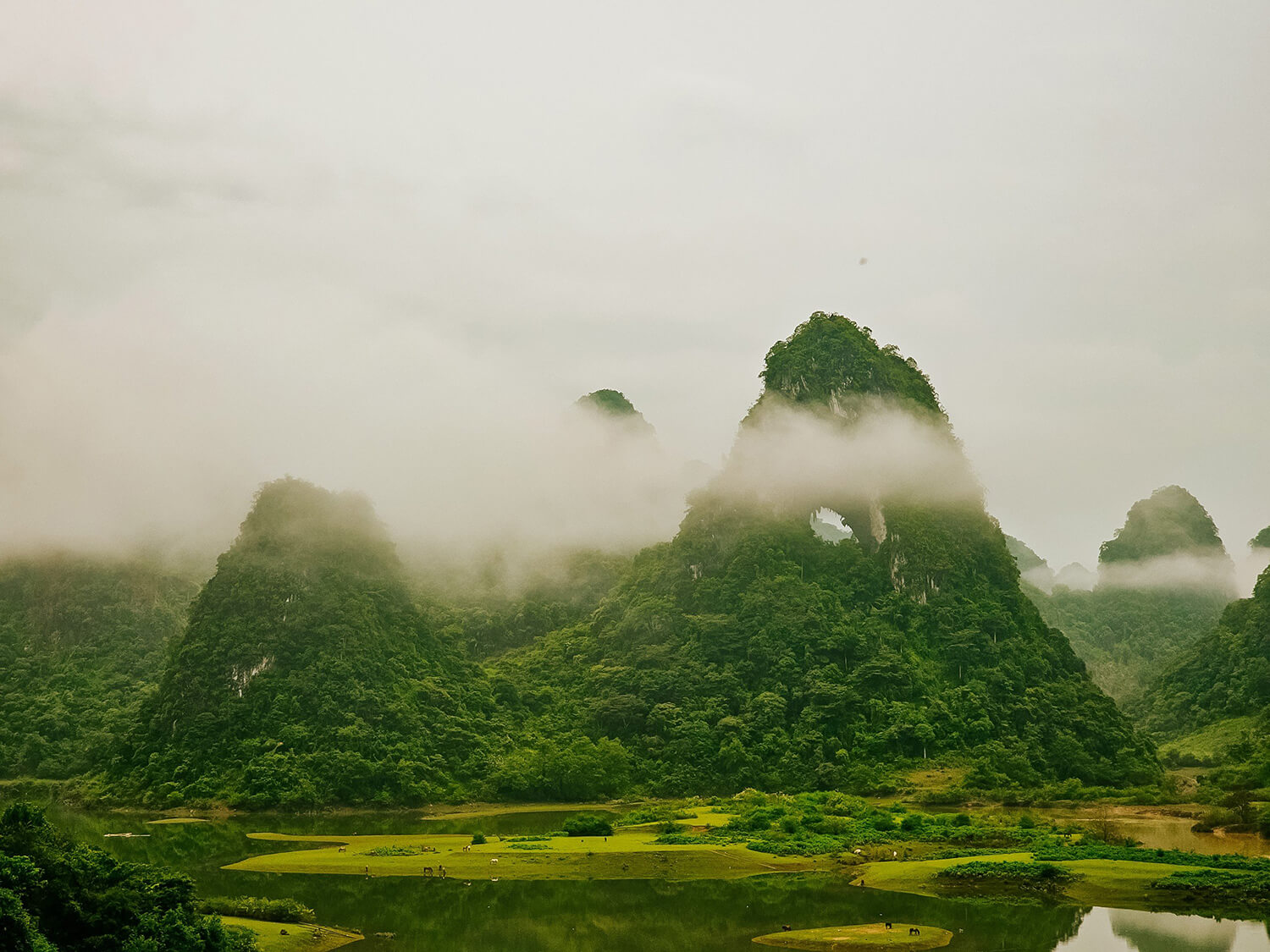
Known locally to the Tay people as Phja Piot, the mountain’s name means “pierced mountain.” This striking feature has also inspired familiar names such as Pierced Mountain and God’s Eye Mountain.
If you’re planning a visit, there’s more to consider than where God’s Eye Mountain is: take in the surrounding scenery, choose the right time to go, and prepare for a smoother trip.
Where Is God’s Eye Mountain?
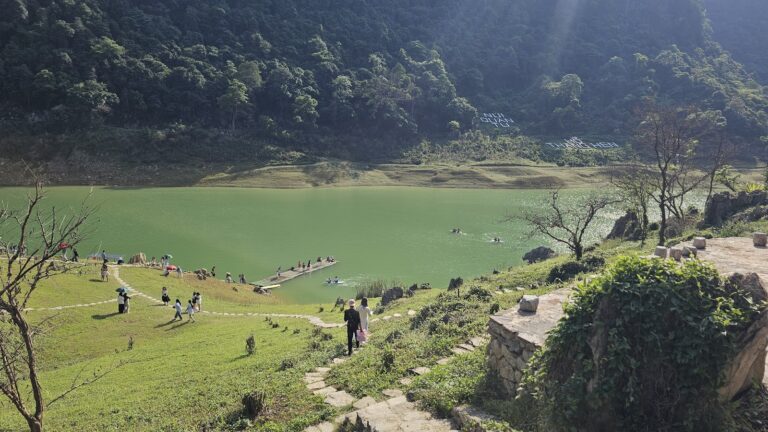
God’s Eye Mountain lies in the Thang Hen Lake area, amid the limestone scenery of Cao Bang. It is a highlight of the Non Nuoc Cao Bang UNESCO Global Geopark. A source from the Cao Bang Union of Science and Technology Associations records the God’s Eye Mountain–Thang Hen Lake scenic area in Quoc Toan, Trung Khanh District, under the former administrative boundaries.
When looking up directions, check the current administrative place names and road routes for your travel date, as boundaries may have changed.
God’s Eye Mountain is about 2 km from Thang Hen Lake, so the two attractions are easy to combine in one trip.
Why Is It Called God’s Eye Mountain?
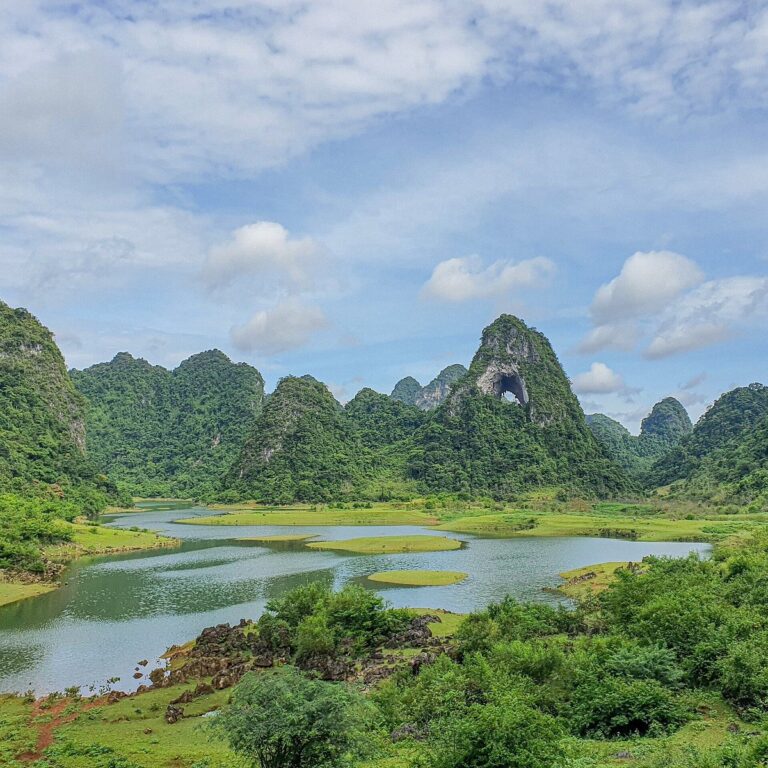
The mountain’s most distinctive feature is a hole that runs right through it.
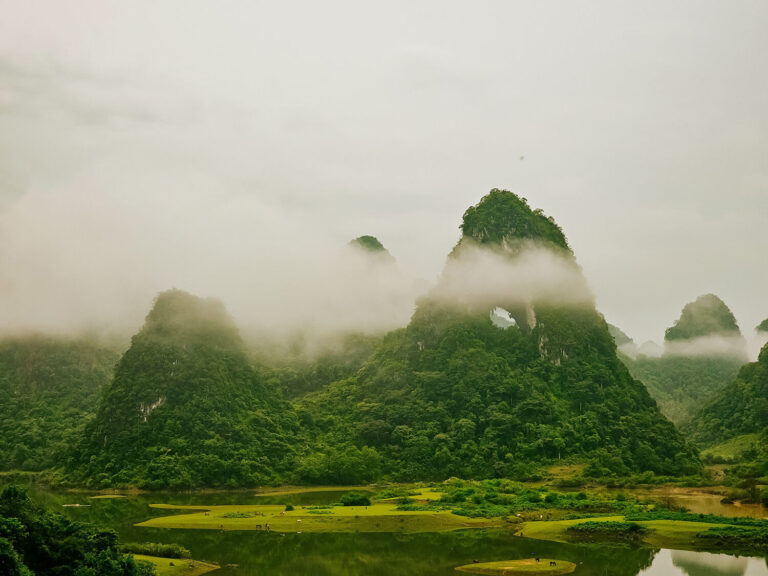
From the front, the large opening looks like a giant eye set among the mountains. From one side, you can see through the opening to the other side of the mountain, giving it a profile unlike that of typical limestone peaks.
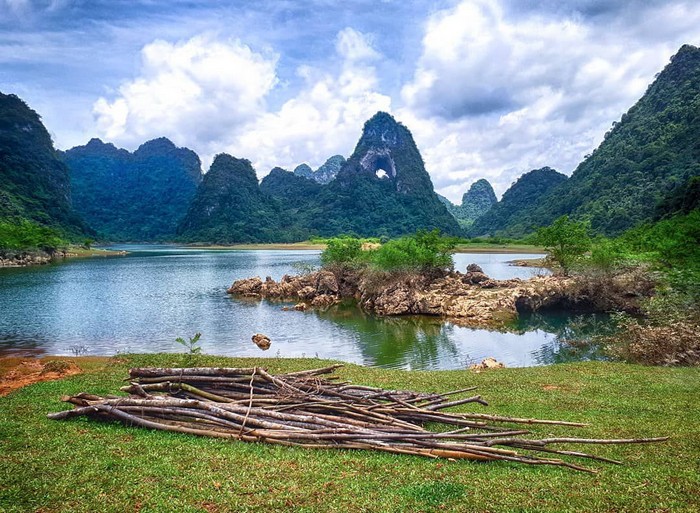
The local Tay name Phja Piot refers directly to this feature and means “pierced mountain.”
This unusual natural formation is what makes God’s Eye Mountain instantly recognizable.
What Is the Scenery Around God’s Eye Mountain Like?
God’s Eye Mountain is part of a wider landscape, not an isolated peak. A broad valley stretches beneath it, and the scenery changes with the seasons.
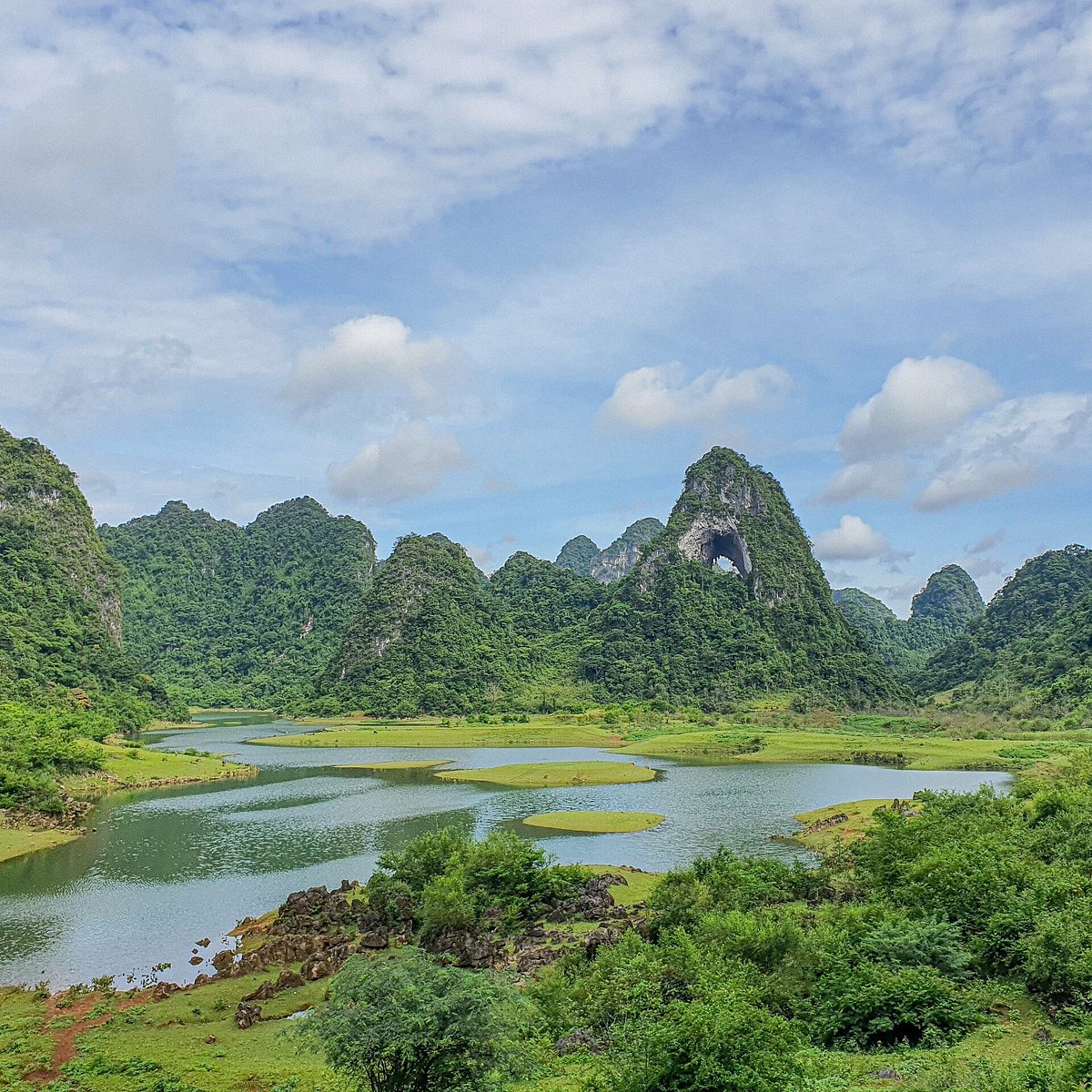
According to the Cao Bang Union of Science and Technology Associations, the area at the foot of the mountain covers about 15 hectares. During the rainy season, a large body of water may form here, known locally as Nam Cha Lake. When the water recedes, wide grasslands emerge below the mountain.
As a result, God’s Eye Mountain doesn’t always look the same.
At times, you’ll find the limestone peak reflected in the water; at others, green grass fills the valley. These seasonal changes are part of what makes the area distinctive.
When Is the Best Time to Visit God’s Eye Mountain?
There’s no single best time to visit, as the scenery changes with water levels and weather.
When the Water Is High
When there’s plenty of water below the mountain, the scenery brings together limestone peaks, water and sky. This is a good time to photograph God’s Eye Mountain reflected on the water.
When the Grass Is Green
After the water recedes, wide grasslands appear across the valley floor. The open scenery is ideal for taking in the views, photographing nature or simply relaxing.
An Important Note
Don’t choose your travel date based only on photos online. The scenery at God’s Eye Mountain depends on the season, rainfall and actual weather conditions, so what you see in person may differ quite a bit from photos taken at another time of year.
Combine God’s Eye Mountain with Thang Hen Lake
If you visit God’s Eye Mountain, Thang Hen Lake is well worth adding to your itinerary.
Thang Hen Lake is part of a group of 36 natural lakes in the area. The lakes lie in a broad valley and are linked by an underground cave system. God’s Eye Mountain is about 2 km from Thang Hen Lake.
Visiting both adds variety to your trip: one features limestone terrain with a remarkable opening, while the other is a system of lakes set among limestone mountains.
If you have time, explore the wider area instead of stopping only for a few photos of God’s Eye Mountain.
What Can You Do at God’s Eye Mountain?
Admire the Mountain’s Unusual Shape
This is the main reason to visit God’s Eye Mountain. Take time to view it from different open spots in the valley to get a clear look at the hole running through the mountain.
Take Panoramic Photos
Rather than focusing only on the opening, include the valley, grasslands or water, and limestone peak in your frame. This gives a better sense of how God’s Eye Mountain fits into the surrounding landscape.
Walk and Enjoy the Scenery
The area is best suited to gentle activities such as walking, enjoying the views and learning about the natural landscape. There’s no need to seek out lots of entertainment—the scenery is the main attraction.
Explore Thang Hen Lake as Well
Since it’s nearby, Thang Hen Lake is easy to add to your itinerary for a more complete visit.
Is the Road to God’s Eye Mountain Difficult?
God’s Eye Mountain is in a mountainous area, so travel conditions depend largely on the weather and the state of the roads.
If travelling by motorbike, take care on local roads and slow down on slippery surfaces or in bad weather. If travelling by car, check the specific route before setting off rather than relying only on the travel time shown in your map app.
If travelling during the rainy season, check road conditions before you leave.
What Should You Bring to God’s Eye Mountain?
God’s Eye Mountain is ideal for nature-focused trips, so you won’t need to bring much. A few items can make your visit more comfortable:
- Shoes or sandals with good grip.
- Drinking water.
- A jacket or sun protection, depending on the weather.
- Check the forecast before you go.
- A power bank if you plan to use your phone for photos and navigation.
- A personal rubbish bag so you can take your waste with you.
If you plan to take photos, make time to take in the whole landscape rather than focusing only on the mountain’s best-known viewpoint.
Tips for Visiting God’s Eye Mountain
God’s Eye Mountain is a natural attraction, so it is important to help preserve its scenery.
Do not climb to dangerous spots on the mountain to take photos. In particular, stay away from cliff edges and areas without a clearly marked access path.
Please also avoid littering, damaging plants, or leaving belongings behind after a rest.
A memorable trip is about more than beautiful photos. It also means leaving the landscape as natural as you found it.
Is God’s Eye Mountain Worth Visiting?
If you love mountains, limestone landscapes, and nature destinations, God’s Eye Mountain is well worth adding to your Cao Bang itinerary.
Its most distinctive feature is easy to spot: a large hole runs through the mountain, giving it the appearance of an eye. But if you only stop for a photo and then leave, you will miss what makes the place even more interesting: the broad valley, scenery that changes with the seasons, and nearby Thang Hen Lake.
God’s Eye Mountain also captures one of Cao Bang’s defining qualities: its natural landscapes need few man-made features to make a lasting impression.
Conclusion
God’s Eye Mountain in Cao Bang is a striking natural landmark, shaped by a hole that passes through the mountain. The Tay name, Phja Piot, also comes from this distinctive feature: a “mountain with a hole.”
What makes God’s Eye Mountain worth exploring is not just its unusual shape, but also the valley at its foot, where the scenery changes with the seasons, from expanses of water to wide grasslands.
If you are planning a visit, check the weather and road conditions, and allow time to visit nearby Thang Hen Lake. Above all, help preserve the landscape so God’s Eye Mountain retains its natural beauty.