Kolia Tea Plantation – Organic Tea Hills on the Misty Peak of Phia Den
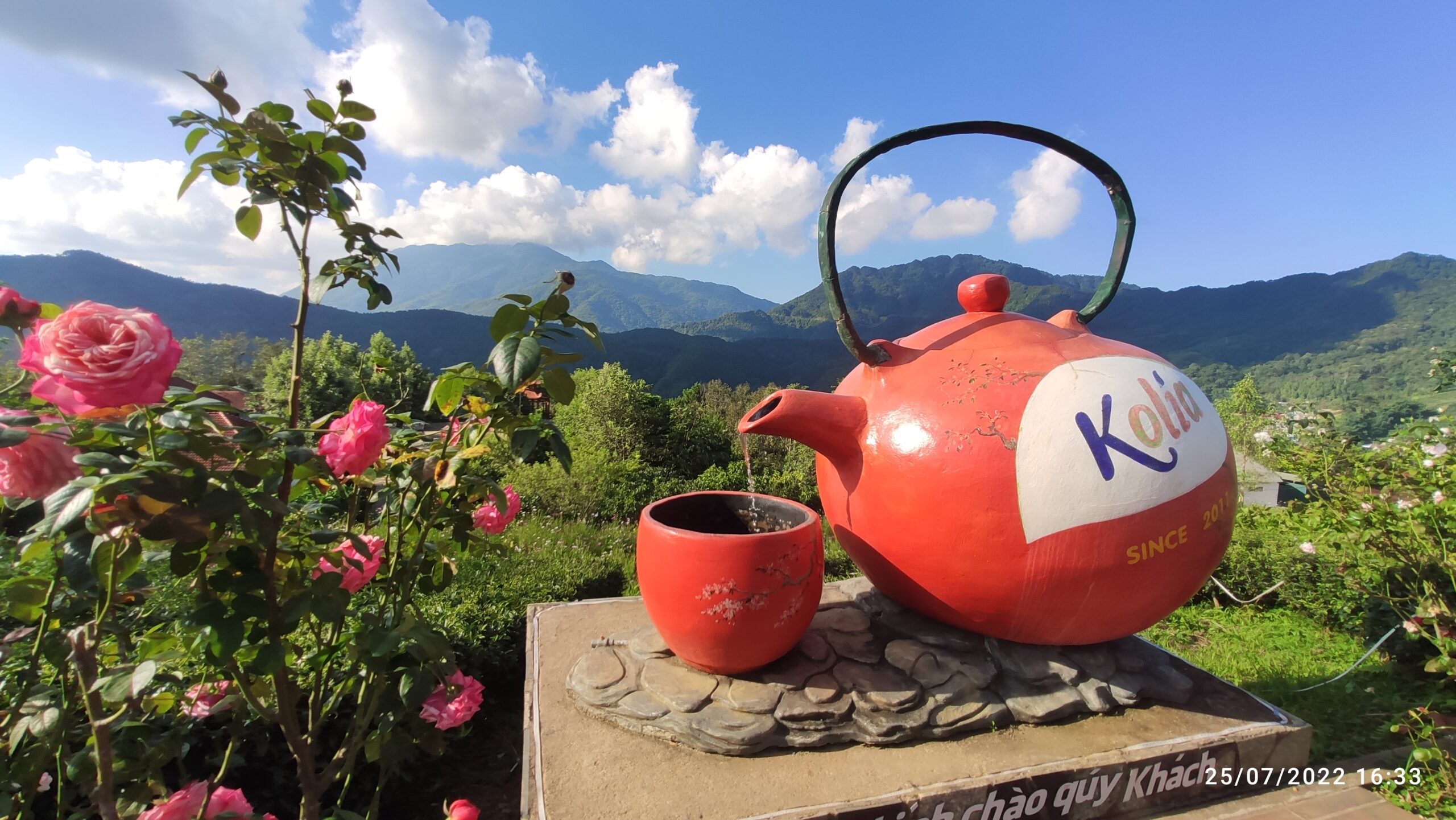
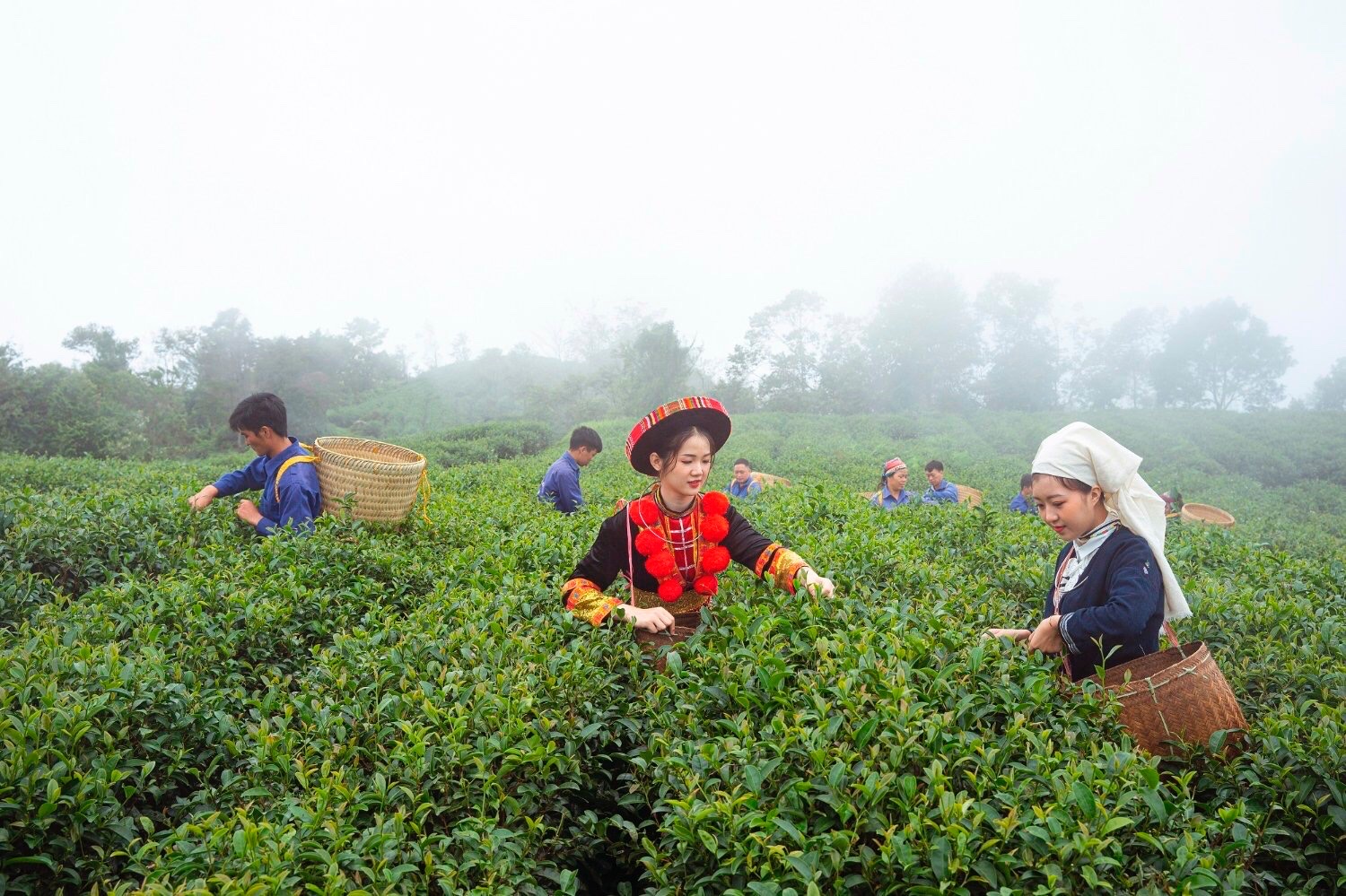
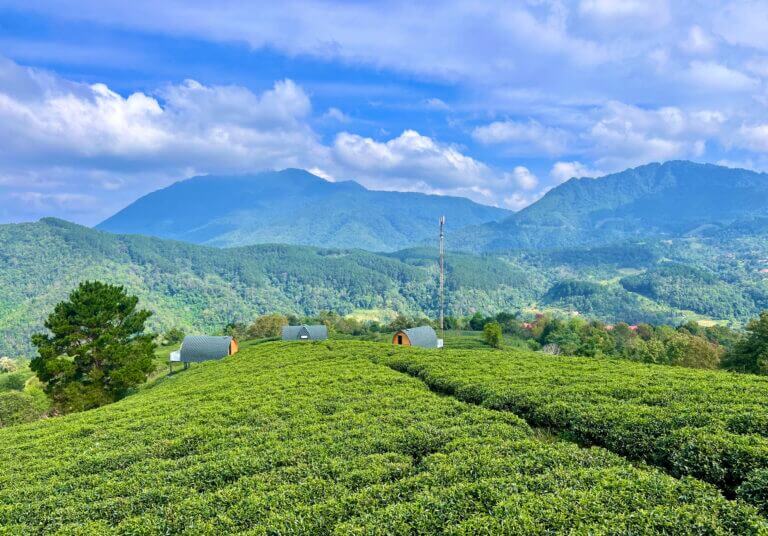
At the summit of Phia Den, more than 1,200 meters above sea level, lush green tea rows stretch from the misty mountaintop down into the valley. Each morning, white mist blankets the hills, and tea pickers work among the clouds. This is Kolia Tea Plantation, Cao Bang’s first organic tea-growing area, where tea buds thrive in the cool air and mist, nourished by pristine water from deep within the mountain to create a truly distinctive flavor.
Where Is the Tea Plantation?
Kolia Tea Plantation sits on Phia Den Mountain in Phia Den Hamlet, Thanh Cong Commune (formerly in Nguyen Binh District), within the buffer zone of Phia Oac – Phia Den National Park. In July 2025, the new Thanh Cong Commune was formed from Quang Thanh and Thanh Cong communes.
The plantation is about 70 km from Cao Bang city center, along the road to the summit of Phia Oac.
From Grazing Hillsides to Lush Tea Fields
The story of Kolia Tea Plantation is one of bringing the land back to life. More than 10 years ago, this was just grazing land for livestock in Phia Den Hamlet, with barren hills covered mostly by natural forest.
Kolia Company Limited was established in 2011 to develop Cao Bang Province’s first large-scale organic tea-growing area. After two years of trials, green tea and oolong varieties proved well suited to the hillsides. The company traveled to Phu Tho to transport truckloads of tea cuttings for planting across nearly 20 hectares.
Where bare hills once stood, Kolia now has 20 hectares of organic tea fields, along with a one-hectare pear orchard and a one-hectare orchard of plums and peaches.
What Makes Phia Den Tea Special?
Elevation and Climate
Tea here is grown at elevations above 1,200 meters in a cold climate, under clouds and mist year-round. As a result, the leaves are thicker and accumulate more natural compounds, giving Kolia tea its distinctive flavor. Mineral-rich soil and clean water from deep within Phia Den Mountain further enhance its character.
Premium Tea Varieties
Rare varieties such as Oolong Thanh Tam, Kim Tuyen, and Phuc Van Tien have found an ideal home here.
Strict Organic Farming
Tea plants are grown and cared for according to IFOAM international organic standards, without pesticides or chemical fertilizers. The closed-loop organic process covers every stage, from planting and tending to drying, roasting, flavoring, and packaging. Workers combine traditional farming techniques with modern science to produce pure tea leaves.
The result is a cup of tea with a natural aroma and a delicately sweet finish.
From the Mountain Peak to the World
Each year, the plantation produces around 6–7 tons of raw tea, which are processed into more than 10 different tea products. Among them, Phia Den-branded Black Tea and Green Tea have received OCOP certification from Cao Bang Province.
Beyond Vietnam, Phia Den tea has reached discerning markets such as Japan, Taiwan, and China, all known for their strong tea industries.
The Tea Hills and People of Phia Den
The plantation adds to the area’s natural beauty while creating jobs and raising local incomes. Tea picking provides a steady source of income for people in Phia Den, who once relied mainly on farming hillside plots.
In 2024, the Institute for Tourism Development Research and the Cao Bang Department of Culture, Sports and Tourism surveyed the Phia Den tea-growing area as one of the province’s signature tea regions with potential for tourism development.
What to Do at Kolia Tea Plantation
Walk among the tea hills at dawn: Strolling between the green tea rows as the mist lingers and clouds drift at eye level is one of the most beautiful moments at Kolia.
Take in the views from the lookout: Perched high on a mountain amid rolling green tea fields, the lookout offers sweeping views of the plantation and the forests of Phia Den.
Enjoy tea on site: Sip a cup of oolong tea made right at the plantation in the cool mountain air.
Learn how tea is made: If you visit during the harvest season, you can watch local farmers picking tea leaves and learn about the processing stages.
Buy tea to take home: Phia Den-branded black, green and oolong teas make thoughtful souvenirs from the mountains.
Take photos: Layered green tea fields framed by mountain mist make a beautiful backdrop, especially on misty mornings and in the late afternoon light.
Combine it with other stops
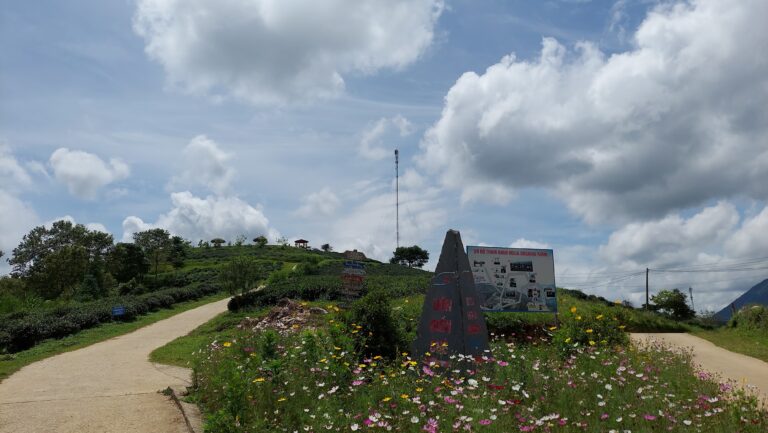
The tea plantation is part of the Kolia Ecotourism Area, which also has flower gardens, a lake, a campground and accommodation (see Kolia Organic Farm). Nearby, you can visit:
- Phia Oac Peak (1,931 m): Go cloud hunting and see winter frost.
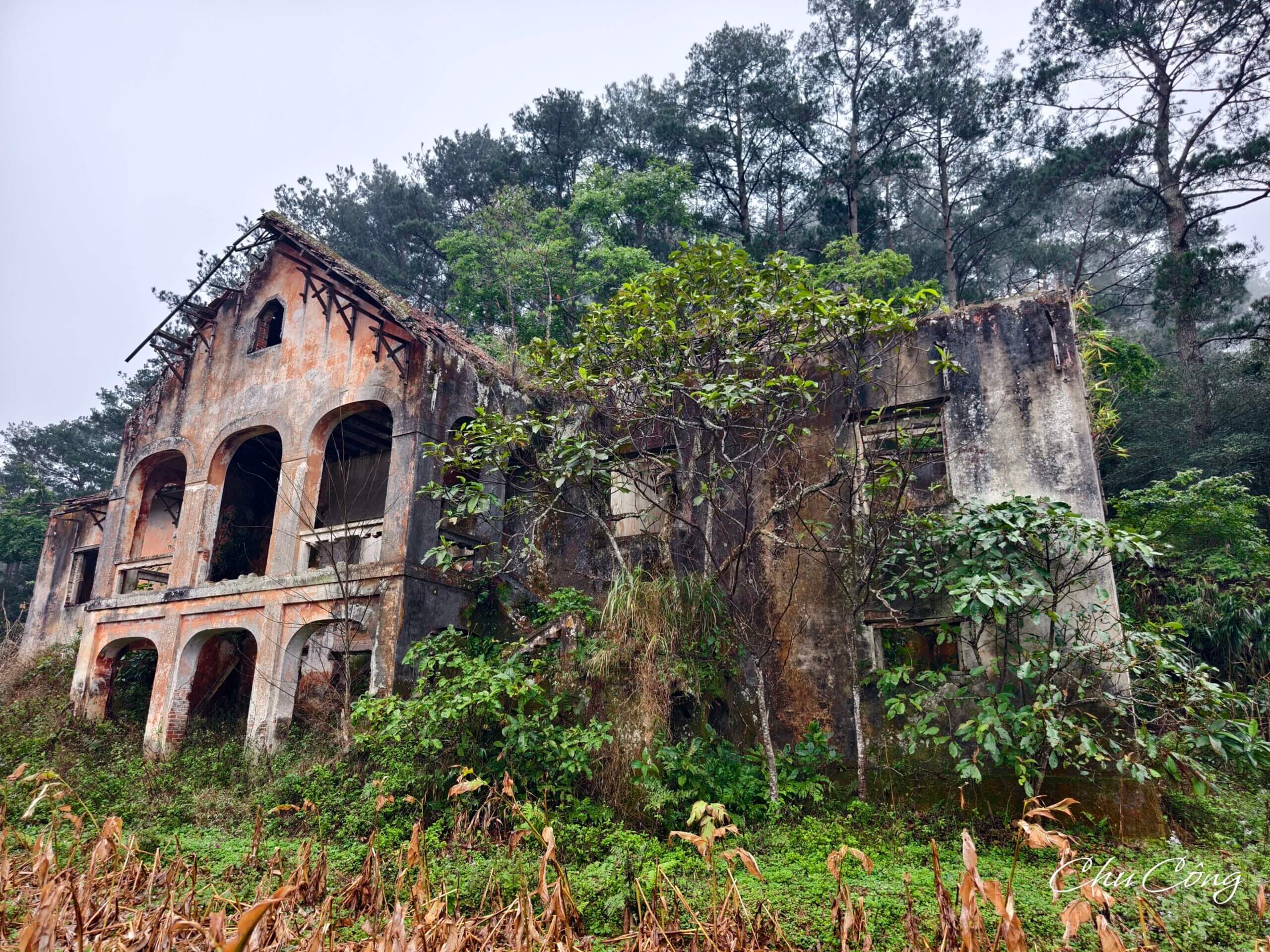
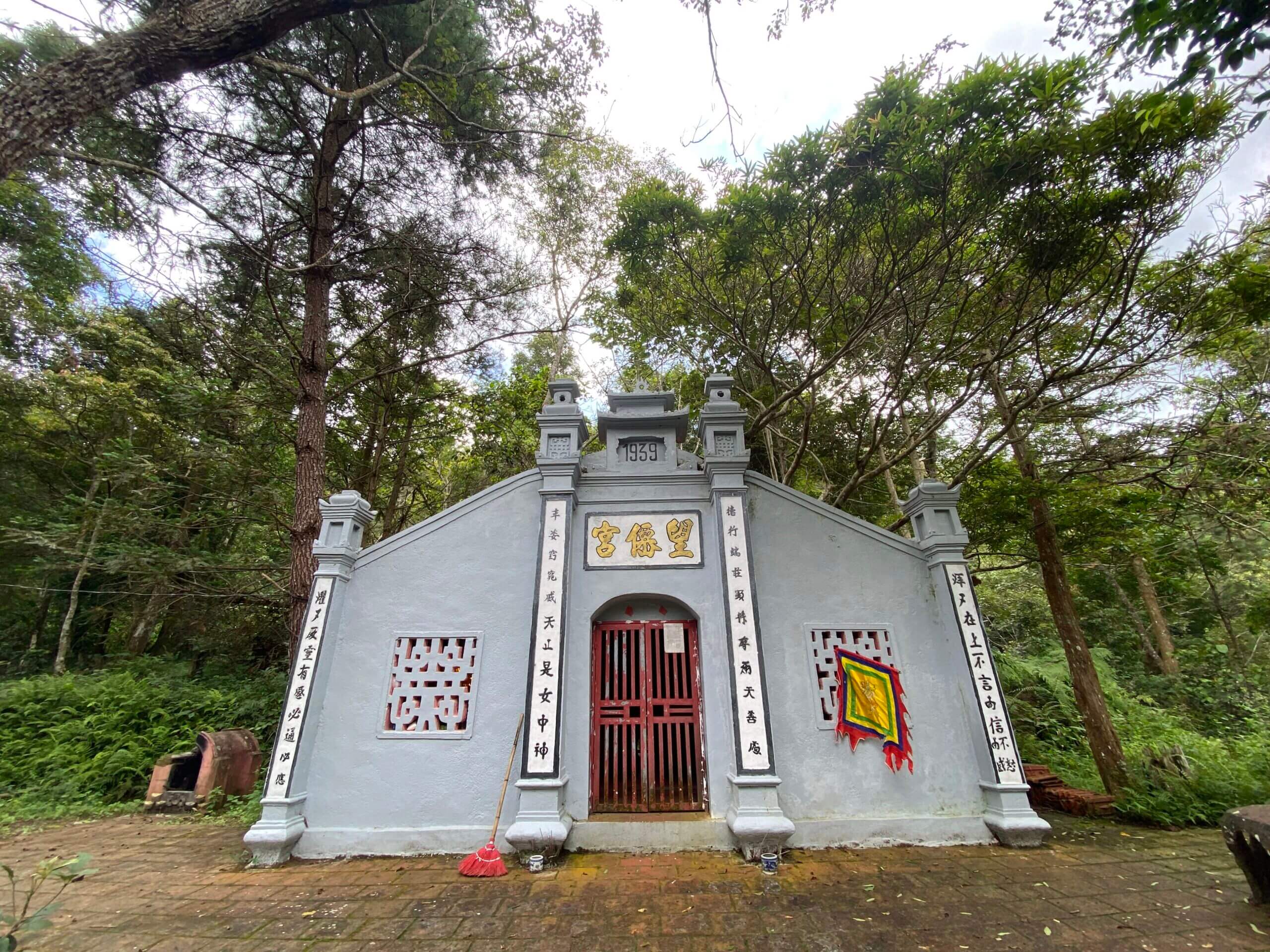
- Phia Den Red Villa and Vong Tien Cung Shrine: Remnants of the French colonial era.
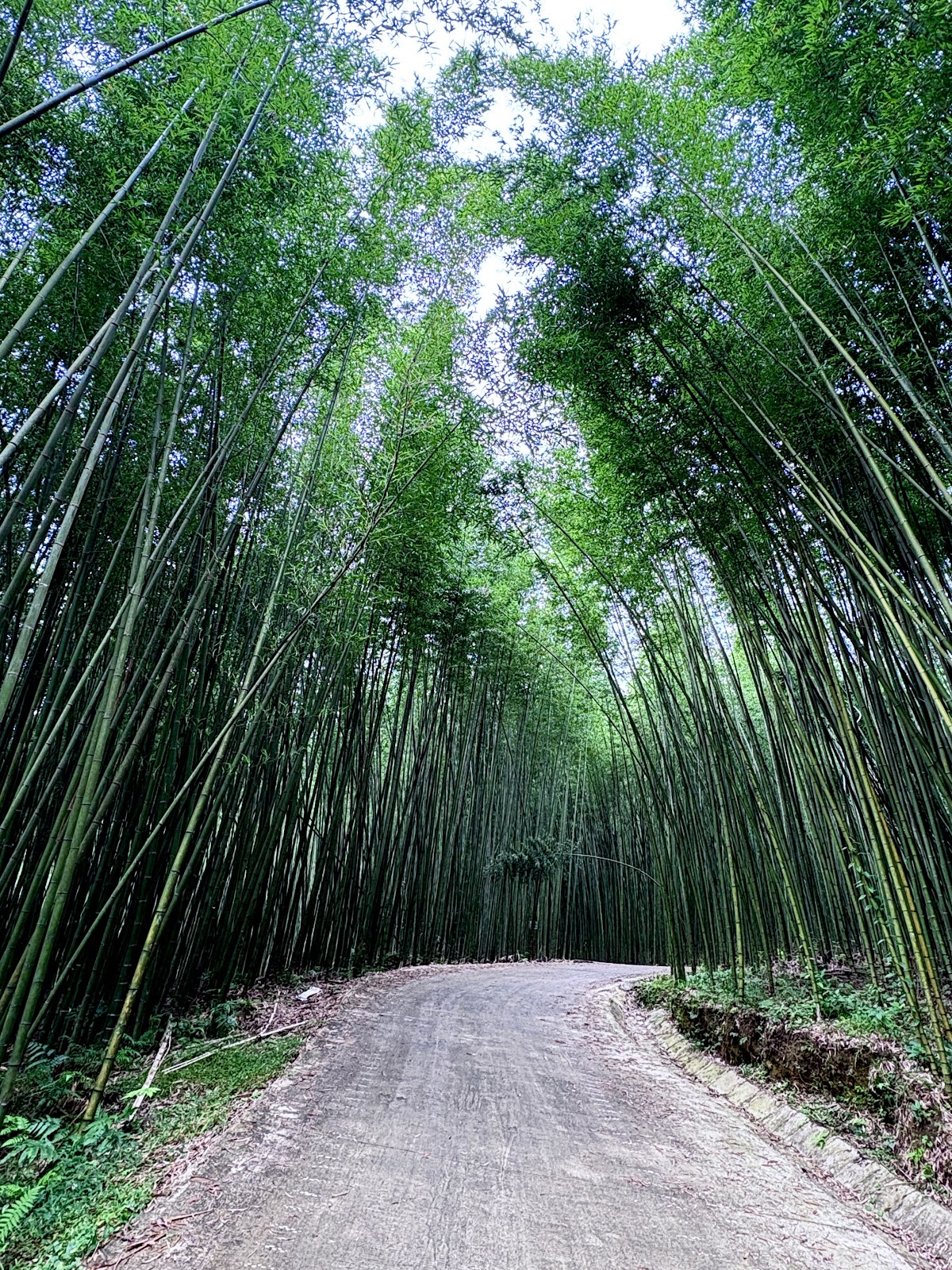
- Ban Phuong Bamboo Forest: A green bamboo forest at an elevation of over 1,000 metres.
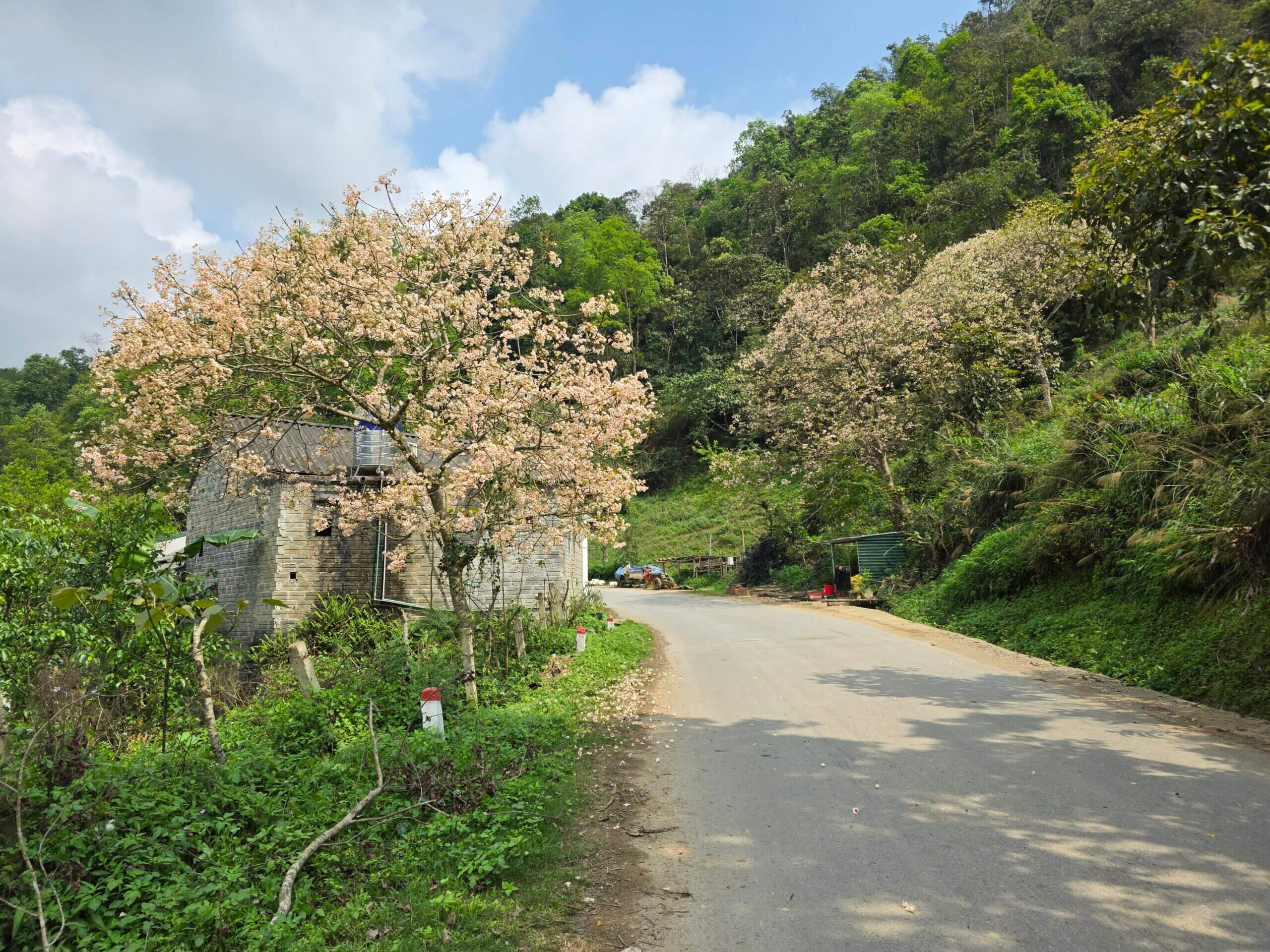
- Beautiful Vernicia Tree: A nearby Kolia photo spot when the Vernicia trees are in bloom.
Visitor tips
- Do not pick tea leaves or break branches while taking photos; this is a working tea plantation.
- Stay on marked paths and avoid stepping on the tea rows.
- Bring warm layers: At over 1,200 metres, early mornings and evenings can be quite cold, even in summer.
- Contact the plantation in advance if you want to tour the processing workshop or buy tea in bulk.
- The road to Phia Den has many bends and can be foggy, so drive slowly with your headlights on.
In conclusion
Kolia Tea Plantation is more than just a tea farm. It tells the story of how barren hillsides were transformed into lush tea fields, bringing the flavours of Phia Den’s mountain air to the world. Take an early morning stroll through the tea fields and sip hot tea in the cool mist. You will taste the lingering sweetness of Cao Bang’s mountains and forests.