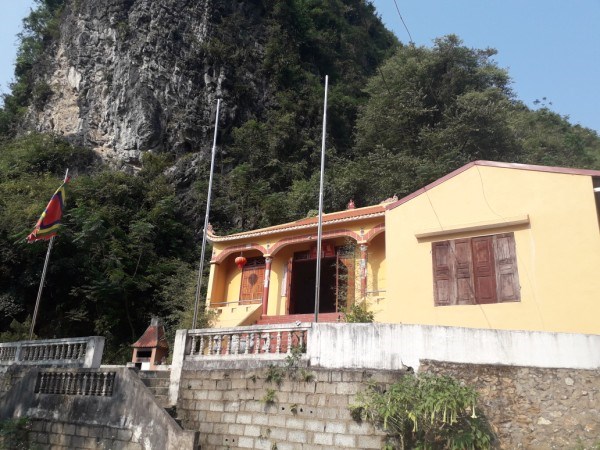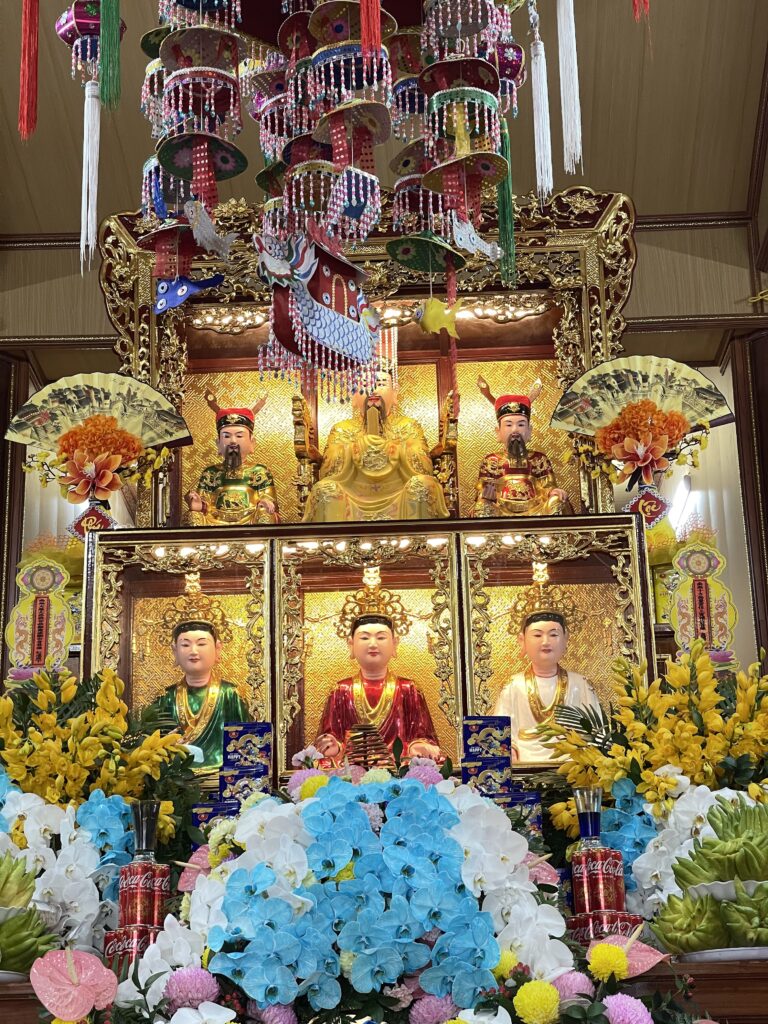
- Long Vuong Temple (Thong Hue Street): An old temple beside the Bac Vong River, at the foot of Ba Co Tien Mountain, associated with a lantern festival held in leap years.
- Lonely Rock (Cao Thang 3 Hamlet): A solitary limestone formation rising from a sea of golden rice fields.
- Ban Viet Lake: A mountain lake surrounded by forest, with red-leaved sweetgum trees in winter.
- Temple of Duc Thanh Pho (Trung Khanh town center): A temple dedicated to Hung Hien Dai Vuong Tran Quoc Uat.
Cho Waterfall (Thoong Ma) – A Lucky Waterfall at the Source of the Bac Vong River
Follow the Bac Vong River past rice fields and a succession of rugged mountains, and you’ll come upon a white cascade spilling over several tiers of rock in the heart of the forest. Locals call it Thoong Ma, meaning “Dog Waterfall”—an unusual name tied to an intriguing story. For the Thong Hue people, it is also the “lucky waterfall,” where water glitters like gold and silver and is believed to bring prosperity to the village.
Where is Cho Waterfall?
Cho Waterfall lies near the source of the Bac Vong River, about 1 km from the small town of Thong Hue, in Doai Duong Commune (formerly Trung Khanh District). It is about 17 km from Trung Khanh town center and more than 50 km from Cao Bang City.
Note: Cao Bang has another Cho Waterfall upstream on the Bang River, in the Ha Quang area. This article is about Cho Waterfall (Thoong Ma) in Thong Hue, in eastern Cao Bang.
Why is it called Cho Waterfall?
During thunderstorms, the waterfall makes strange sounds like a howling dog. That is why locals call it Thoong Ma, meaning “Dog Waterfall.”
But the name has another, more auspicious interpretation: “lucky waterfall.” Locals believe that in the rainy season, when the water surges down in a brilliant white torrent and glitters in the sunlight like gold and silver, the waterfall brings prosperity to the village.
Untamed beauty across multiple tiers
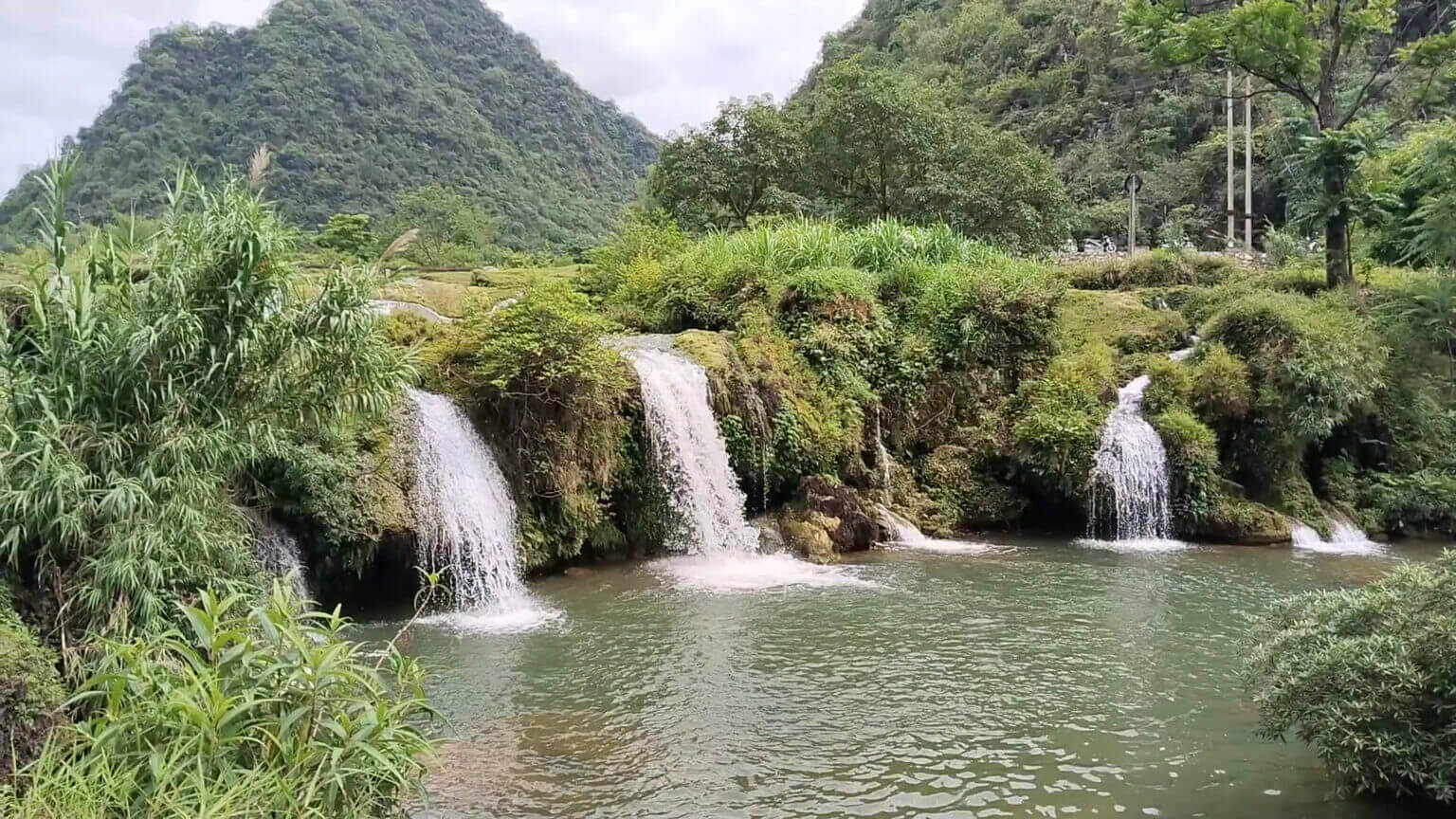
Cho Waterfall formed naturally in the Bac Vong River basin. It is a powerful cascade running down a steep rocky mountainside, with several tiers; the highest drops more than 10 meters.
The change in elevation gives the waterfall an imposing presence. Its white waters rush through the forest like a ribbon of silk, while a fine mist drifts through the air and settles on the grass nearby, adding to the wild, dramatic scenery.
At the foot of the waterfall, the force of the current has carved clear, green pools. Water winds through large and small boulders, naturally arranged like a wall that keeps the pools full year-round. Smooth, connected stone steps form a series of smaller cascades, creating a picture-perfect scene.
The journey to the waterfall is an experience in itself
The road to the waterfall is beautiful. Visit during rice-growing season and you’ll feel as though you’re traveling through lush green fields, with rugged mountains on one side and the gentle sound of the falls nearby. This picturesque landscape makes the journey part of the trip to remember.
When should you visit?
Rainy season (around May to July): The waterfall is at its most impressive, with abundant water rushing down in a brilliant white torrent. Locals say this is when it “glitters like gold and silver.”
Dry season: The flow is gentler and the water clear and green. With less rain, sunny weather and dry roads, it’s easier to get around.
What to do at Cho Waterfall
Admire the tiers: Each tier has its own character. Walk alongside the stream to take in the full cascade.
Take photos: White water against rock and greenery, along with the clear pools at the foot of the falls, makes a beautiful backdrop.
Relax by the water: Sit on the rocks, listen to the waterfall and feel the cool spray for a simple, refreshing way to enjoy the scenery.
Pair your visit with a trip around Thong Hue and Doai Duong
- Long Vuong Temple (Thong Hue Street): An old temple beside the Bac Vong River, at the foot of Ba Co Tien Mountain, associated with a lantern festival held in leap years.
- Lonely Rock (Cao Thang 3 Hamlet): A solitary limestone formation rising from a sea of golden rice fields.
- Ban Viet Lake: A mountain lake surrounded by forest, with red-leaved sweetgum trees in winter.
- Temple of Duc Thanh Pho (Trung Khanh town center): A temple dedicated to Hung Hien Dai Vuong Tran Quoc Uat.
Safety Tips
- Do not swim when the water is fast-flowing, especially during the rainy season or after heavy rain.
- Watch out for slippery rocks around the waterfall and wear shoes with good grip.
- Do not climb to the upper tiers of the waterfall.
- Keep an eye on children playing near the water.
- Do not trample the rice when crossing the fields on the way to the waterfall.
- Take your rubbish with you to preserve the waterfall’s unspoiled beauty.
Final Thoughts
Cho Waterfall has a simple, even slightly amusing name, yet it hides away a wild, unspoiled beauty and a charming local belief held by the people of Thong Hue: that the waterfall brings good fortune to the village. When visiting eastern Cao Bang, set aside a few hours to stop by Thoong Ma. Who knows? A little of the waterfall’s good luck might stay with you throughout your journey.