Slam Cao Mountain Peak – the First Observation Post of the Vietnam People’s Army
Deep in the old-growth forest of Tam Kim, moss-covered stone steps wind up to a mountain peak blanketed in green. In autumn, the leaves of ancient maple trees turn red, while chestnuts scatter across the steps. At the summit, the red flag with its golden star flies beside an observation post. In 1944, General Vo Nguyen Giap stood here to watch enemy positions as he prepared for the first battle of the newly formed force. This is Slam Cao Mountain Peak, where every step uphill takes you back through history.
Where Is Slam Cao Mountain Peak?
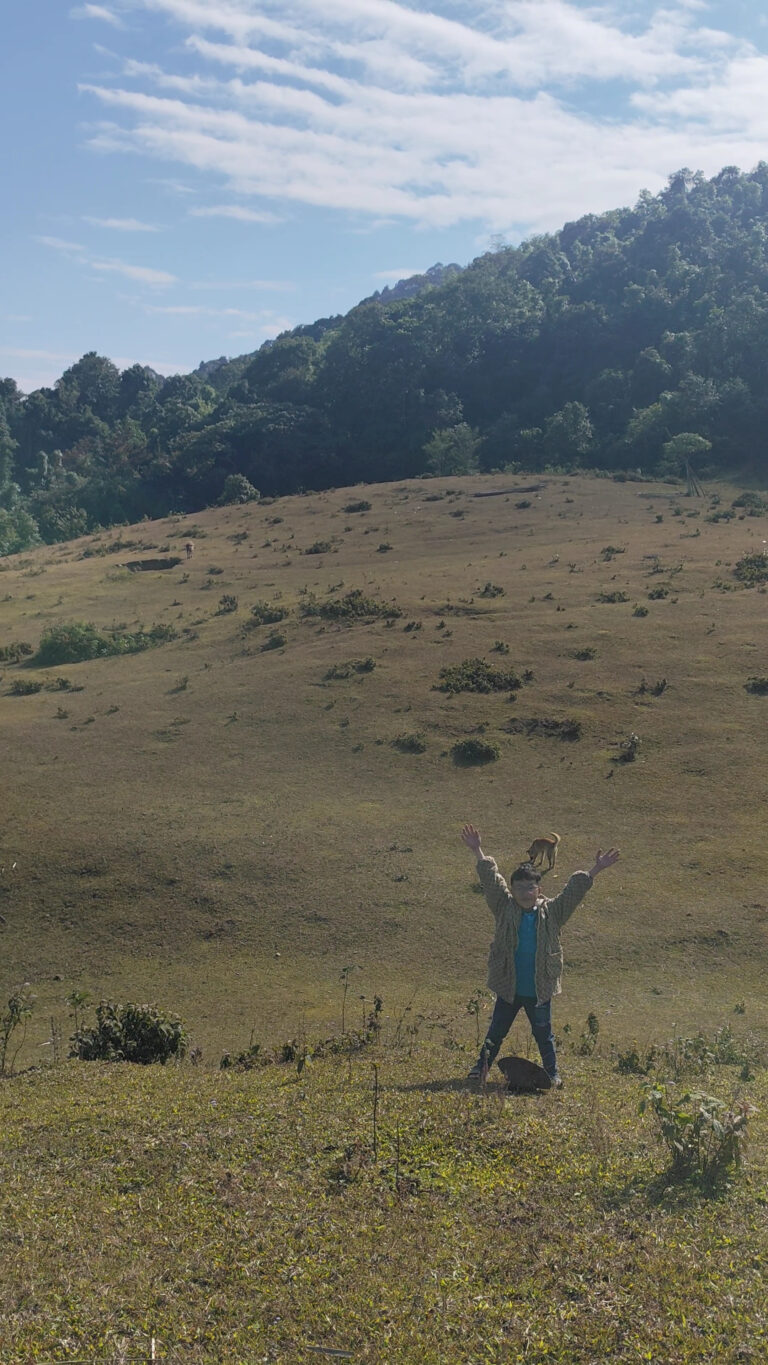
Slam Cao is the highest peak in the Khau Giang Mountain Range, also known as Den Sinh Mountain, in Tam Kim Commune (former Nguyen Binh District), about 45–50 km from Cao Bang city center. Before the 2025 administrative reorganization, the area spanned Tam Kim and Hoa Tham communes.
The peak lies within the Tran Hung Dao Forest Special National Relic Site, where the Vietnam Propaganda and Liberation Army—the forerunner of the Vietnam People’s Army—was founded on December 22, 1944.
A Historic Observation Post on the Mountain
Slam Cao Peak is one of four sites in the central complex of Tran Hung Dao Forest, alongside the army’s founding site, the rest huts and kitchen, and the water spring.
Soon after the army was founded, General Vo Nguyen Giap and its command chose this summit as an observation point to prepare for attacks on the Phai Khat and Na Ngan outposts on December 25 and 26, 1944. These two victories marked the beginning of the Vietnam People’s Army’s tradition of victory.
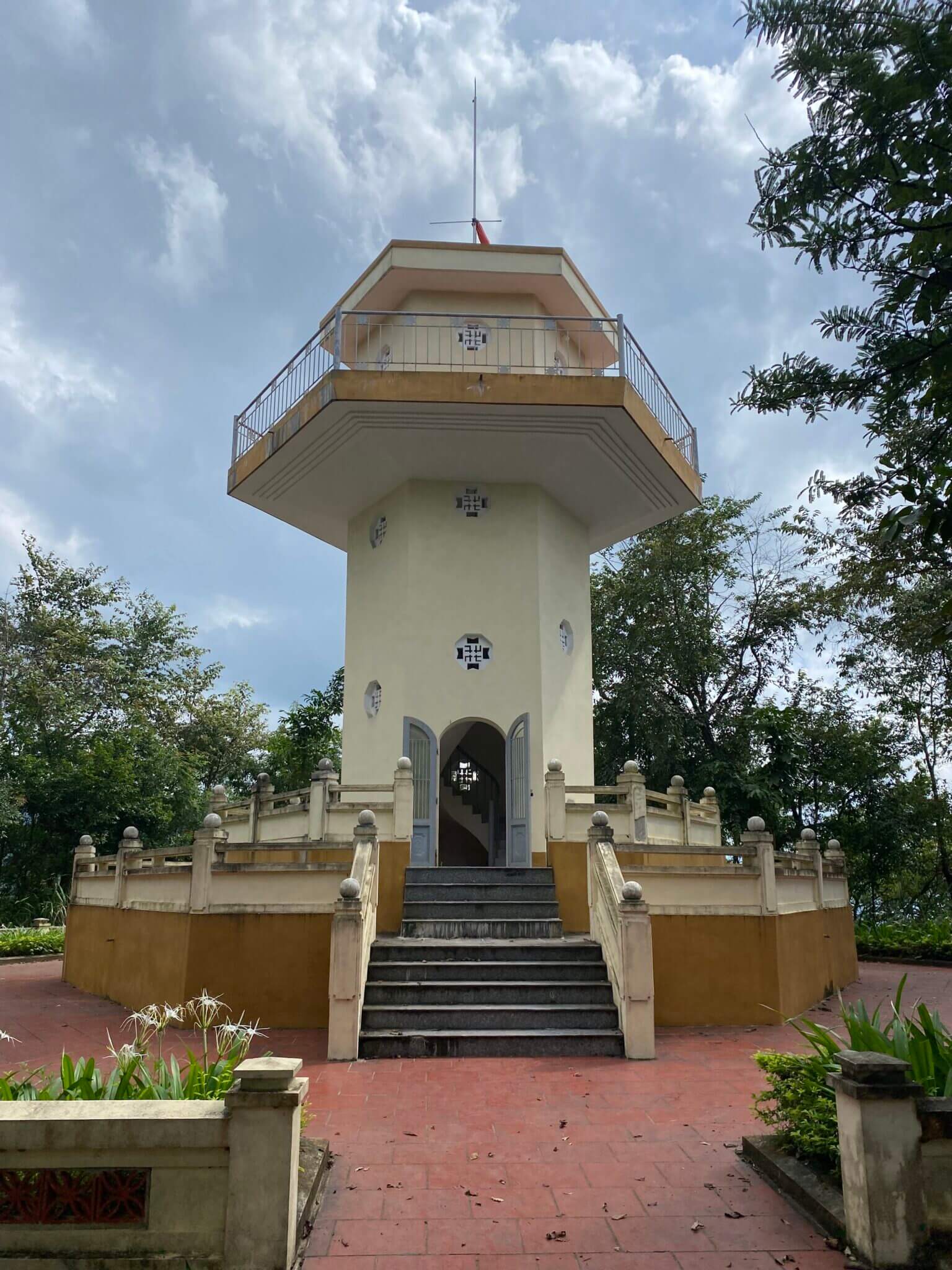
Today, the summit features a roughly 500-square-meter grounds with a flagpole, a stone stele commemorating the event, and an observation post built to mark the 75th anniversary of the founding of the Vietnam People’s Army.
Stone Steps Through Old-Growth Forest
Compared with many trekking routes to peaks in northern Vietnam, the climb to Slam Cao is relatively straightforward: the entire trail consists of stone steps shaded by towering trees. Sources estimate there are about 1,200 steps from the foot of the mountain to the summit. The section from the army’s founding site to Slam Cao Peak is nearly 1 km long, with more than 500 steep stone steps.
Ancient maple trees and towering chestnut trees are highlights along the route. In October and November, when the maple leaves turn red and chestnuts fall onto the steps, the trail becomes an autumn scene set amid the vast forest.
Stops Along the Way to the Summit
The climb to Slam Cao is also a journey through important moments in history:
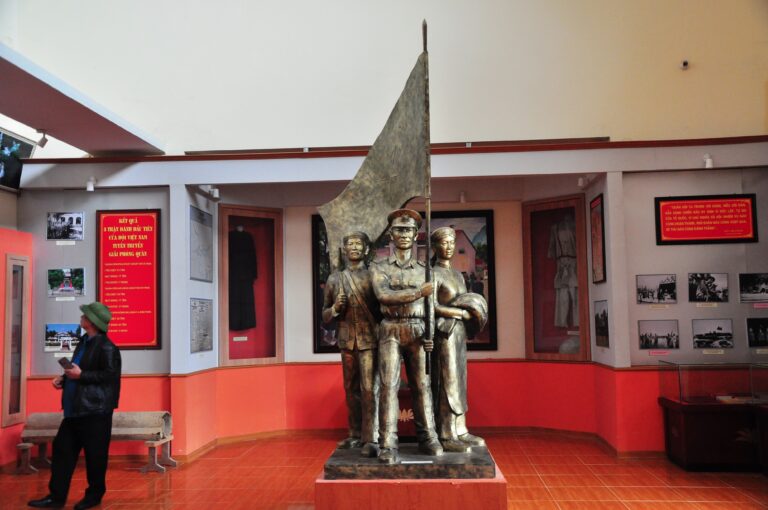
Relief of the 34 Soldiers: Carved from a single block of green stone and built in 2004 to mark the 60th anniversary of the Vietnam People’s Army, this relief depicts the 34 soldiers at the army’s founding ceremony.
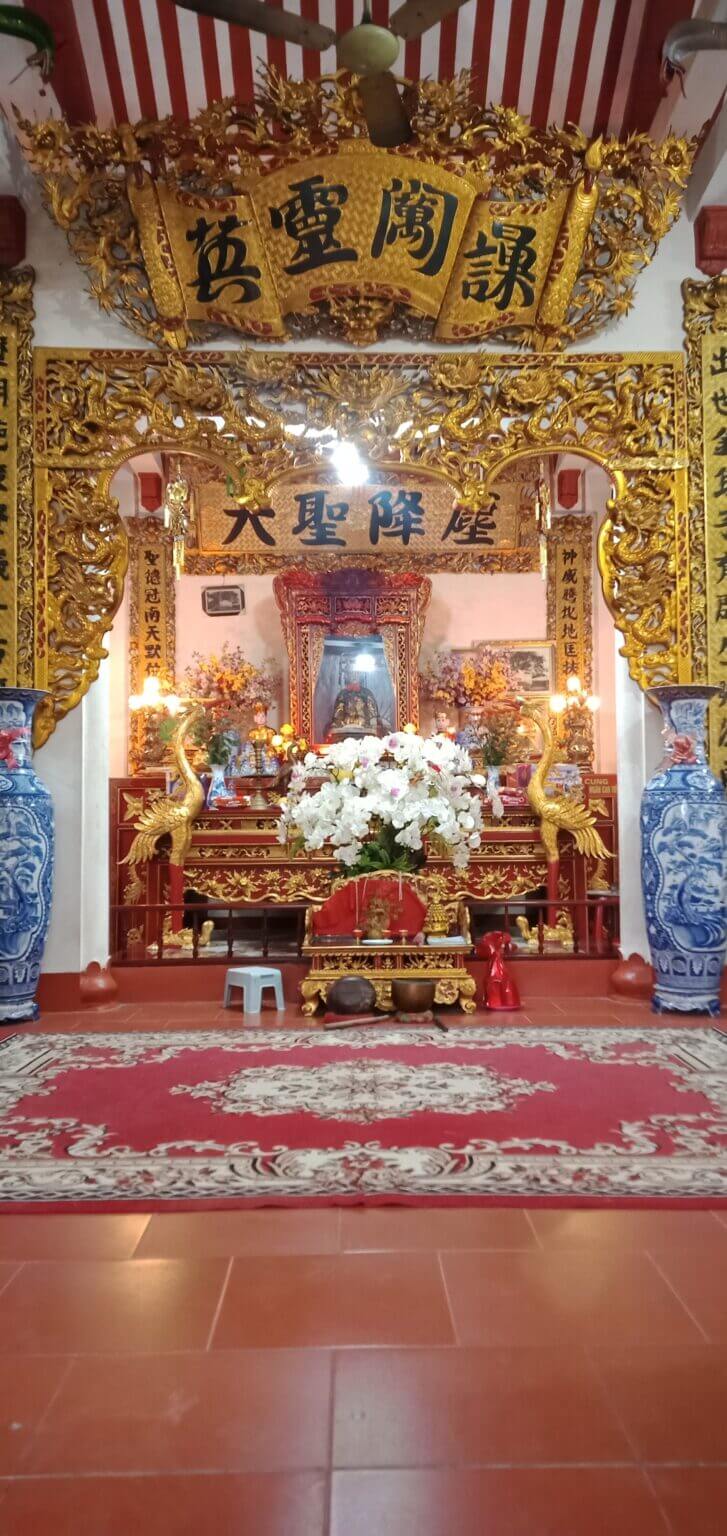
General Vo Nguyen Giap Memorial House: A statue of the general stands inside, where visitors can offer incense in remembrance of the Vietnam People’s Army’s “Big Brother.”
Army Founding Site: Four stone steles record the names and hometowns of the first 34 soldiers, alongside the directives and 10 oaths of honor of the Vietnam Propaganda and Liberation Army.
Rest Huts and Kitchen: A row of reconstructed huts shows where officers and soldiers ate and slept in the force’s early days.
Slam Cao Peak: The final stop, with a flagpole, stone stele, and observation post.
A Natural Treasure in the Old-Growth Forest
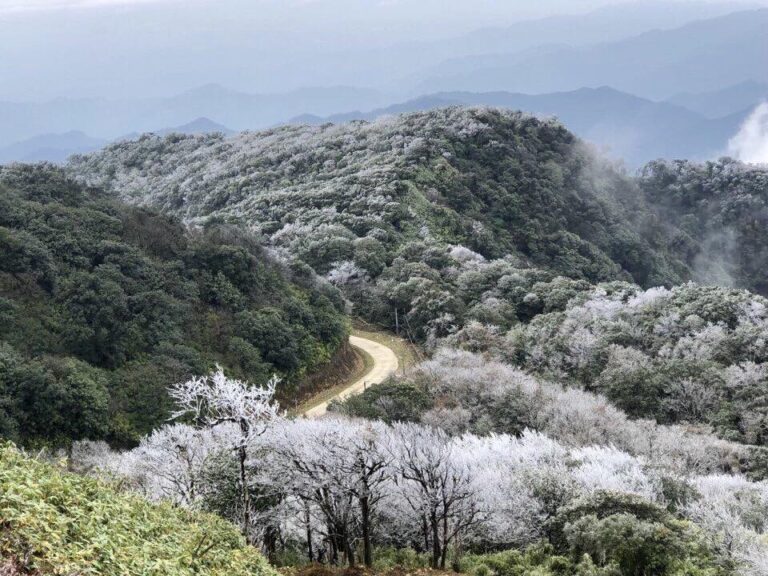
Slam Cao Peak is surrounded by about 200 hectares of old-growth forest with rich plant life. The area is home to many species listed in Vietnam’s Red Data Book, including Chieng trees, golden cypress, golden chicken grass, seven-son flower, red-faced macaques, and king cobras.
As you hike through the old forest, listening to birdsong and rustling leaves while breathing in the fresh air, you’ll discover that this historic trail is also a beautiful nature escape.
The Forest Guardian at the Foot of the Mountain
One moving story associated with Slam Cao is that of Mong Van Bon, a Tay man who has devoted nearly 30 years to the forest. In 1998, he took on the role of guide and guardian of the historic site. He knows every stone step leading to the summit of Slam Cao. He has also collected many historical artifacts for display and written simple, heartfelt poems about the mountains and forests here. If you’re lucky enough to meet him, take time to listen to stories no book could ever tell in full.
Best Time to Visit
- October–November: The best time to visit, when red maple leaves fall, chestnuts drop from the trees, and the weather is cool and dry.
- Spring: The forest is lush and green, and the weather is pleasant.
- December 22: On the anniversary of the founding of the Vietnam People’s Army, groups of visitors come to the historic site to pay their respects. The atmosphere is solemn and meaningful.
Avoid visiting on rainy days, as moss-covered stone steps can be slippery.
Experiences to Enjoy
- Set off early: Start your climb in the morning to allow time to stop at the historic sites and avoid the midday heat.
- Hire a guide: Hearing the stories behind each place will make your journey far more meaningful.
- Try local cuisine: At the end of the day, sample dishes from the Dao, Tay, and Nung communities of Nguyen Binh.
Places to Visit Along the Way
- Tran Hung Dao Forest Historic Site: Explore Tham Khau Cave, Phai Khat Fort, Na Ngan Fort, and Va Pha.
- Phia Oac–Phia Den National Park: Wander through moss-covered forest and watch the clouds from Phia Oac Peak.
- Kolia Organic Farm: Visit the organic tea hills atop Phia Den.
- Dong Mu Fort Historic Site: The site of the Team’s third battle.
Mountain Climbing Tips
- Wear grippy athletic shoes and comfortable clothing.
- Bring drinking water, a towel, and a light jacket; pack warm layers in winter.
- Climb at a comfortable pace and rest at the stops along the way. Visitors with heart conditions or high blood pressure should consider their fitness before setting out.
- Dress respectfully when visiting the memorial house and historic sites.
- Do not break branches, pick leaves, or hunt wildlife in the protected forest.
- Do not litter along the trail or at the summit.
In Closing
Slam Cao is not the highest peak in Cao Bang, but it is one of its most sacred. Every stone step to the summit tells a story from the difficult early days. Standing beside the observation platform and watching the flag fly above the vast forest, you can sense what the soldiers of 1944 once saw: from this place, a journey to liberate the nation began.