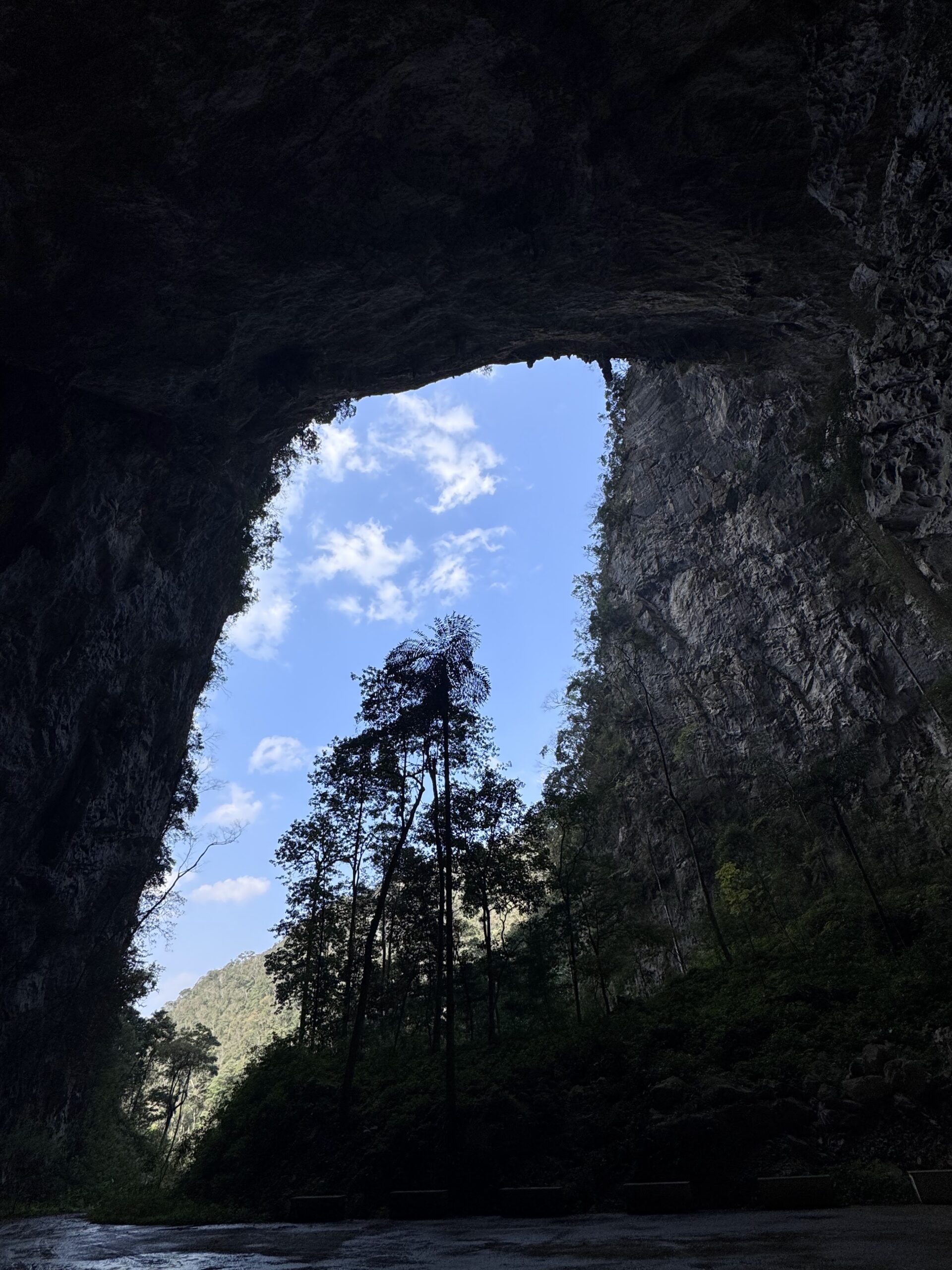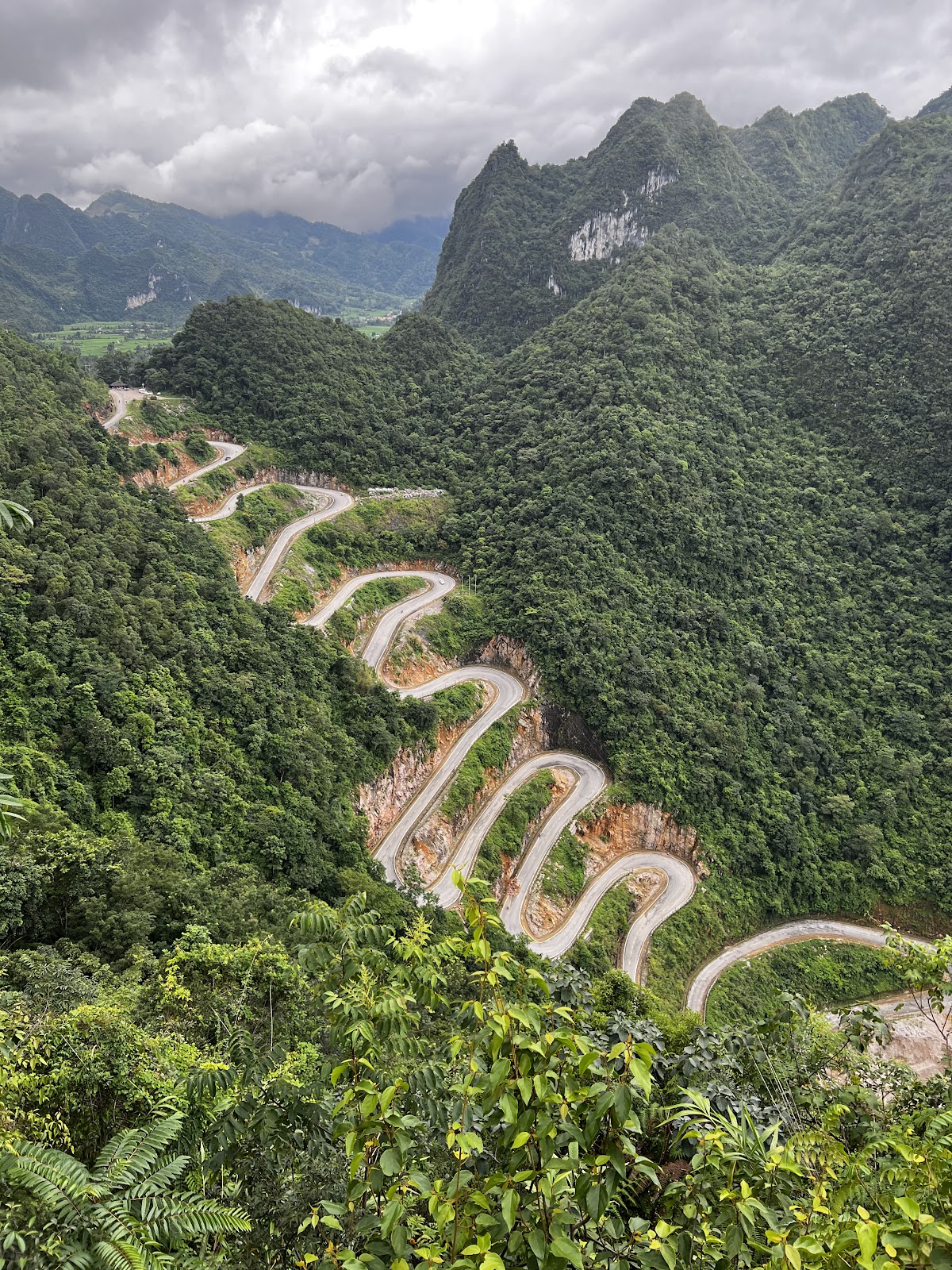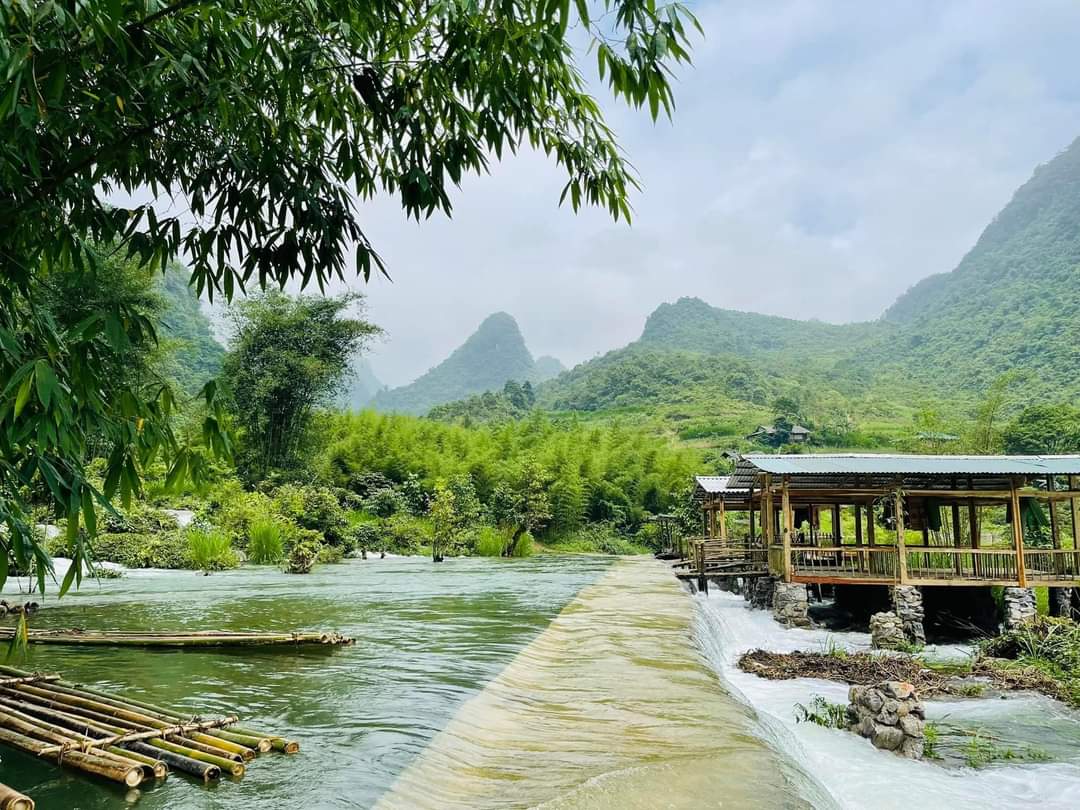
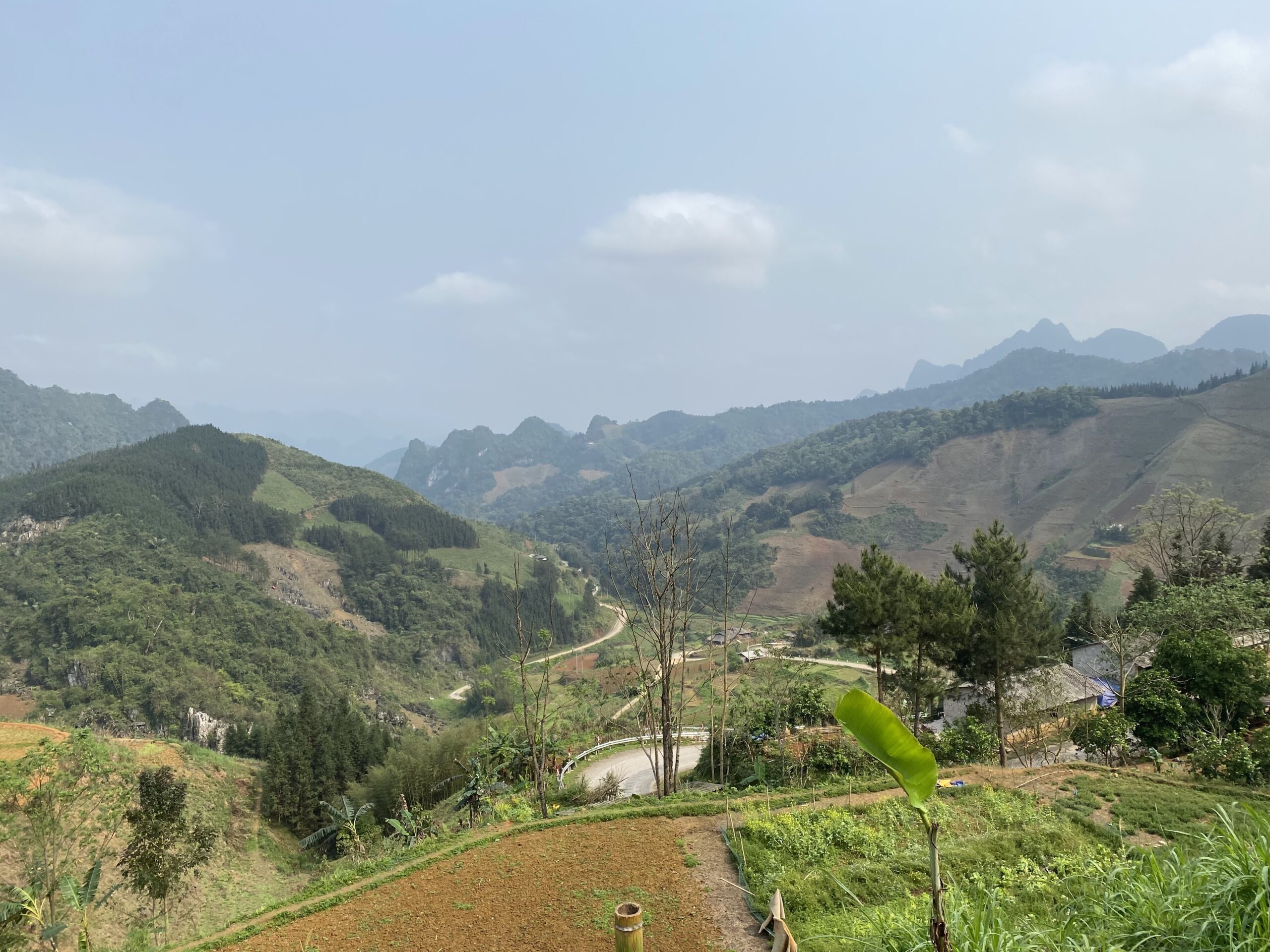
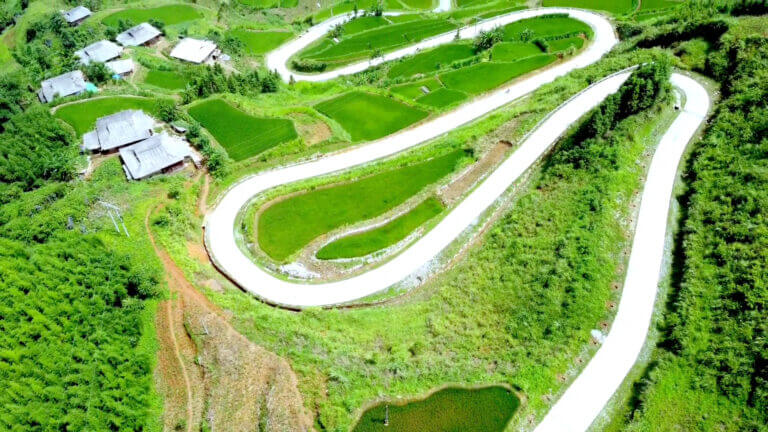

In the Tay language, Na Tinh means “highland fields.” The simple name captures what first catches your eye on the pass: terraced rice fields and corn plots stretching along the mountainsides, threaded by around 20 winding bends.
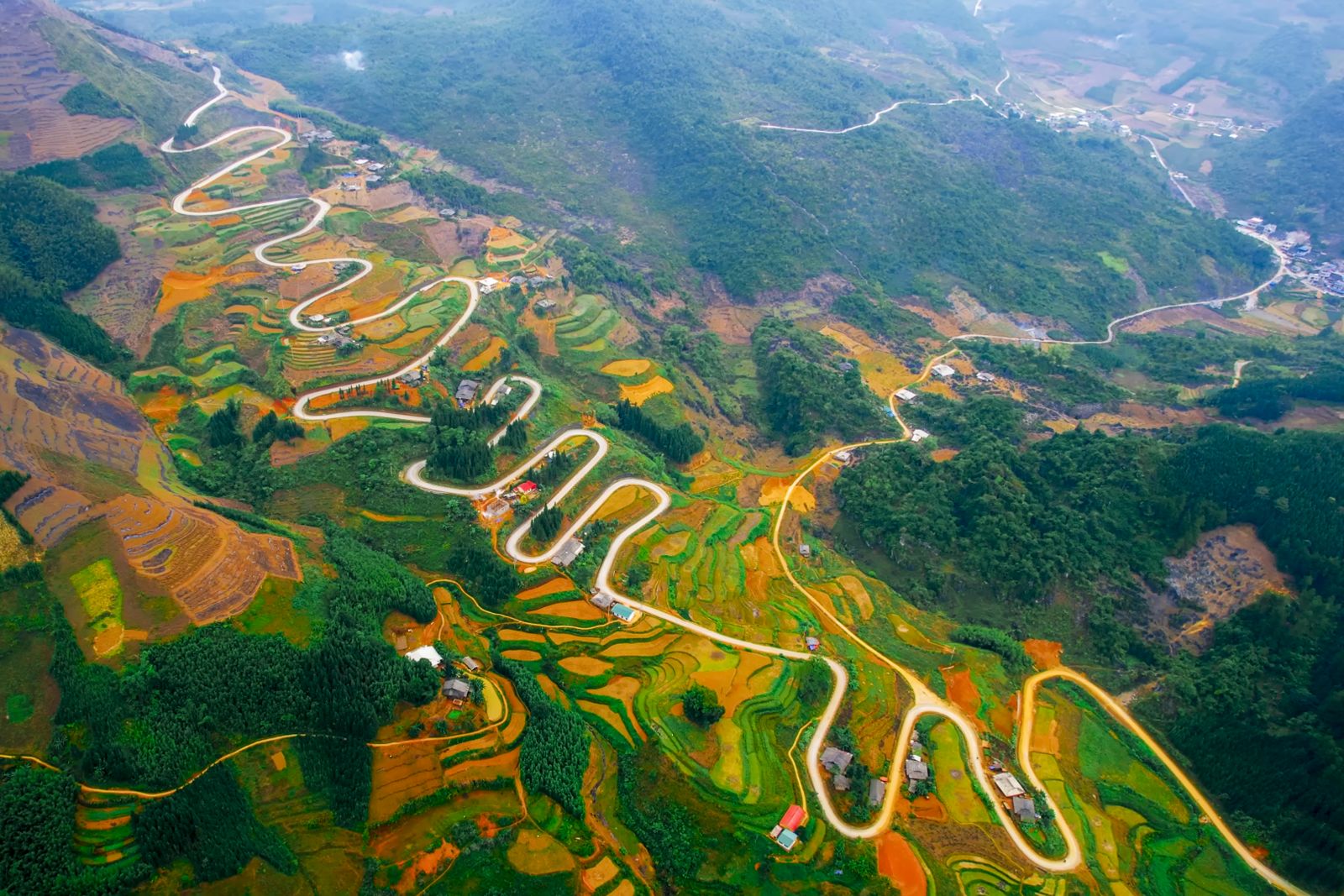
When people talk about passes in Cao Bang, they often mention the “seven-tier” Ma Phuc Pass on the way to Ban Gioc Waterfall, or Khau Coc Cha Pass (also known as Me Pia Pass, the 14-tier pass) in Bao Lac. Na Tinh is only about 15 km from Khau Coc Cha, yet far less well known, so its scenery remains largely unspoiled.
If you’re traveling the Ha Giang–Cao Bang route, you can easily cross both passes in one day. Here’s what to know before setting off: where the pass is, when to go, how to drive safely, where to eat and stay, and which nearby attractions to visit.
Where is Na Tinh Pass?
Na Tinh Pass lies in the former Can Nong Commune (Thong Nong District, later incorporated into Ha Quang), bordering Xuan Truong Commune in Bao Lac. Cross the summit and you’re in Bao Lac.
New address information: Since July 1, 2025, Cao Bang has eliminated the district level and reorganized into 56 communes and wards. Can Nong Commune was merged with Luong Thong and Can Yen to form the new Can Yen Commune. When asking for directions or searching maps, try both the old and new names, as local residents and Google Maps may not have updated them consistently.
This is a border area: the former Can Nong Commune bordered China to the north. If you’re traveling from Ha Giang toward Cao Bang, Na Tinh is about 15 km beyond Khau Coc Cha Pass.
When is the best time to visit?
September and October are the best months to visit Na Tinh: the rice terraces turn golden, the weather is dry, and there’s little rain, making the pass easier to ride. Every other season has its own appeal, along with a few trade-offs:
| Time of year | Scenery | Road and weather conditions | Recommended? |
|---|---|---|---|
| September–October | Golden rice, corn harvest, clear skies | Dry, cool, and easy to travel | Best time |
| November–December | Wildflowers, deep green mountains, and possibly a few buckwheat flowers | Cold, with morning fog | Highly recommended; dress warmly |
| January–March | Plum and peach blossoms, with a festive highland atmosphere | Bitterly cold, with possible frost and dense fog | Recommended; take it slow |
| April–June | Water season, when the terraced fields mirror the sky | Showers begin | A good option; check the forecast |
| July–August | Lush green mountains and hills | Heavy rain and risk of landslides | Best avoided |
In my experience, it’s best to ride the pass in the late morning (9–11 am), once the fog has cleared, or in the afternoon around 3–5 pm, when the angled sunlight brings out the contours of the bends.
How do you get there?
From Hanoi to Cao Bang City: The quickest and most affordable option is an overnight sleeper bus, which takes around 7–8 hours and arrives early in the morning. If you’re driving, take the Hanoi–Thai Nguyen Expressway, then continue north on National Route 3.
From Cao Bang City to the pass: Head toward Ha Quang and Thong Nong, pass through the Can Yen area, then continue into the former Can Nong Commune to reach the foot of the pass. Grab isn’t available in Cao Bang, and attractions are far apart, so renting a motorbike in the city center is your best bet. Manual motorbike rental usually costs around VND 150,000–250,000 per day (indicative price; check in advance).
Which direction to ride: Climbing the pass is less risky than descending, although going downhill takes less effort. With around 20 consecutive bends, the descent requires steady braking.
Suggested 3-day, 2-night itinerary (Cao Bang east–west loop)
- Night 0: Take an overnight sleeper bus from Hanoi to Cao Bang City.
- Day 1: Have banh cuon canh for breakfast and pick up your motorbike. Visit the Pac Bo Historical Site in the morning. In the afternoon, ride toward Thong Nong and Can Yen, crossing Na Tinh Pass in the late sunlight. Stay overnight at a homestay in Xuan Truong or return to the nearest town.
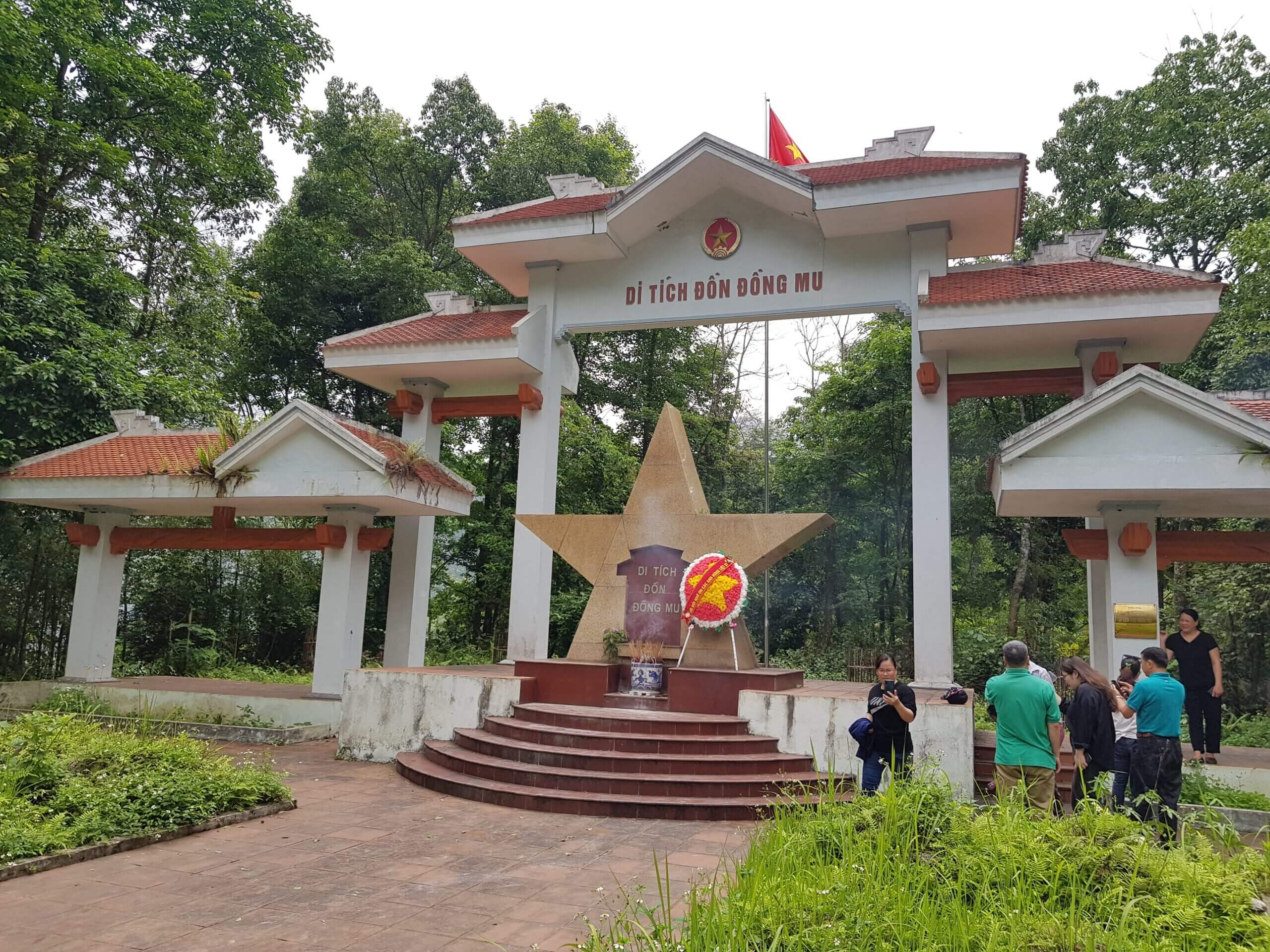
- Day 2: Explore Xuan Truong Valley early in the morning, visit the Dong Mu Fort historic site, then take on Khau Coc Cha Pass. Stay overnight in Bao Lac and have dinner by the Gam River.
- Day 3: From Bao Lac, follow National Route 34 to Cao Bang City, passing through the Nguyen Binh area near Phja Oac–Phja Den if time allows. Return the motorbike and take an evening bus to Hanoi.
If you only have two days, you can make the round trip in a day: Cao Bang City → Na Tinh → back the way you came. However, you’ll be riding almost nonstop and may find it tiring.
What can you do on Na Tinh Pass?
Na Tinh’s biggest draw is the sweeping view of the bends from above, with terraced rice fields and corn plots tracing the mountainsides between them.
- Take in the view from the summit: Stop at the open area near the top. Below, the road winds back and forth in a long series of S-shaped curves. It’s the best spot for a souvenir photo.
- Fly a drone (if permitted): An aerial view is the best way to capture all 20 bends. As this is a border area, check with the commune authorities or border guard post before flying.
- Take photos with local residents: In the afternoon, you may see Dao, Nung, and Tay people carrying corn or leading cattle back to their villages. Ask permission before taking close-up photos.
- Stop at bends with a clear view: Find a wide shoulder with good visibility, pull your motorbike right up against the mountainside, and only then take photos. Never stop in the middle of a bend.
- Take a break in a village at the foot of the pass: Buy a drink and ask about the harvest. You may even be offered a cup of corn wine or roasted corn. These moments bring the trip to life.
Photography tip: A wide-angle lens (or your phone’s 0.5x setting) is ideal for panoramic shots, while a telephoto lens can compress the tiers of bends into a striking image. Late afternoon sunlight from the west lights up the road against the dark mountain backdrop.
Tips for driving safely over the pass
The bends on Na Tinh aren’t especially sharp, but there are 20 in quick succession, which can make it easy to become complacent. Avoid riding in the rain, when the road is slippery. These are the rules I always follow:
- Check your vehicle before setting off: Inspect the front and rear brakes, tires, lights, and horn. If you’re renting a motorbike, insist on a test ride first.
- Fill up in town: Gas stations are few and far between, and there may be stretches of dozens of kilometers without one.
- Descend in a low gear: Use first or second gear on a motorbike, or a low gear in a car to let the engine help control your speed. Avoid riding the brakes continuously, as they can overheat.
- Stay in your lane and honk before blind bends: Corn trucks and farm vehicles can appear unexpectedly.
- Watch out for gravel and sand on bends: Especially after rain or near roadworks.
- Avoid riding at night or in dense fog: If you encounter fog, switch on your yellow fog lights, slow right down, or stop somewhere safe and wait for it to clear.
- Don’t drink and drive: People in the highlands are hospitable. Thank them and say you’ll have a drink when you stop for the night.
If you’re not used to mountain roads, hire a motorbike with a local driver or join a group led by an experienced rider.
Where to eat and stay
Accommodation: There are no hotels on the pass, so plan to stay at either end.
- Homestays in Xuan Truong: Stay in a Tay or Nung stilt house with a tiled roof, sleep on a floor mattress, and share a meal with your hosts. Book by phone in advance, as options are limited.
- Former Bao Lac Town: There are guesthouses and small hotels, along with places to eat and refuel. It’s an ideal place to stay after crossing both Na Tinh and Khau Coc Cha.
- Cao Bang City: There are plenty of hotels and homestays, making it a good choice for your first and last nights.
Local dishes to try along the way:
- Cao Bang banh cuon canh: Steamed rice rolls served in bone broth instead of with fish sauce; a warming breakfast.
- Seven-flavor roast duck, khau nhuc, and lap suon: Cao Bang specialties best enjoyed in the city.
- Sour pho, banh ap chao, and ant-egg cakes (seasonal): Popular local snacks for breakfast or an afternoon bite.
- Xuan Truong fragrant sticky rice: A long-renowned local variety, delicious steamed or cooked in bamboo tubes.
- Xuan Truong golden pears: In season around July and August, these pears are crisp and refreshingly sweet.
- Corn wine and smoked pork: Great gifts to take home, but buy from local households with a clear source.
Food is quite affordable in this area. A meal at a casual local restaurant usually costs around VND 50,000–100,000 per person (indicative price).
What else is there to see nearby?
- Khau Coc Cha Pass: About 15 km from Na Tinh, it’s famous for its dozen-plus hairpin bends. Crossing both passes in one day is the highlight of this route.
- Xuan Truong Valley: Rice fields, pear orchards, and tiled-roof stilt houses set among limestone mountains. The area is named after martyr Xuan Truong, a member of the Vietnam Propaganda Liberation Army who died here.
- Dong Mu Fort historic site: The site of the Vietnam Propaganda Liberation Army’s third battle in early 1945, and a worthwhile stop for history buffs.
- Pac Bo Historical Site (Ha Quang): Lenin Stream, Karl Marx Mountain, and Coc Bo Cave are worth visiting on the way up from the city.
- Former Bao Lac Town and the Gam River: Bao Lac’s market meets every five days and is busiest in the early morning. Ask locals when the next market day is.
- If you have more time: Thang Hen Lake, Mat Than Mountain, Ban Gioc Waterfall, and Nguom Ngao Cave lie in the eastern part of the province and are ideal for a longer 4–5-day trip.
What should you pack and keep in mind?
Packing checklist:
- Original national ID card (required in border areas), driver’s license, and vehicle registration
- Quality helmet, gloves, and shoes with good grip
- Windbreaker and warm layers (temperatures can drop very low from November to March)
- Rain suit and waterproof bags for your phone and documents
- Power bank and small flashlight
- Cash (ATMs are rare, and many places don’t accept bank transfers)
- Motion sickness medicine, stomach medicine, and bandages
- Offline maps, as phone signal can be patchy
Border area reminders:
- Don’t enter trails, restricted areas, or areas near border markers without permission.
- Ask the border guard post before flying a drone.
- If you stay in a local home, your host will register your temporary residence. Please cooperate and provide your documents.
Cultural etiquette:
- Ask permission before photographing local residents, especially older people and children.
- Avoid handing out sweets or money to children. If you’d like to help, donate through a school or commune authorities.
- When entering a stilt house, don’t block the doorway or step over the hearth. Ask your host before entering the altar room.
- Take your rubbish back down the mountain, and don’t leave plastic bags or bottles on the pass.
Final thoughts
Na Tinh is quieter than the passes that have become popular photo stops. That’s why it still has the unspoiled character travelers seek: a winding road, golden terraces, and the warm smiles of people in the highlands.
Take your time, linger a little longer at the top of Na Tinh Pass, and chat with the locals. I’m sure you’ll come away with more than beautiful photos—you’ll also carry home the unique sense of peace found in Cao Bang’s remote borderlands.
Local administrative boundaries and prices may change; check the weather and road conditions before you set off.