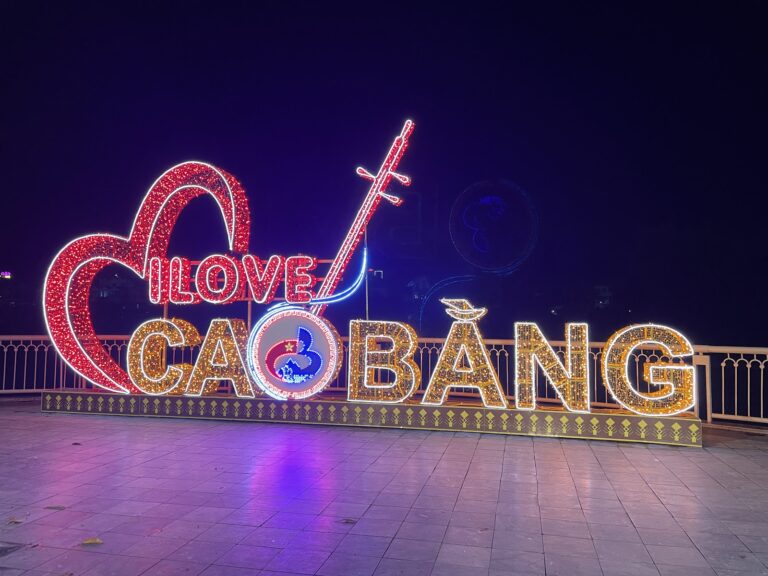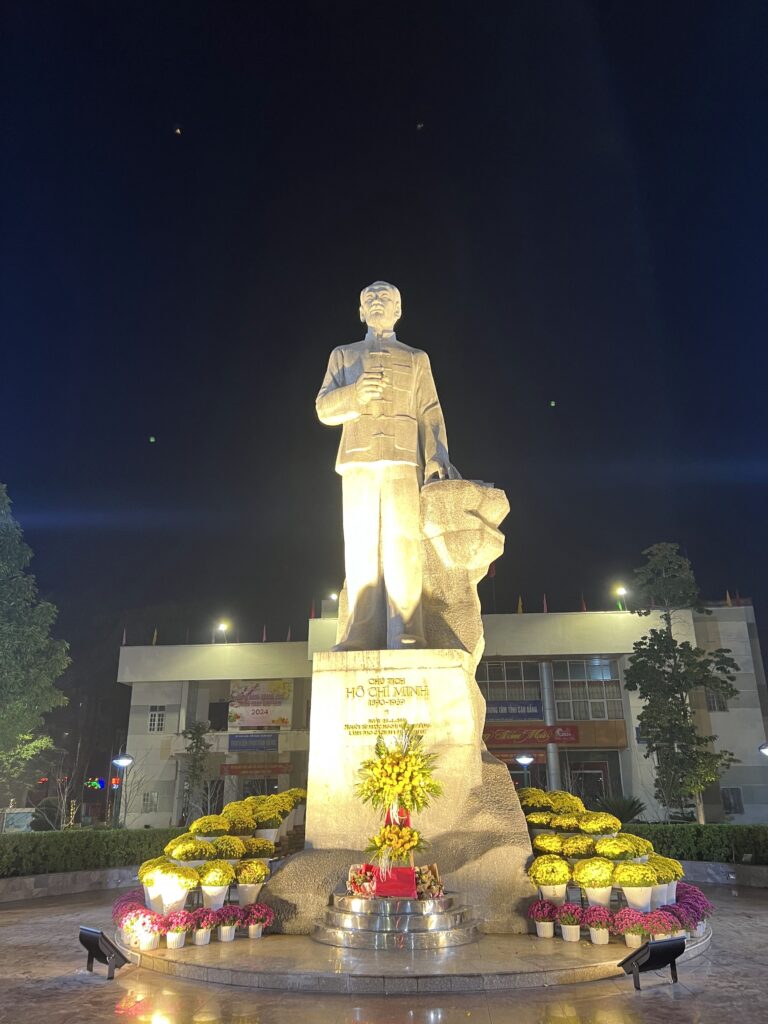
Kim Dong Pedestrian Street – the weekend heartbeat of the highland town of Cao Bang
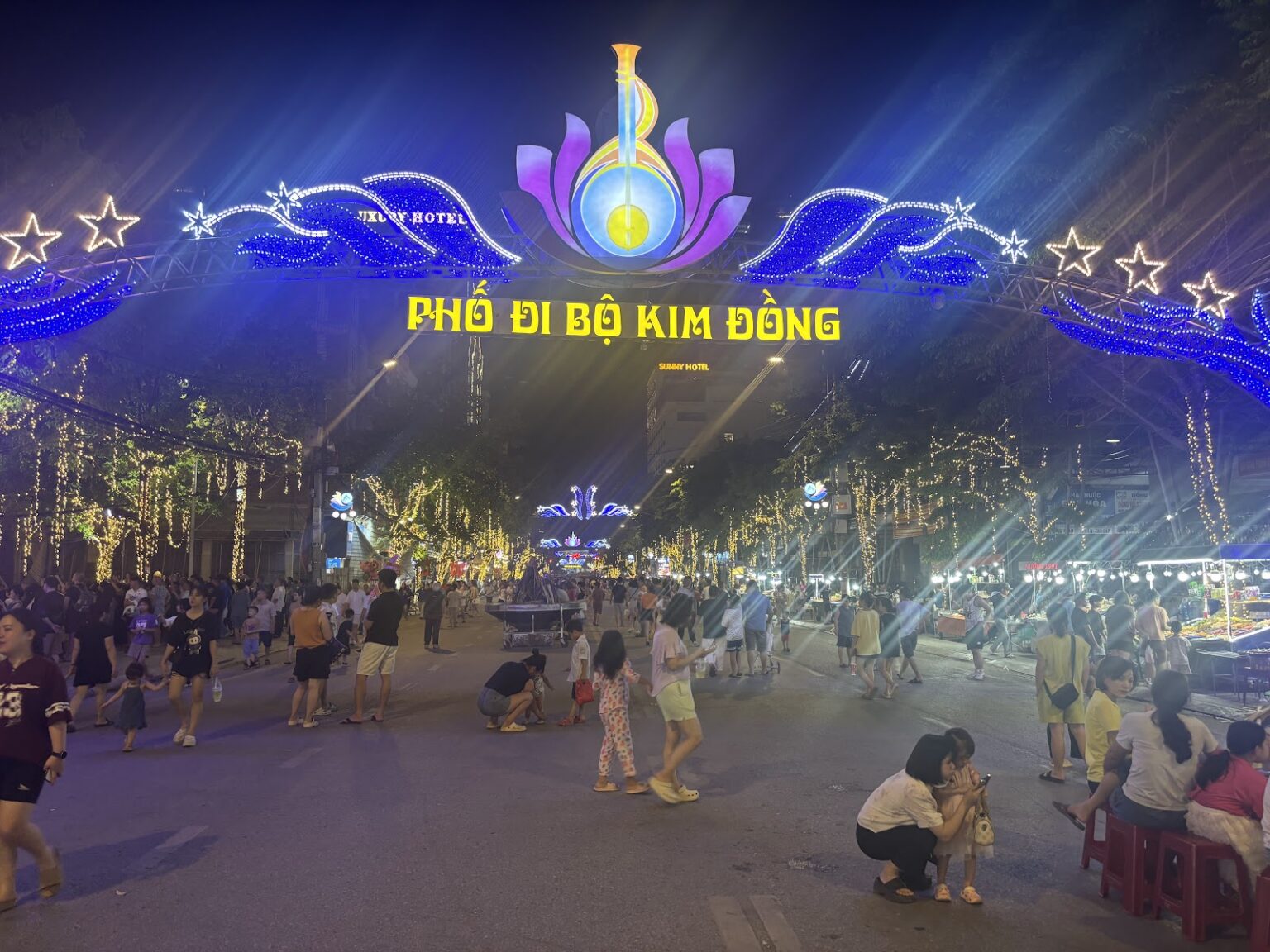
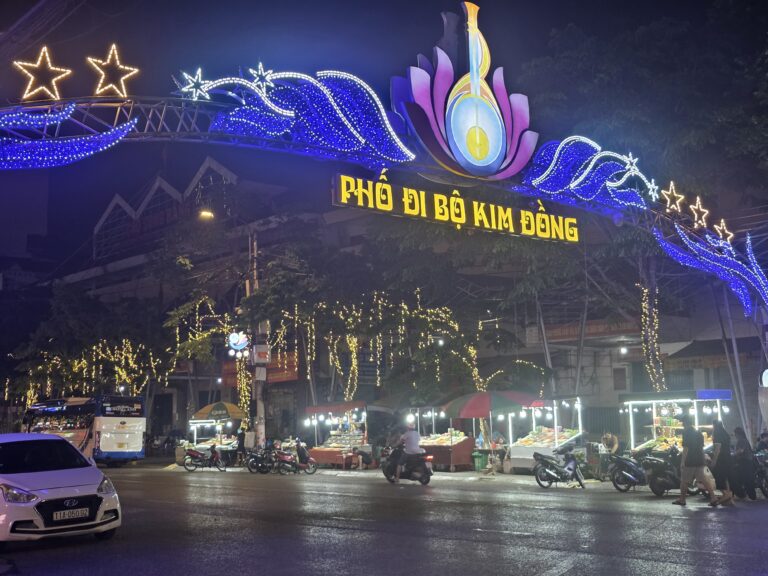
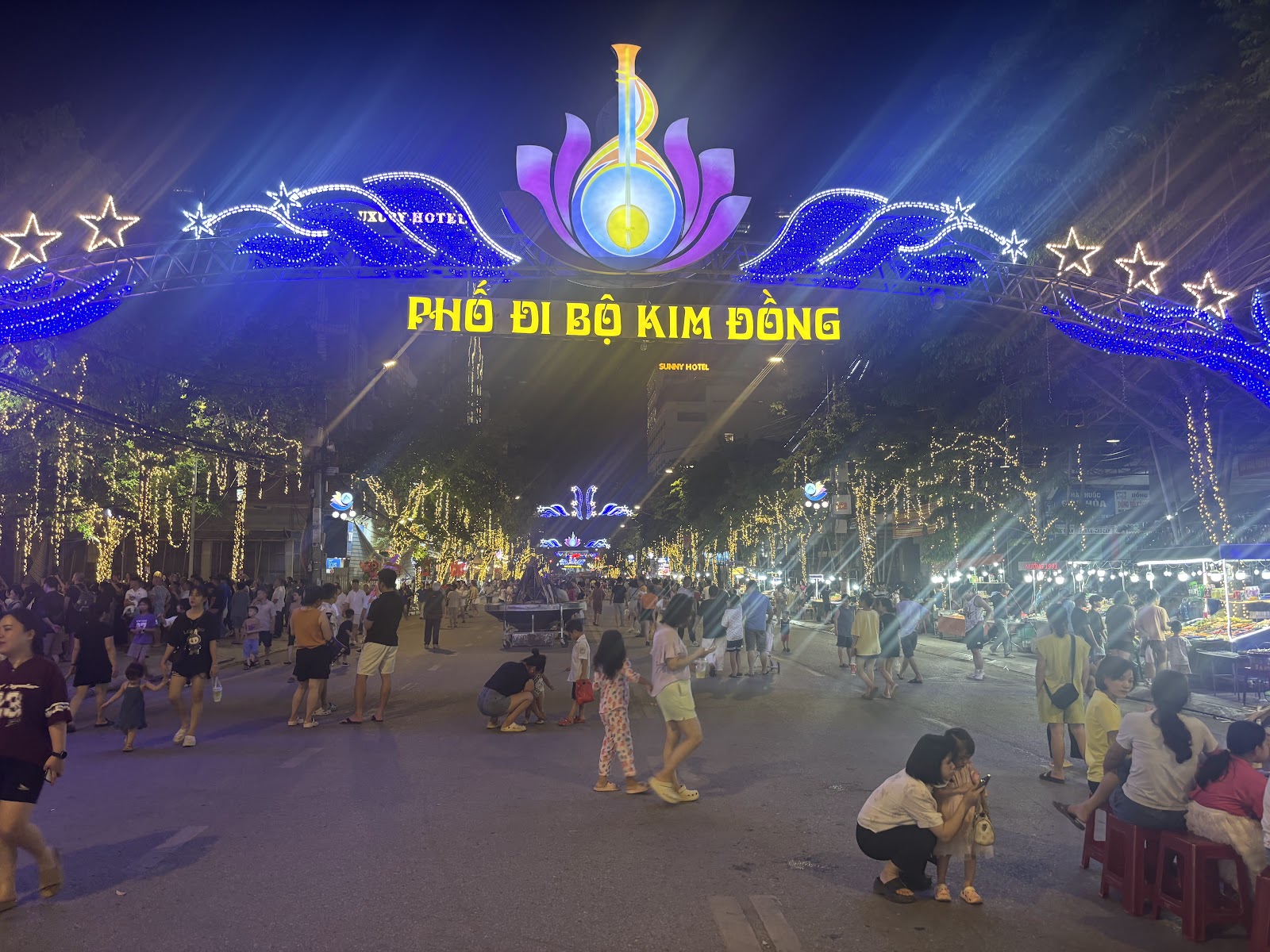
By day, Kim Dong Street is a bustling shopping street with a steady stream of traffic. On Friday and Saturday nights, the traffic gives way to the sound of tinh (gourd lute) music, the smell of grilled street food, campfire light, and circles of bamboo-pole dancing right in the middle of the road. If you want to see how the people of Cao Bang live, have fun, and welcome visitors, spend an evening at Kim Dong Pedestrian Street.
When is it open?
The pedestrian street runs from 7 p.m. to 11 p.m. every Friday and Saturday night. During holidays and Tet (Lunar New Year), it usually follows its own special schedule.
What can you experience here?
Folk games – a playground for all ages
This is the liveliest part of the pedestrian street. Once the lights come on, adults and children alike join in bamboo-pole dancing, jump rope, shuttlecock kicking, stilt walking, Chinese chess, mancala (o an quan), and jackstones (danh chat). All the equipment is provided, and local young volunteers are on hand to show visitors how to play.
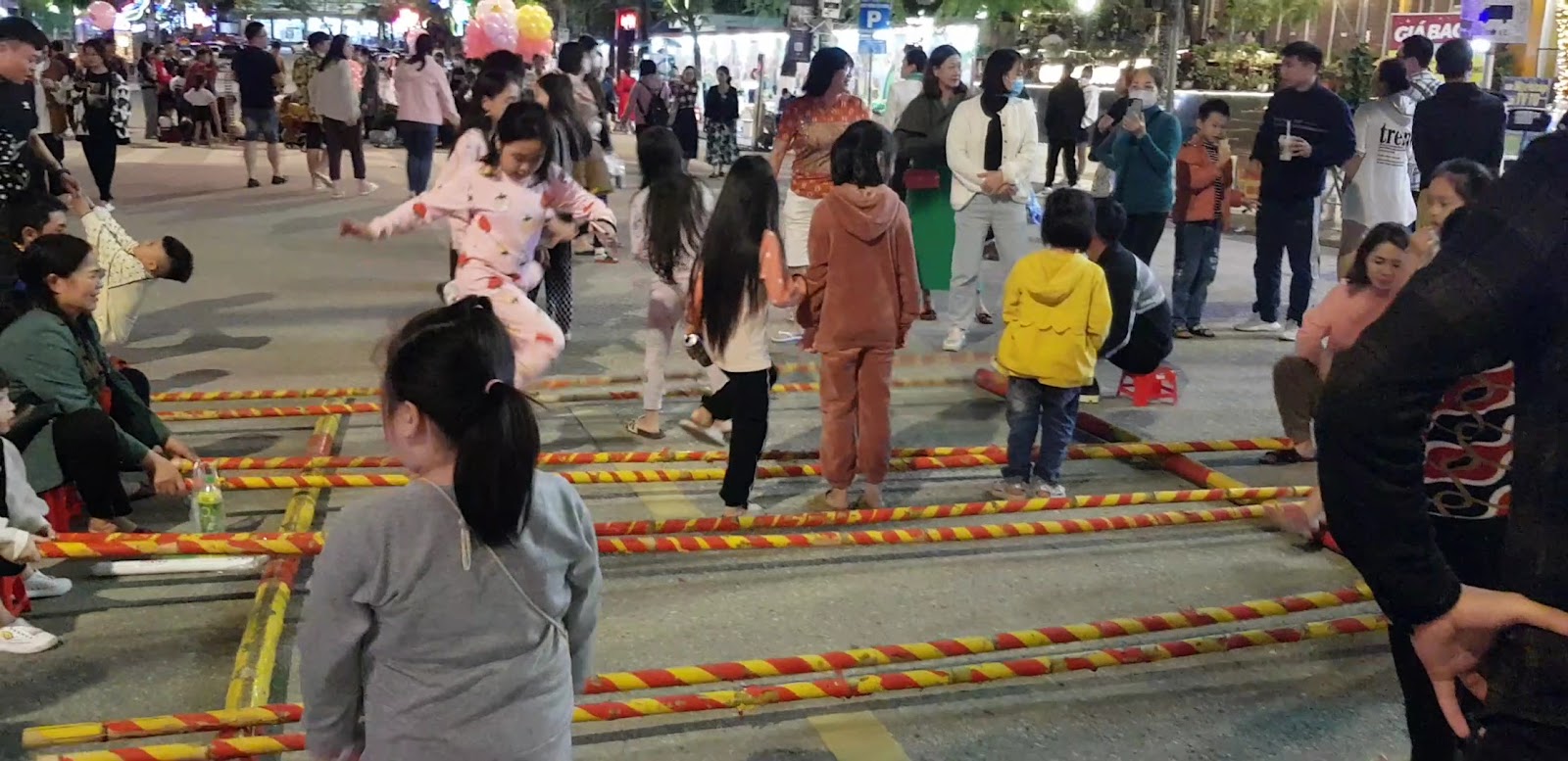
The games area is run by the local Youth Union. International travelers often jump right in, dancing between the bamboo poles, jumping rope, playing mancala, and walking on stilts alongside the local youngsters.
The lineup of games is refreshed regularly. Besides mancala, bamboo-pole dancing, tug-of-war, and “lay co” (a traditional Tay-Nung grass-pulling game), the street has recently added sack racing and blindfolded balloon-smashing, a modern twist on the traditional blindfolded pot-smashing game. These newer games are especially popular with teenagers and young children.
“Lay co” is a game unique to the Tay and Nung ethnic groups. If you come across it, don’t miss the chance to try your hand.
Then singing and tinh lute music – heritage in the heart of the street
This is the experience that captures Cao Bang’s identity best. Local artisans regularly perform Then singing with tinh lute accompaniment right on the pedestrian street. Kim Dong Street is one of only two models in the province that link the preservation of Then heritage with regular, ongoing activities.
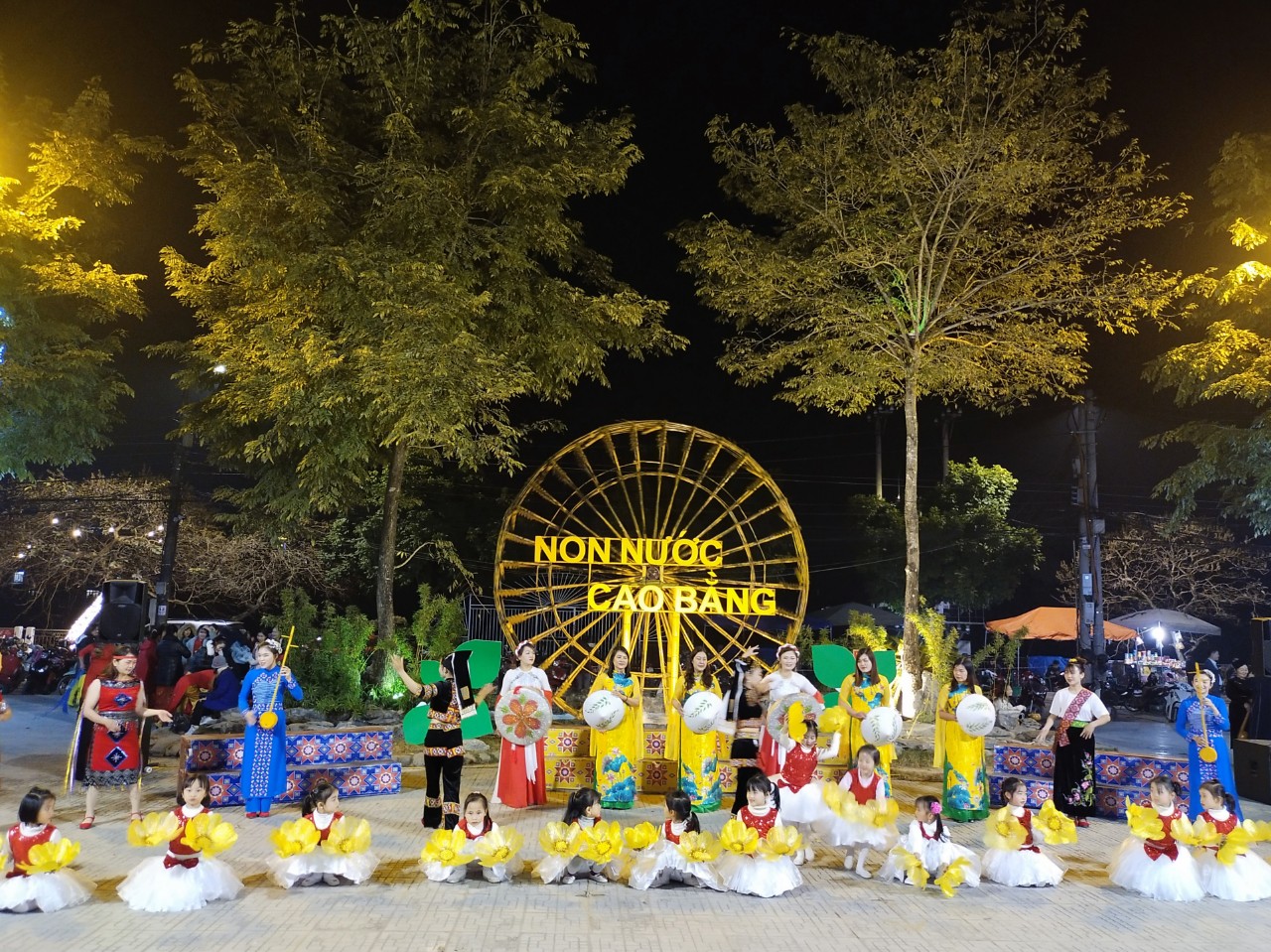
Then practices of the Tay, Nung, and Thai people have been recognized by UNESCO as a Representative Intangible Cultural Heritage of Humanity. Getting to hear these melodies right in the middle of the street, without having to travel deep into a village, is something truly special.
Along the sidewalk by the mural wall, the street also sets aside an area where artisans make and sell handicrafts and perform on the tinh lute, the Mong panpipe (khen), the jaw harp (dan moi), and leaf trumpet (ken la). You can stop and watch them craft and play their instruments, and chat with them along the way.
“Bringing the village to the street”
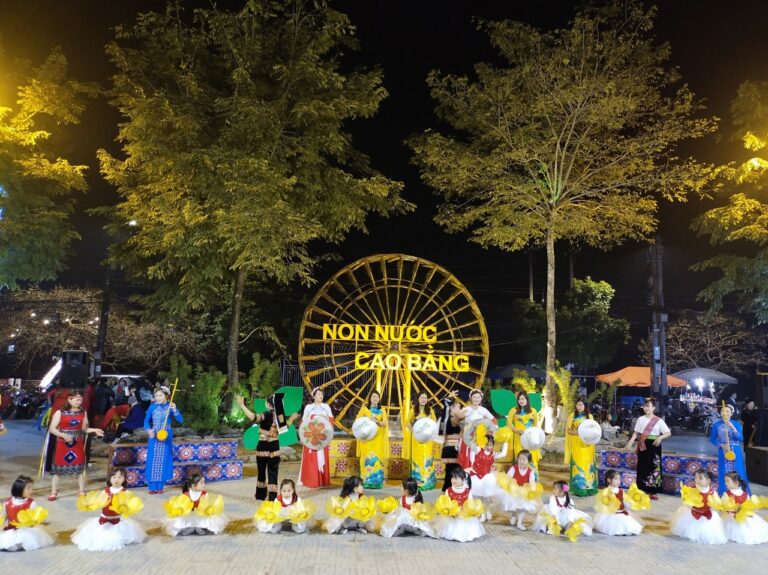
At times, localities across the province take turns bringing their own culture to the pedestrian street. Visitors can enjoy Then singing and tinh lute music from the Tay and Nung people, as well as folk dances of the Dao and Mong people. Stalls selling local specialties and handicrafts from each area accompany the performances.
As a result, in just one evening, you can get a taste of many different ethnic cultures without having to travel deep into each region.
Music, dancing, and campfires
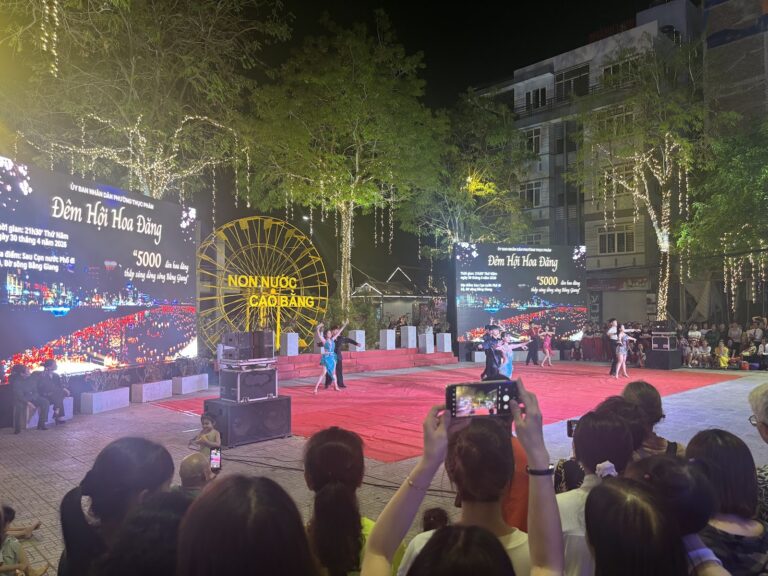
Besides traditional arts, the street hosts community performances, singing and dance programs, and group dances. Some weeks even feature a DJ alongside the live singing.
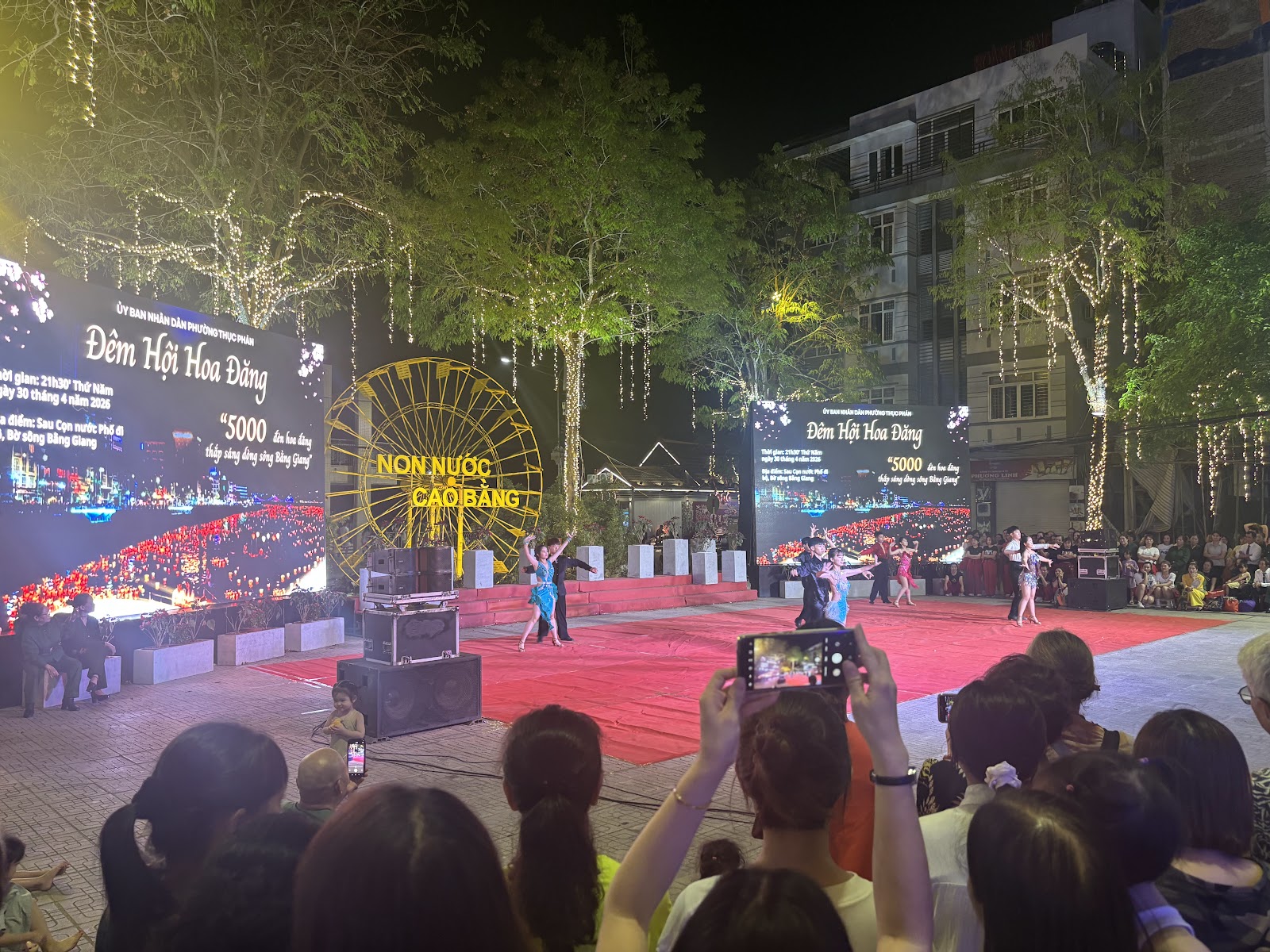
A recent addition is the campfire. The glow of the fire together with music and singing recreates the familiar communal atmosphere of highland life. Many locals say that since the folk games, campfires, and group dances were added, the street has become noticeably livelier.
Along the Bang River promenade, around 8 p.m., the city’s dance groups start their evening sessions. They often reach out and invite visitors to dance along, chatting warmly all the while. Groups of young people also like to gather by the riverbank to sing and play music, raising donations for disadvantaged children.
Reading and photo exhibitions
The street also has quieter corners. Visitors can read books and browse photo exhibitions right there on the street. Exhibitions showcasing the landscapes of Cao Bang are a great way to get a feel for the places you might want to explore in the days ahead.
Highland cuisine
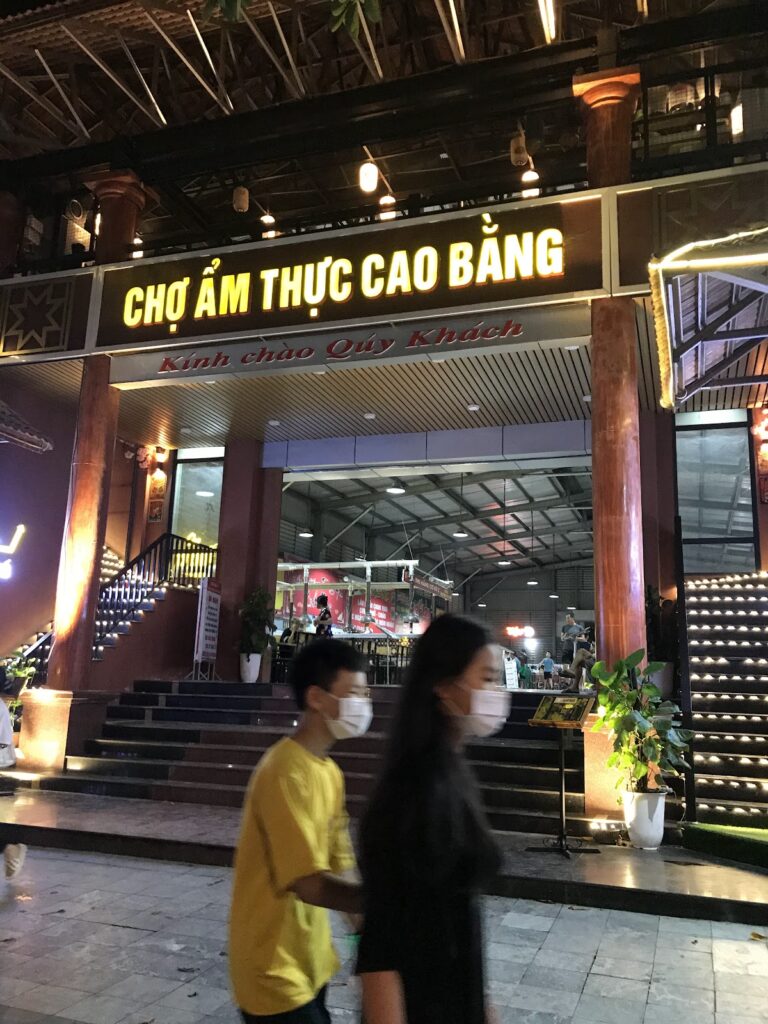
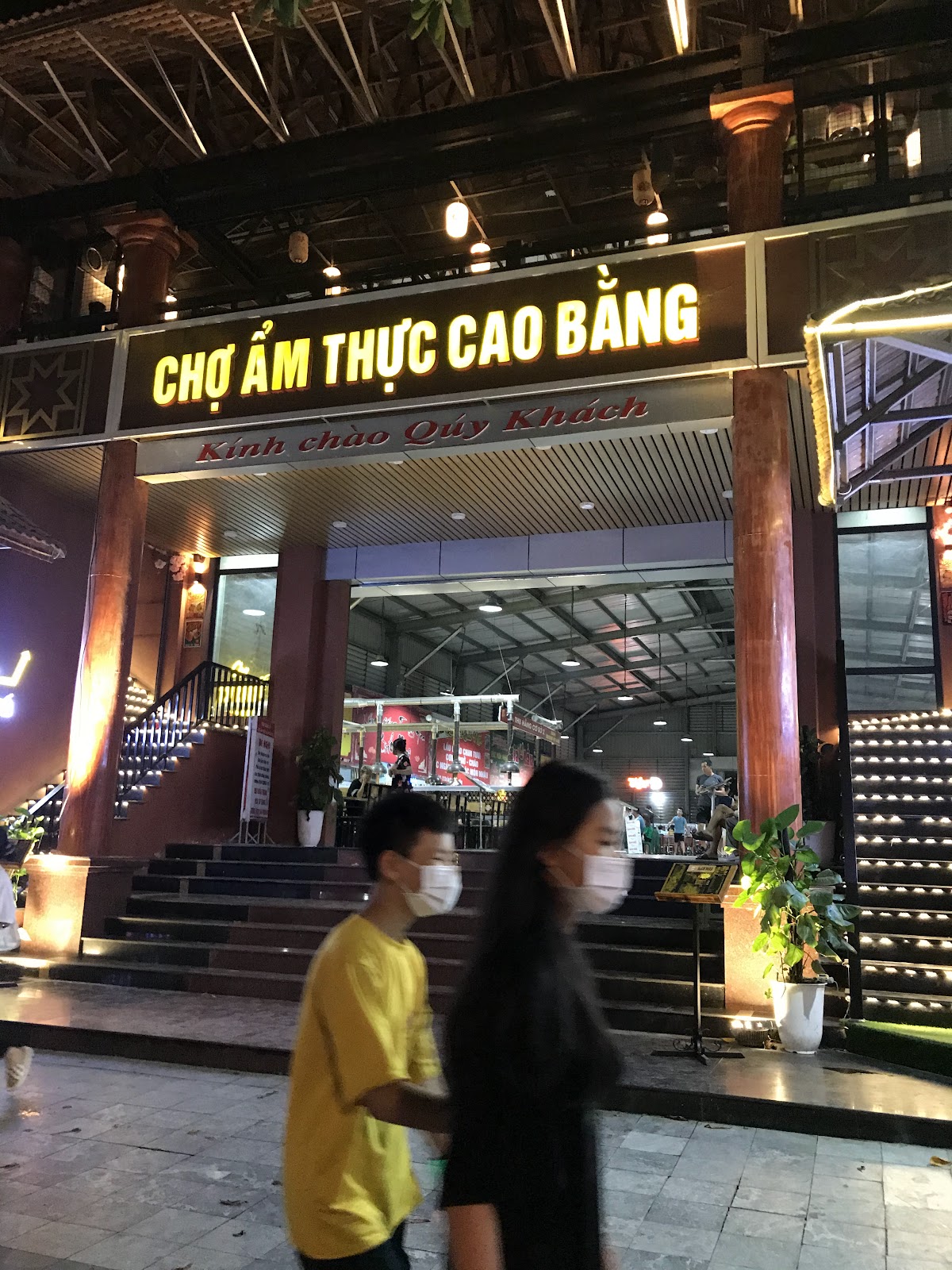
The street has a food and souvenir market with around 70 stalls selling food, souvenirs, and Cao Bang specialties. The market area is designed in a highland architectural style.
Best times to visit
Lunar New Year (Tet): The street comes alive from the afternoon of the 3rd day of Tet onward, drawing large crowds of visitors.
National Day, September 2: Kim Dong Street and the riverside street along the Bang River host community performances, cultural exchanges between ethnic groups, traditional sports competitions, and games such as tug-of-war, bamboo-raft racing, “lay co,” ring-tossing (tung con), and chicken-coop weaving. The street also displays OCOP products, local specialties, and handicrafts. In 2026, this occasion will feature additional art programs with themes such as “The Spirit of the Bang River” and “Dance of Unity.”
A regular weekend: Quieter, and a great chance to chat more easily with vendors and artisans.
Not Just a Place for Fun
For the people of Cao Bang, the pedestrian street has become part of everyday life. Many families make it a habit to bring their children out to the street on weekend evenings. Local authorities see it as a new cultural institution, an open space for community activities and for promoting the image of Cao Bang.
A Few Travel Tips
- Accommodation: Hotels around the street often fill up on weekends, so book ahead.
- Parking: Park early at the lots around the center, as weekends get quite crowded.
- Weather: Winter nights in Cao Bang can be quite cold, so bring a warm jacket.
- Cash: Carry some cash for the small stalls.
- Etiquette: Keep the area clean, respect the performances, and ask permission before taking close-up photos of the performers.
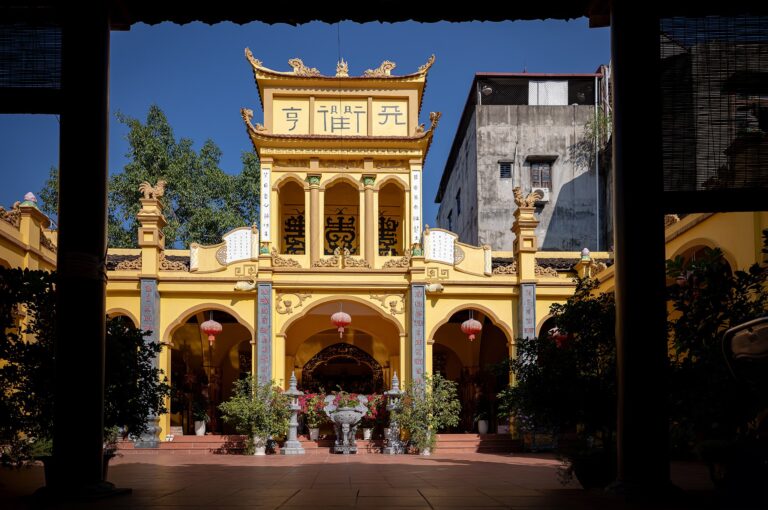
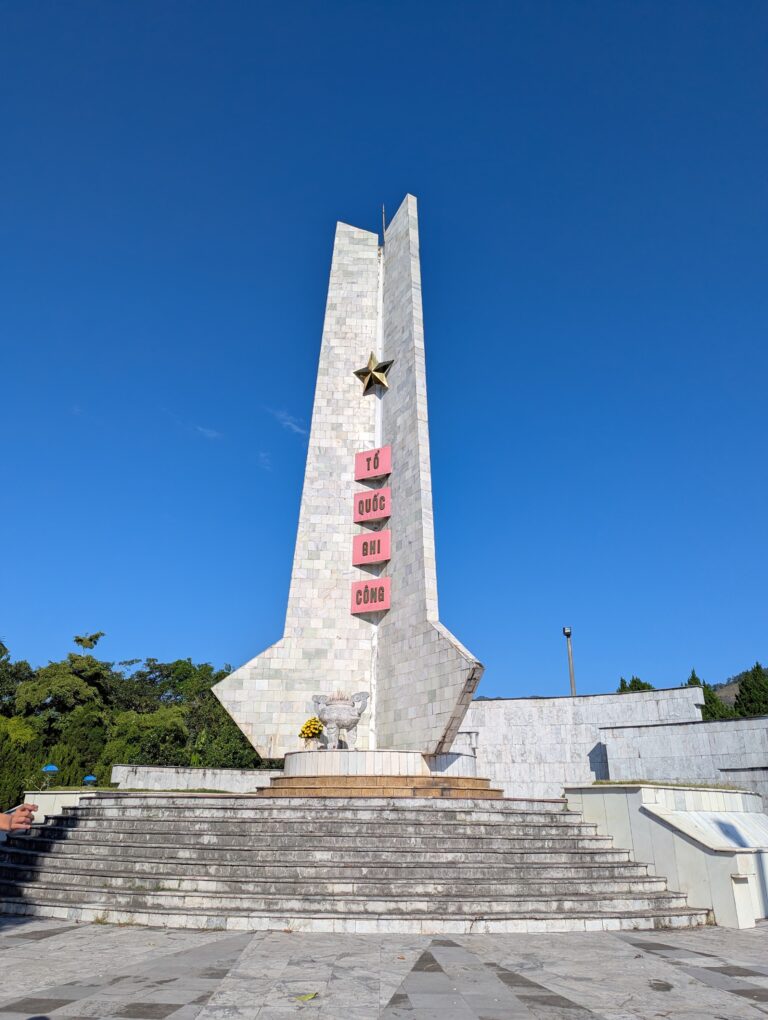
- Combine your visit: Stop by Vua Le Temple or the Nam Lin Historical Site during the day, then unwind on the pedestrian street in the evening.
Final Thoughts
Kim Dong Pedestrian Street has no famous landmarks or ancient relics. What it offers is the chance to spend an evening living alongside the people of Cao Bang: listening to a then melody accompanied by the tinh tau lute, trying a round of the “lay co” grass game, sitting by a campfire, and holding a stranger’s hand in a bamboo dance circle. A trip to Cao Bang feels far more complete with a weekend evening like this.